
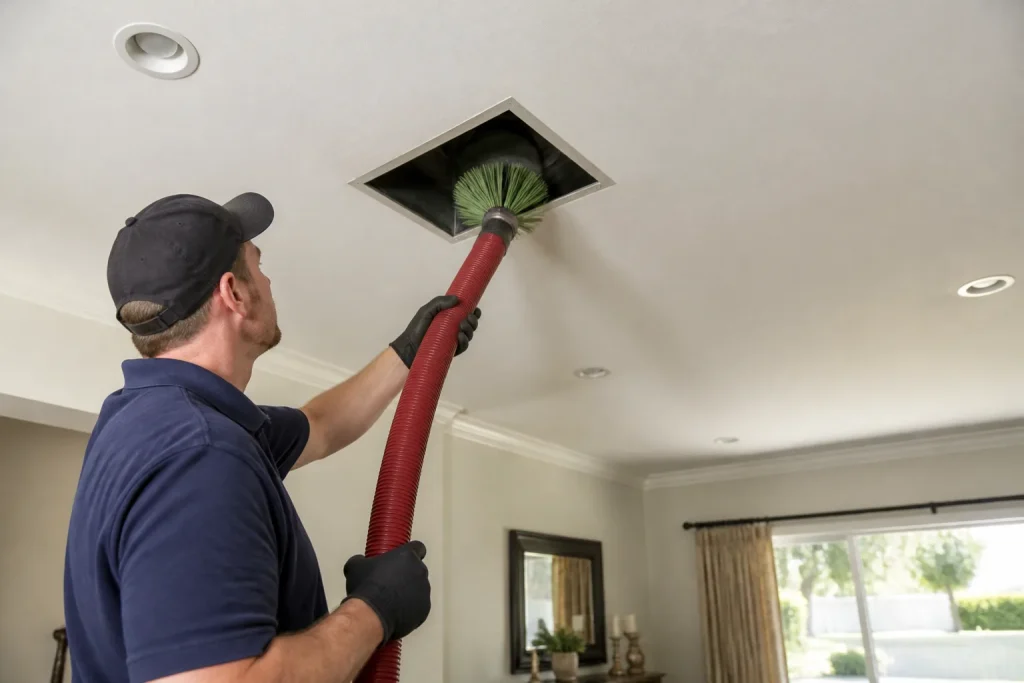
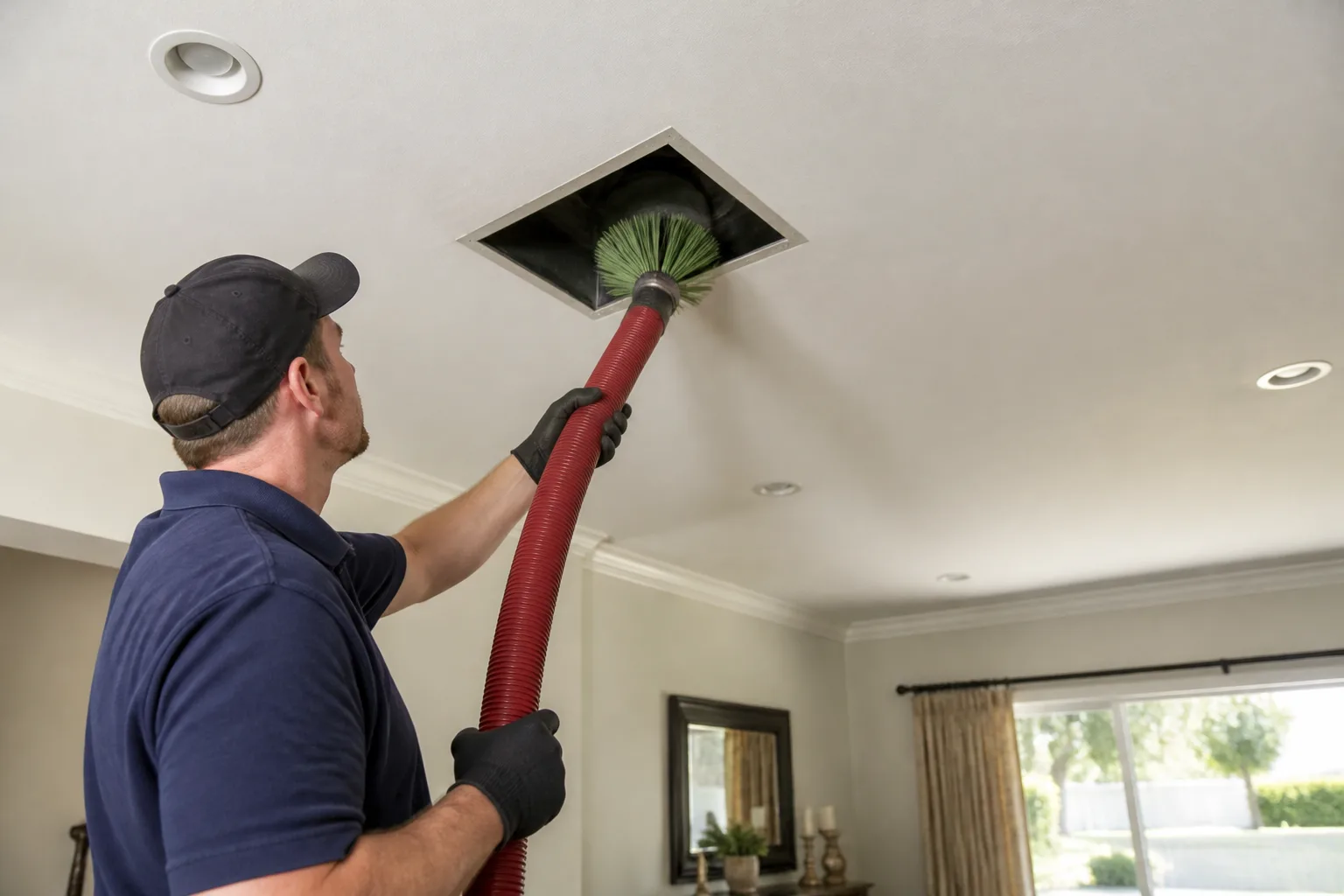
Air Duct Cleaning What It Really Costs: What Tarzana Homeowners Pay in 2026
In Tarzana, air duct cleaning for a typical 2,000-square-foot home runs between $450 and $850 in 2026, with the final number depending on system size, duct material, and whether you’re paying for a real negative-pressure cleaning or a glorified vacuum job. The $99 mailer price and the $1,200 specialist quote aren’t two prices for the same service. They’re two entirely different scopes of work. If you’d rather skip the research and just get an honest number, call Air Duct Cleaning Tarzana home specialists at (866) 472-7239 for a free estimate.
Here’s the uncomfortable truth most Tarzana homeowners discover too late: the average house in this area has between 18 and 26 supply and return vents. A legitimate cleaning of that system, done to NADCA standards with truck-mounted or high-powered portable negative-air equipment, takes 3 to 4 hours. Any quote that prices that job under $250 is either capping the vent count, skipping the return plenum, or using equipment that can’t achieve the static pressure required to actually pull debris out of the duct runs.
We’ve been inside enough Tarzana ductwork to know exactly what separates a real cleaning from a surface wipe-down. This guide breaks down what you should actually pay in 2026, line by line, so you can compare bids without getting played.
What a Real Duct Cleaning Should Cost in Tarzana: The 2026 Line-Item Breakdown
A complete air duct cleaning in Tarzana is rarely a single line item. Contractors who quote one flat number are either bundling everything (good) or omitting critical steps to hit a low headline price (not good). Here’s what the component costs look like in the Tarzana market this year:
- Base system cleaning (18 – 26 vents, both supply and return): $350 – $550. This is the core service: hooking a negative-air machine to the main trunk line, agitating each branch run with a rotating brush or air whip, and physically extracting the loosened debris. Homes in the hills south of Ventura Boulevard with longer duct runs or accessible-only crawlspace plenums often land at the higher end.
- Air handler and evaporator coil cleaning: $150 – $300. Your coil is where dust becomes a permanent paste. If the coil is caked, cleaning ducts without addressing it means you’ll have dirty air again within months. This step requires pulling the access panel and using a foaming coil cleaner, not just compressed air.
- Dryer vent cleaning (standalone or bundled): $125 – $225. Tarzana homes with laundry rooms on interior walls often have vent runs exceeding 15 feet, sometimes with multiple elbows. That’s exactly where lint accumulates fastest. If your dryer takes two cycles to dry a load, the vent is the problem, not the machine.
- Mold or mildew treatment: $200 – $500 if warranted. This is a conditional add-on, not a default. See the upsell section below before you agree to anything.
- Duct sealing (aerosol or mastic at accessible joints): $400 – $1,000 depending on access. Older Tarzana homes built in the 1960s and 70s frequently have 30 – 40% duct leakage. Sealing can pay for itself in lower cooling bills within two to three San Fernando Valley summers.
Total realistic range for a complete job on a standard Tarzana single-family home: $650 – $1,400. The spread isn’t random. It tracks system size, condition, and whether repair work is bundled in.
Why Duct Material Changes the Price (And Why Fiberglass Costs More)
Most Tarzana homes built before 1985 have sheet metal ducts. Newer construction and many remodels use fiberglass duct board. Both can be cleaned properly, but fiberglass demands a different approach and commands a legitimate upcharge of $100 – $250 per system.
Here’s why: fiberglass duct board has a textured inner surface. The fiberglass strands grab and hold dust, pollen, and the fine particulate that blows in through open windows during Santa Ana winds. Aggressive brushing can fray the surface, releasing fiberglass particles into your air stream. That means a proper cleaning on duct board requires lower-contact-air agitation techniques, more time per vent, and often a HEPA-filtered negative-air setup running throughout to capture anything that dislodges. It’s slower, and slower costs more.
Sheet metal, by contrast, has a smooth surface. A Rotobrush or Nikro air whip can work each branch faster, and the debris releases more completely. If you’re getting quotes and one contractor asks whether your ducts are metal or fiberglass while another doesn’t even mention it, the first one is doing a real evaluation. The second one is pricing a guess.
We also see a lot of Tarzana homes with a mix: sheet metal trunk lines with fiberglass branch runs from a later addition. That hybrid system takes the longest to clean correctly because the technician has to switch methodology mid-job.
Flat Pricing vs. Per-Vent Pricing: What Each Structure Incentivizes
Some Tarzana contractors price per vent. Others quote one flat price for the whole system. Neither is automatically better, but you should understand what each pricing model encourages the contractor to do.
Per-vent pricing, typically $25 – $45 per vent in Tarzana in 2026, sounds transparent. It isn’t. The incentive is to move fast. If a crew gets paid by the vent, they’re motivated to spend 5 minutes per register and move on. Worse, some per-vent quotes conveniently undercount: they’ll quote 14 vents, then “discover” 22 once they’re in the attic, and your price nearly doubles mid-job.
Whole-system flat pricing flips that incentive. The contractor walked through the home, counted every register, looked at the plenum access, and gave you one number. That number should match the quote even if the job takes longer than expected. Ask directly: “Is this a flat price for the entire system, regardless of how long it takes or how many vents we find?” A credible contractor says yes without blinking. A contractor who hedges is planning to adjust later.
One more thing on flat pricing: make sure it includes the return side. The return ducts carry the dirtiest air in your home, and on a lot of Tarzana systems, the return plenum is the single dirtiest component. A per-vent quote that only covers supply registers is pricing half a job.
The Three Upsell Triggers: Which to Accept and Which to Question
Duct cleaning attracts upsells because the work happens out of sight. A technician opens a return grill, snaps a photo of dust, and suddenly you’re being told you need three additional services. Some are legitimate. Some are not. Here’s how to tell the difference in real time:
Mold treatment: Accept only with visual or lab confirmation
If a technician points at dark staining inside a duct and says “that’s mold,” ask them to prove it. Mold needs moisture to grow. In Tarzana’s semi-arid climate, true mold inside ductwork is less common than contractors imply. Dark staining is often just years of accumulated dust adhered to the duct surface. Legitimate mold treatment requires either visible, active growth confirmed by the technician showing you the exact location, or lab testing of a swab sample. Without confirmation, skip it and ask for a standard cleaning instead. We pull a lot of “moldy” ducts apart only to find nothing but dust and the occasional cricket.
Full-system sanitizer: circumstantial, not mandatory
EPA-registered sanitizers or antimicrobial foggers genuinely reduce microbial load after a cleaning, but they’re not necessary for every system. Sanitizer makes sense if someone in the home has severe allergies, if there’s been confirmed mold, or after rodent activity in the ducts. For a standard dusty-but-dry system, a thorough mechanical cleaning removes the substrate that microbes feed on anyway. If you’re told the sanitizer is “part of the package” and can’t be removed, that’s a bundled upsell, not a medical necessity.
Duct sealing: measurable ROI on older Tarzana homes
This is the one upsell we actually recommend evaluating seriously. Many Tarzana homes were built in the 1960s and 70s, and their duct joints were sealed with foil tape that has long since failed. Leaks in the attic mean cooled air never reaches your living room, and in summer, your AC runs longer to compensate. Duct sealing with mastic at accessible joints or aerosol sealant can cut leakage significantly. If a contractor shows you pictures of disconnected or visibly leaking sections during cleaning, sealing is not an upsell. It’s a repair, and it has a legitimate payback period on your utility bill.
How to Compare Two Bids That Look Wildly Different: A Written Scope Checklist
A $450 quote and an $850 quote in Tarzana might actually cover the same work, or they might cover radically different scopes. The only way to know is to put both scopes side by side. Here’s the checklist to run every bid through:
- Vent count listed in writing. If the cheaper quote says “up to 12 vents” and your home has 20, that’s not a cheaper quote. That’s a partial job with a surprise invoice waiting.
- Return side specifically included. A surprising number of low bids clean supply vents only. The return plenum is the dirtiest part of most systems.
- Equipment named. Ask what machine they use. Rotobrush, Nikro, and similar professional negative-air systems can actually pull debris from the full duct run. A portable consumer vacuum with a brush attachment cannot, regardless of what the mailer says.
- Air handler and coil addressed. If the coil isn’t cleaned, your ducts will be dirty again within a year. A quote that skips this step is either incomplete or assumes the coil is clean, which in Tarzana it rarely is.
- Duct material acknowledged. If the contractor doesn’t know whether your ducts are metal or fiberglass, they haven’t actually looked. That’s a red flag on its own.
- Containment described. The job should use negative-air equipment (we run Abatement Technologies units) to keep loosened debris from recirculating through your living room during the cleaning. If the quote doesn’t mention containment, ask why.
- Repair capability on the table. If the technician finds a disconnected section or a damaged liner during cleaning, can they fix it? A clean-only contractor walks away and tells you to call someone else. We clean it; if it’s broken, we fix it. That’s the difference between a cleaning quote and a solution quote.
Run both bids through this checklist and the real value difference becomes obvious fast. Often the “$450” quote and the “$850” quote are the same job, and one of them is just being honest about what it actually takes.
When to call a pro: If a bid doesn’t answer these questions in writing, call someone else. Ductwork repairs, especially anything involving damaged liners or disconnected sections, are not DIY projects and many are inaccessible without proper equipment. For related services in Tarzana, see our dryer vent cleaning in Tarzana and air duct repair in Tarzana pages.
The Bottom Line
Tarzana homeowners in 2026 should expect to pay $450 – $850 for a legitimate full-system air duct cleaning, and up to $1,400 if coil cleaning, dryer vent service, and duct sealing are bundled in. The $99 mailer is a door-opener, not a scope. The honest way to shop this service is to get two or three written quotes, demand a vent count and equipment list, and verify that the return side and air handler are included. A specialist who runs professional-grade equipment like Rotobrush and Nikro, uses negative-air containment, and can also repair damaged ductwork will cost more than a crew with a shop vac. The price difference buys a different service entirely.
If you’re in Tarzana and want a straight number on your system, Air Duct Cleaning Tarzana offers free estimates. Call (866) 472-7239 and we’ll walk the job with you, show you what’s actually in your ducts, and give you one flat price that doesn’t change when we start pulling panels.
Frequently Asked Questions
For a standard single-family home with 18 – 26 vents, expect $450 – $850 for a complete cleaning that includes both supply and return sides. Homes with fiberglass duct board, longer crawlspace runs, or severely neglected systems may run higher. A full job with coil cleaning and duct sealing can reach $1,400. Call (866) 472-7239 for an exact quote on your system. Estimates are free.
Cheap quotes usually cap the vent count, skip the return plenum and air handler, or use equipment that can’t achieve the negative pressure needed to extract debris from full duct runs. In Tarzana, a $99 or $199 advertised price typically covers a partial job, and the price climbs once the crew is on site. Always ask whether the quote is a flat price for the entire system, written in the scope of work.
Ask for before-and-after photos of your own ducts, specifically the return plenum and the air handler area. A legitimate cleaning shows obvious visual difference in those two locations. Also request a written summary of what was cleaned and what the technician observed. If your contractor uses negative-air containment, you should see the setup running during the job, not just a hose running from a truck to one vent.
In Tarzana, most homes benefit from a full duct cleaning every 4 to 7 years. Homes with pets, recent renovations, active smokers, or occupants with significant allergies may need it every 2 to 4 years. If you’ve never had it done and your home is over 15 years old, you’re likely due. Call (866) 472-7239 for an evaluation and we’ll give you an honest assessment, even if the answer is “you don’t need it yet.”
Written by the team at Air Duct Cleaning Tarzana, serving Tarzana since 2013.
Need Air Duct Cleaning Help?
Call Air Duct Cleaning Tarzana - licensed & insured, here with fast help in Tarzana.
(866) 472-7239