
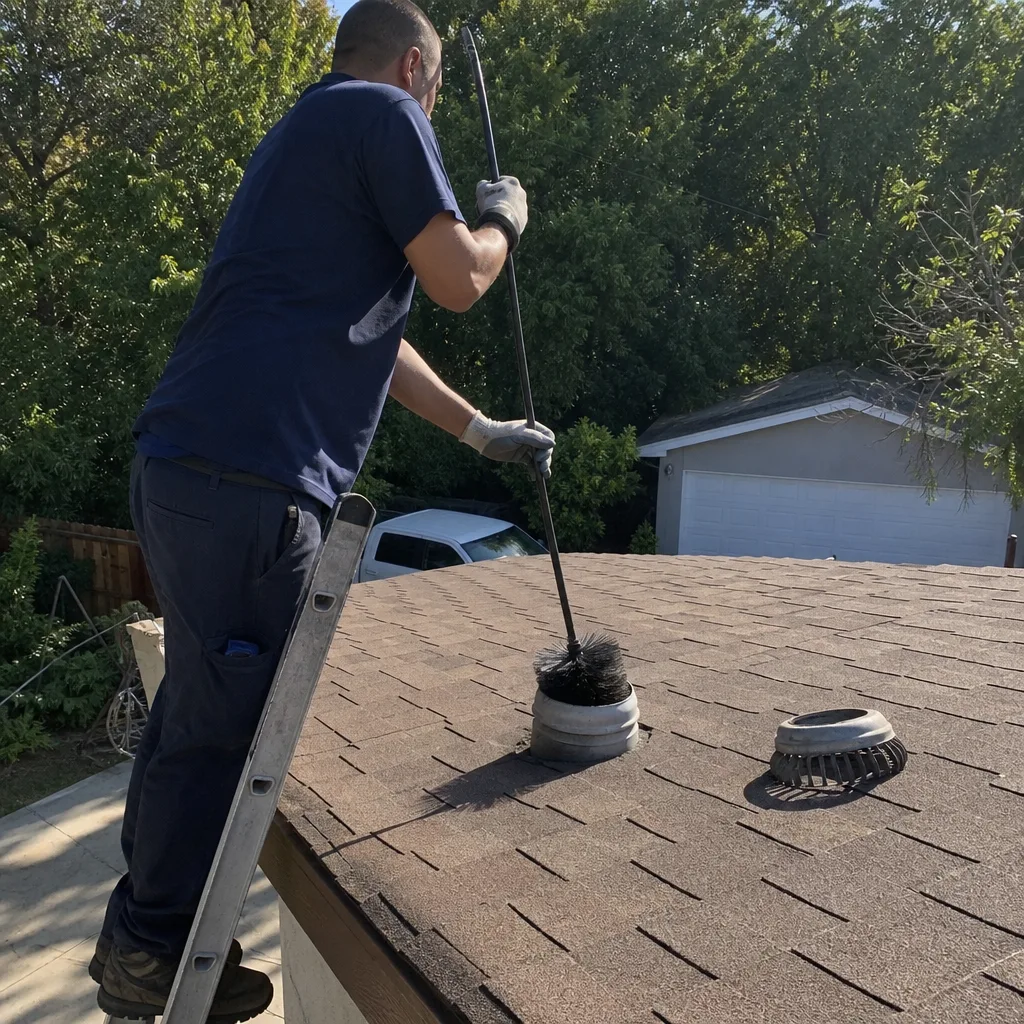
Last updated November 2, 2026
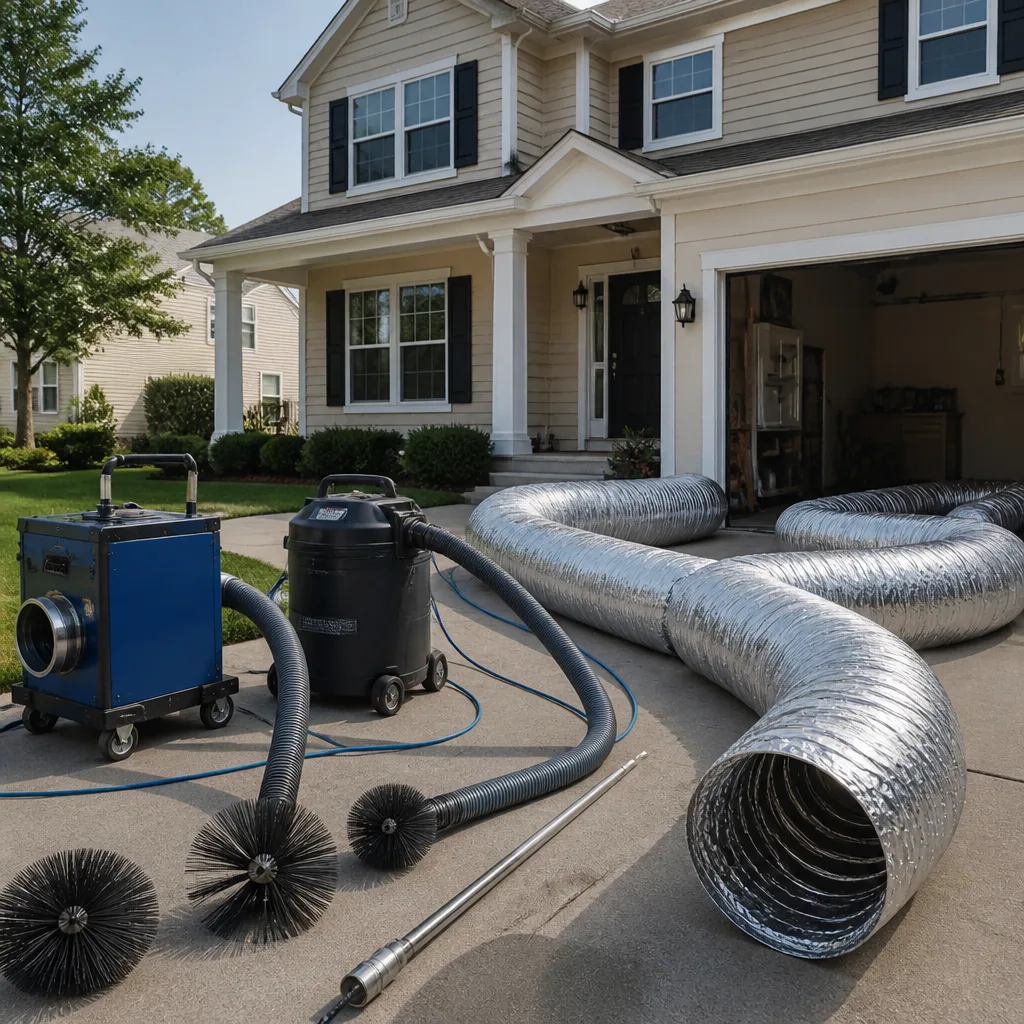 Whole-home duct cleaning
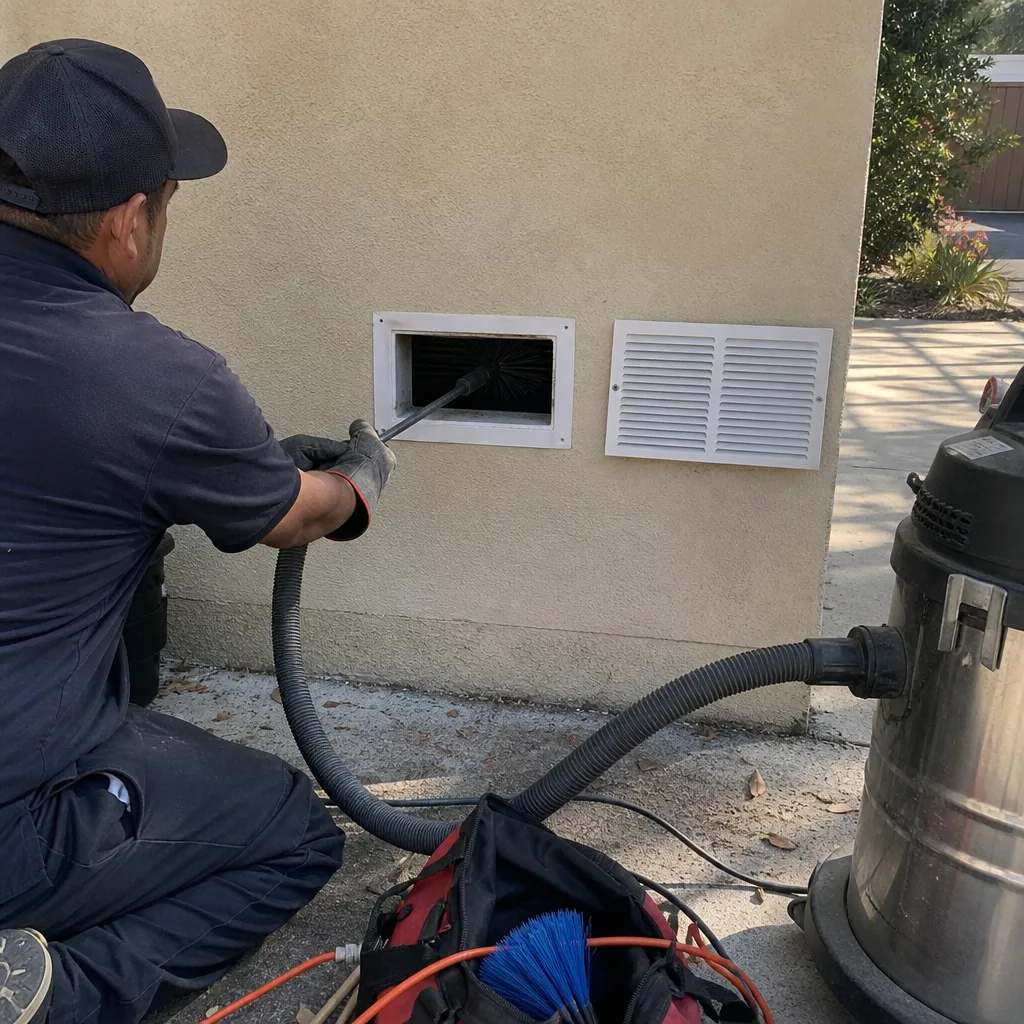
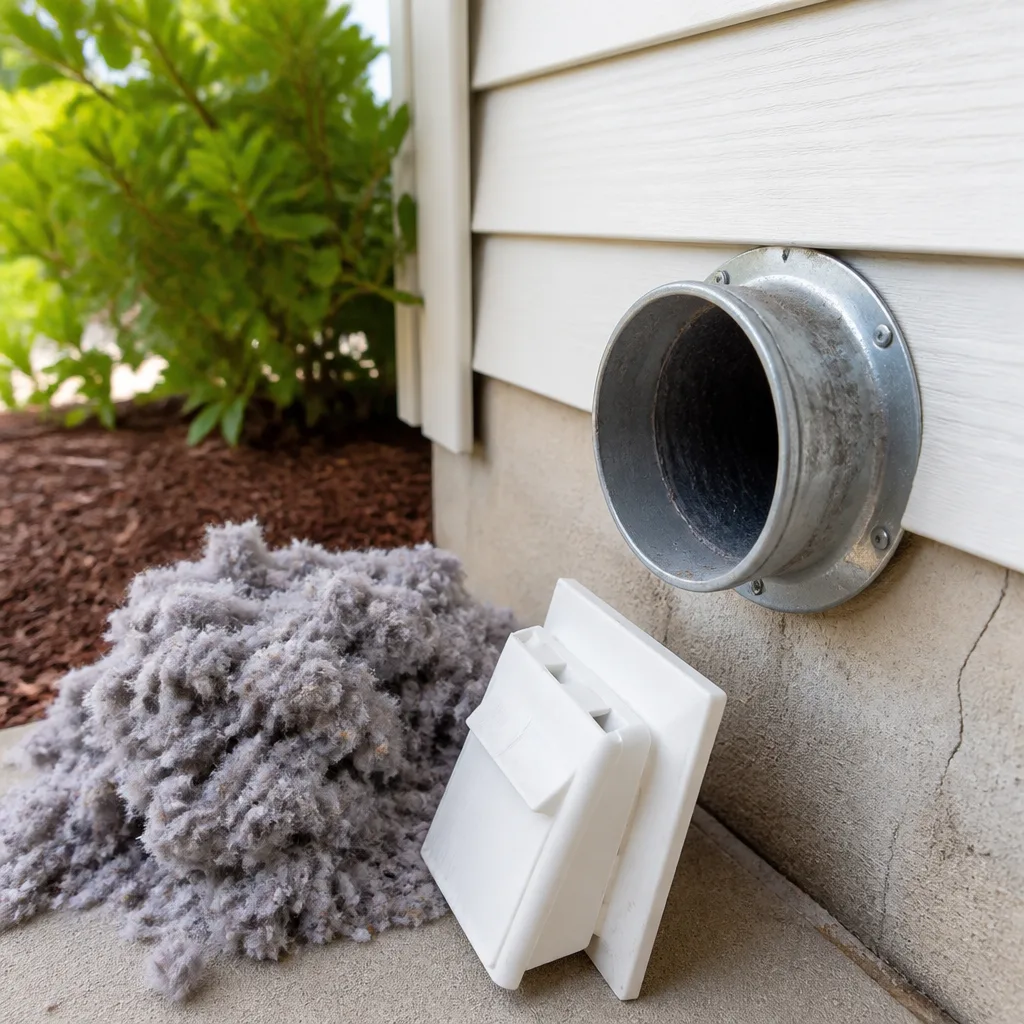 Dryer vent cleaning
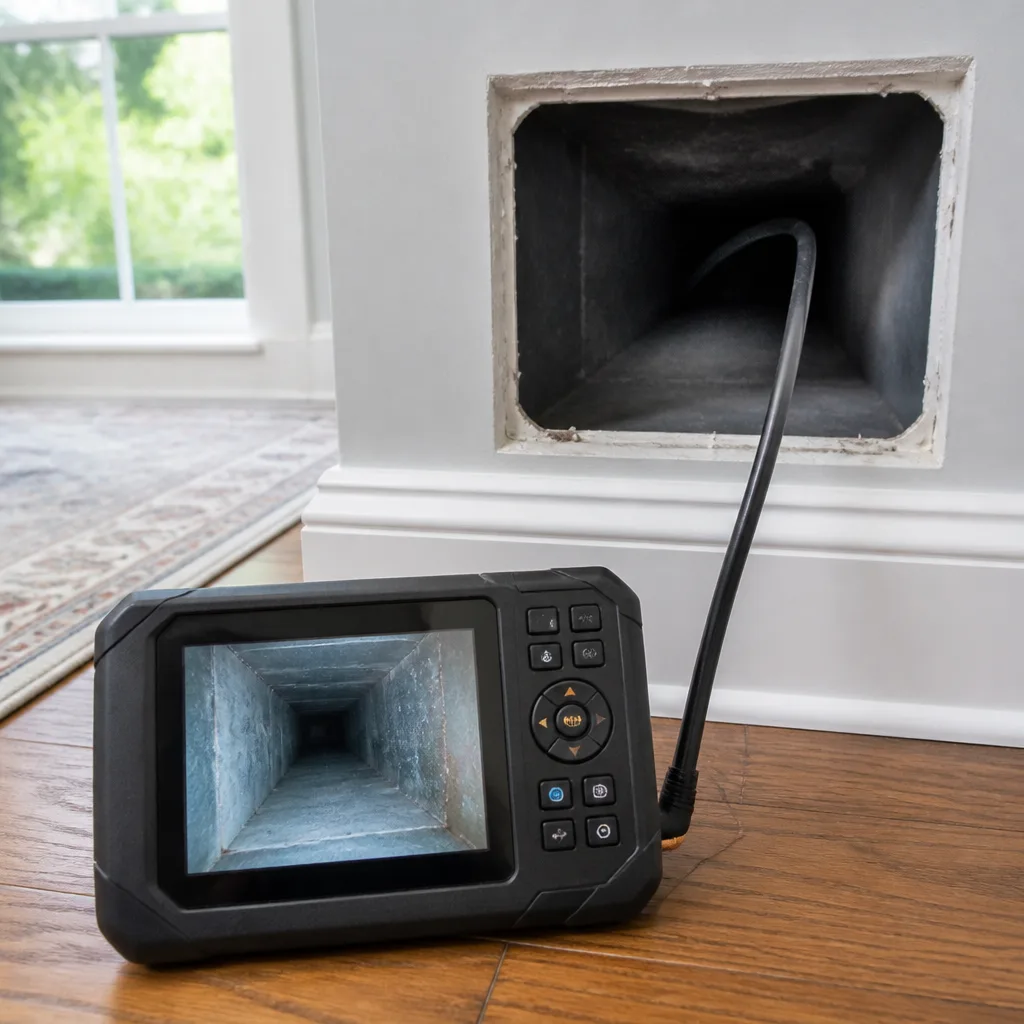 Camera inspection
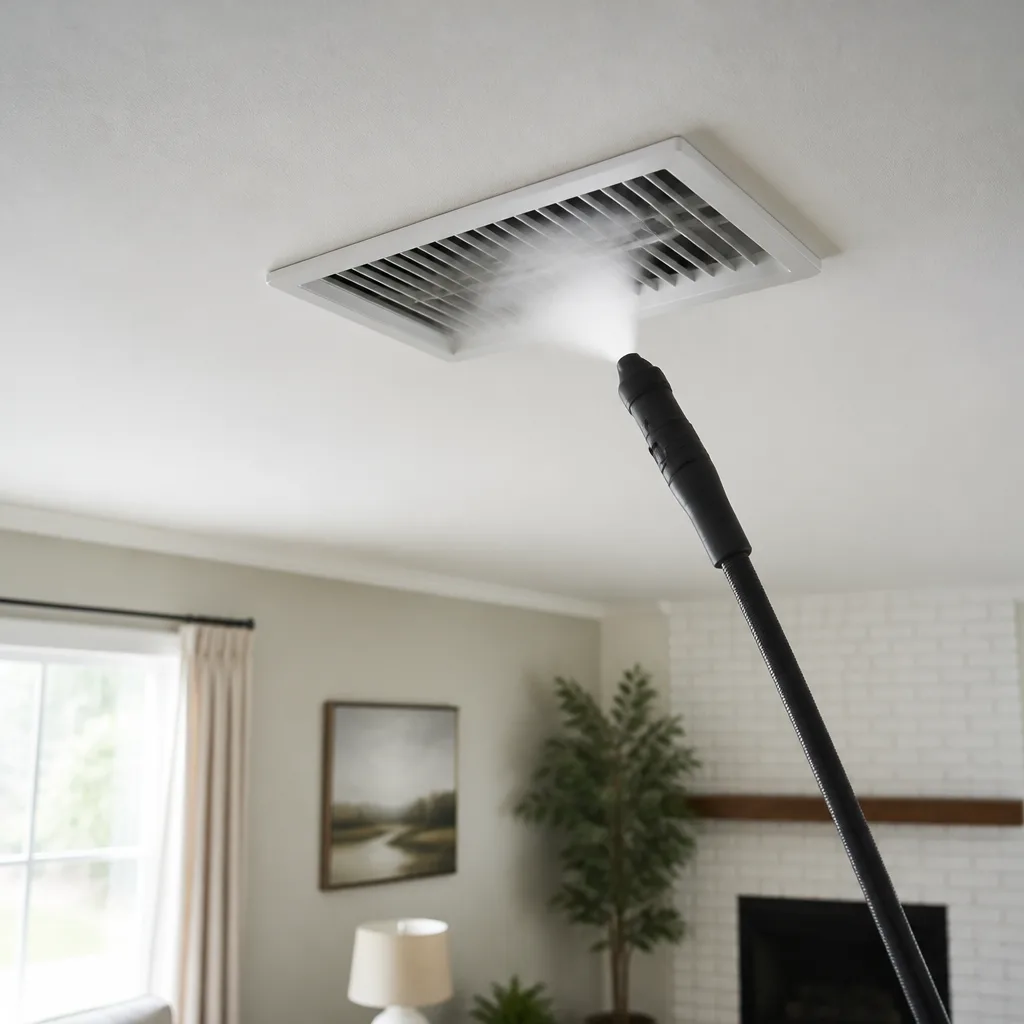 Sanitizing & deodorizing
Whole-system duct and dryer vent check with before-and-after photos - you see exactly what came out of your vents
That "$99 whole-house special" is a bait ad - the real number appears once they are in your hallway, or the "clean" is a shop-vac at the register. We photograph the inside of your ducts before and after instead.
How to Hire an Air Duct Cleaning Contractor in Tarzana: A Step-by-Step Guide
In Tarzana, a $99 whole-house duct cleaning offer is mathematically impossible to deliver with commercial-caliber equipment. The truck-mounted vacuum alone costs more per hour to operate than that price covers. So when you see that coupon in a mailbox flyer, what you’re really looking at is a crew that either skips the cleaning entirely or runs a shop-vac through your registers and calls it done. This guide and our Seasonal Air Duct Cleaning Care for Tarzana: Year-Round Homeowner’s Guide give you the technical questions and credential checks that separate actual specialists from opportunists working an unregulated market.
Styles & brands we work with
- Whole-home duct cleaning
- Dryer vent cleaning
- Camera inspection
- Sanitizing & deodorizing
Quick Answer
To hire an air duct cleaning contractor in Tarzana, verify their NADCA membership directly on the NADCA website, ask what vacuum system they use by name (Rotobrush, Nikro, or equivalent commercial platforms), confirm they deploy negative-air containment during cleaning, check their California CSLB license status if any repair work is included, and require a written scope that specifies what’s included, what’s excluded, and how results will be documented. A legitimate contractor in Tarzana charges between $425 and $850 for a typical single-system residential cleaning, not $99.
Table of Contents
- Why Vetting Matters More in California Than Almost Anywhere Else
- Step 1: Verify NADCA Membership and Equipment Credentials Before You Call
- Step 2: Ask the Equipment Questions That Expose Low-Quality Operators
- Step 3: Check the California Contractor License (CSLB) Before Work Starts
- Step 4: Require a Written Scope With These Four Specifics
- Step 5: Watch for These Three On-Site Red Flags During the Appointment
- Step 6: Understand Realistic Pricing for Duct Cleaning in Tarzana
- Common Mistakes to Avoid
- When to Call a Professional
- Frequently Asked Questions
- The Bottom Line
Why Vetting Matters More in California Than Almost Anywhere Else
Here’s the uncomfortable truth about this industry: California has almost no meaningful licensing barrier for air duct cleaning alone. The California Contractors State License Board (CSLB) requires a C-20 HVAC license for heating, ventilation, and air conditioning work, but cleaning ducts without performing repairs sits in a gray zone that lets unlicensed operators legally market themselves as cleaners. No state exam tests duct cleaning competency. No state inspector verifies the equipment a cleaner brings to your door.
That means the entire vetting burden falls on you, the Tarzana homeowner. In most trades, a license filters out the worst operators before they reach your front door. Here, anyone with a rented van and a printed flyer can call themselves a duct cleaner. The NADCA (National Air Duct Cleaners Association) operates a certification program called the Air Systems Cleaning Specialist (ASCS) credential, and its ACR standard (Assessment, Cleaning, and Restoration of HVAC Systems) sets the baseline for what a proper cleaning actually entails. But membership is voluntary. Plenty of companies clean ducts without ever touching these standards.
For San Fernando Valley homes, this matters more than most homeowners realize. Tarzana’s dry, windy climate pushes fine dust and particulate into homes through open windows and attic vents. That’s not a problem unique to Tarzana, but it means your ductwork becomes the collection point for months of accumulated debris. When someone “cleans” your ducts without proper containment equipment, they don’t remove that accumulation. They loosen it and redistribute it through your living space. The result is often worse air quality than before the cleaning. If you’re researching air duct cleaning in Tarzana, the contractor you choose determines whether the service helps your home or actively makes it dirtier.
Step 1: Verify NADCA Membership and Equipment Credentials Before You Call
Here’s what separates a legitimate contractor from a company that just claims to be one: verification. Any contractor can print “NADCA Certified” on a business card. Few homeowners check whether the claim is real. The process takes three minutes.
Start by visiting the NADCA website and using their member directory search. Type in the company name. If the name appears, check the certification status. Look for the ASCS credential, which requires passing an exam on HVAC system anatomy, contamination types, and cleaning methodology. The standard is updated regularly to reflect current best practices. A company that lists “NADCA member” without the ASCS credential has paid a membership fee but hasn’t proven technical competency.
Then ask directly about equipment. The NADCA ACR standard specifies certain performance requirements for vacuum systems used in source-removal cleaning. A proper commercial system pulls at least 2,000 CFM (cubic feet per minute) of airflow. Consumer shop-vacs pull 100-200 CFM. That’s not a small difference; it’s an order of magnitude. At 200 CFM, loosened debris doesn’t get extracted. It gets stirred up and left suspended in your air. At 2,000 CFM or higher, the vacuum creates enough negative pressure to pull contaminants out of the duct run rather than just relocating them.
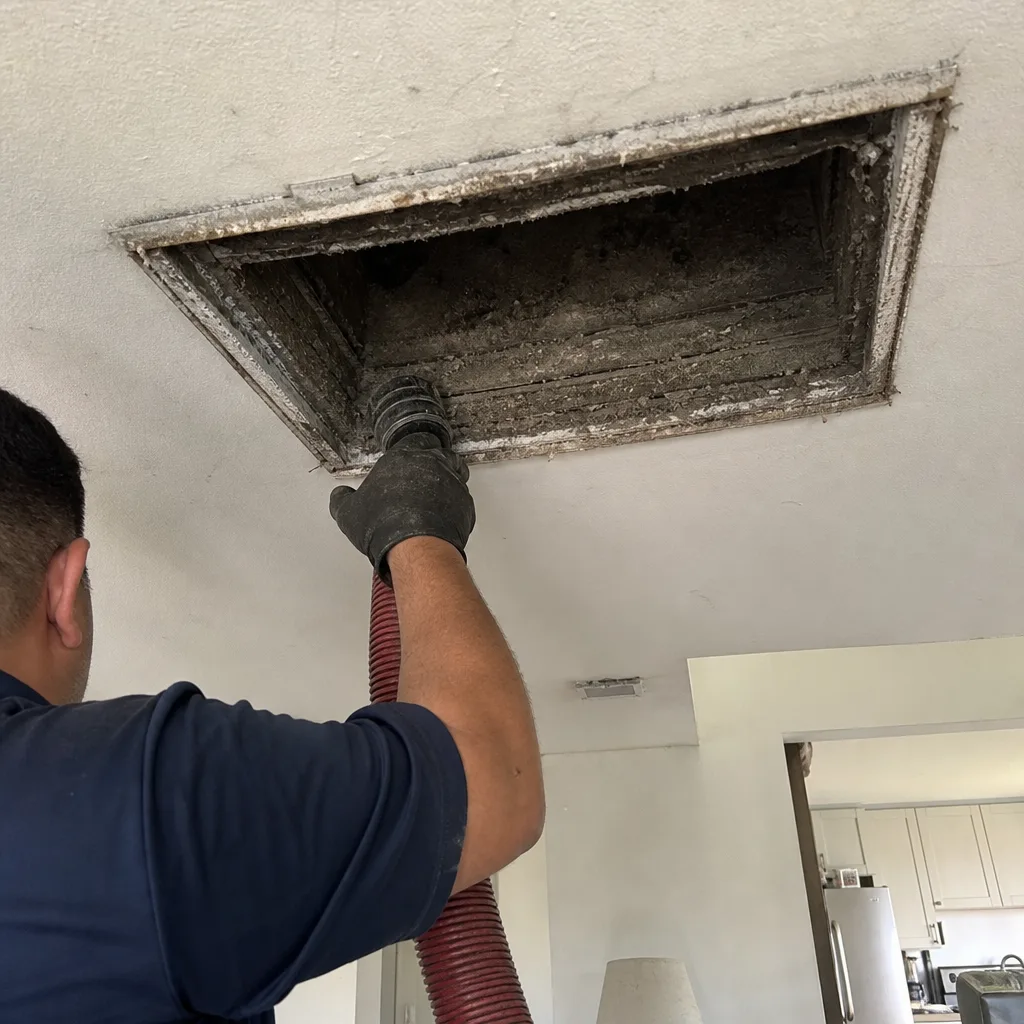
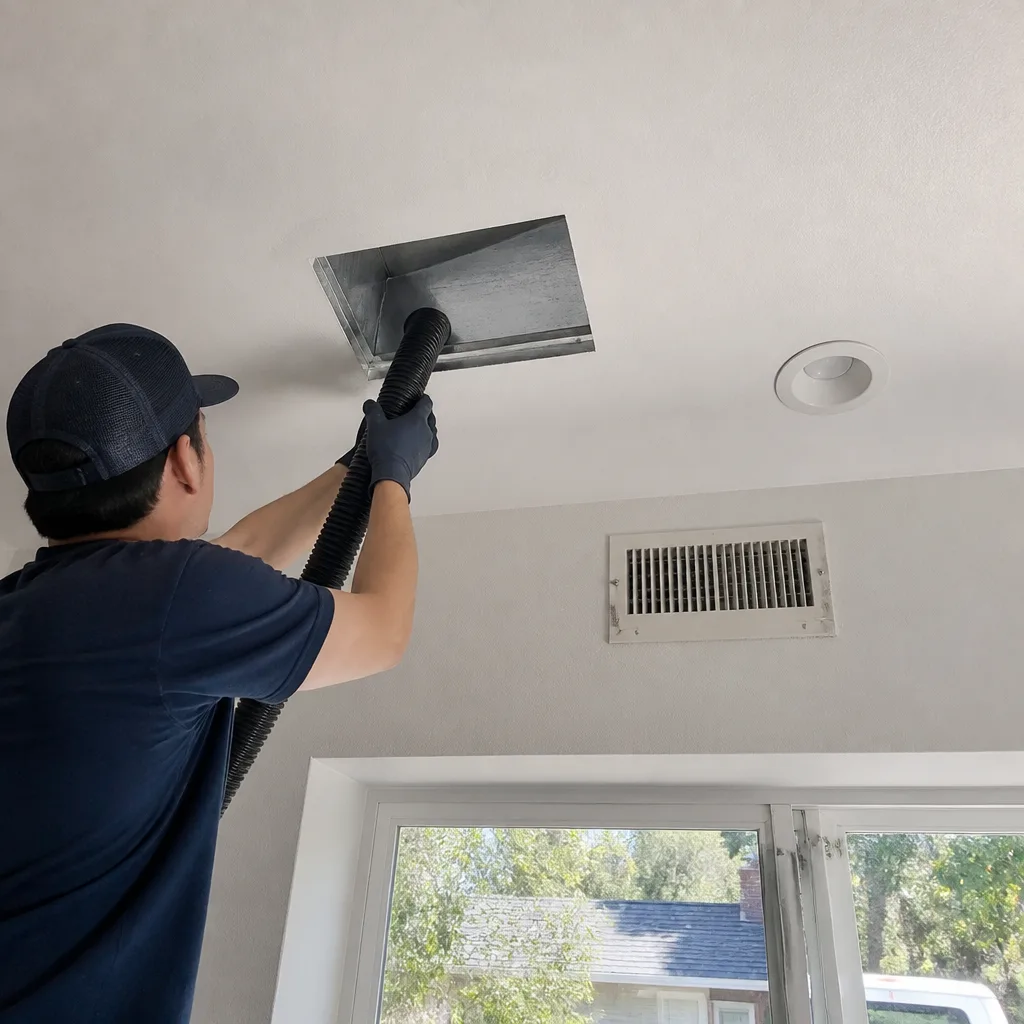
In our experience working on Tarzana homes, the difference between a shop-vac cleaning and a professional extraction is visible in before-and-after photos of the interior duct surfaces. A proper cleaning leaves bare metal or clean liner visible. A weak extraction leaves a smeared residue. Ask any contractor you’re vetting: “What CFM does your vacuum system pull?” If they can’t answer that question immediately, end the call. That’s a technician who doesn’t understand the physics of what they’re doing.
Step 2: Ask the Equipment Questions That Expose Low-Quality Operators
This is where you separate specialists from opportunists before they ever set foot in your house. Most Tarzana homeowners don’t know what equipment questions to ask, so low-quality cleaners never face scrutiny. Here are three questions that expose the difference immediately.
Question 1: “What vacuum system do you use, and what’s the CFM rating?” A legitimate contractor answers with a specific platform and a number. At Air Duct Cleaning Tarzana, we run Rotobrush and Nikro commercial duct-cleaning systems. These are purpose-built platforms designed for HVAC extraction work. The Rotobrush system uses a spinning brush head that makes simultaneous contact with the duct surface while pulling debris into a HEPA-filtered vacuum stream. A Nikro unit operates on a separate design principle: high-CFM vacuum power with variable air-wash tools for different duct configurations. Both are industry-standard systems you’ll find on commercial IAQ jobs. If a contractor says “we have professional equipment” without naming what it is, they have a shop-vac in a van.
Question 2: “Do you use contact cleaning or just a whip system?” This is the technical distinction that separates thorough cleaning from a show. A contact vacuum uses a rotating brush that physically touches the duct surface, dislodging caked-on debris. A whip system (also called air-washing) uses only compressed air nozzles. Air-washing removes loose particulate but leaves adhered dust and biofilm layers in place. The best results combine both methods. A contractor who doesn’t understand the distinction can’t tell you what they’re actually doing inside your ducts.
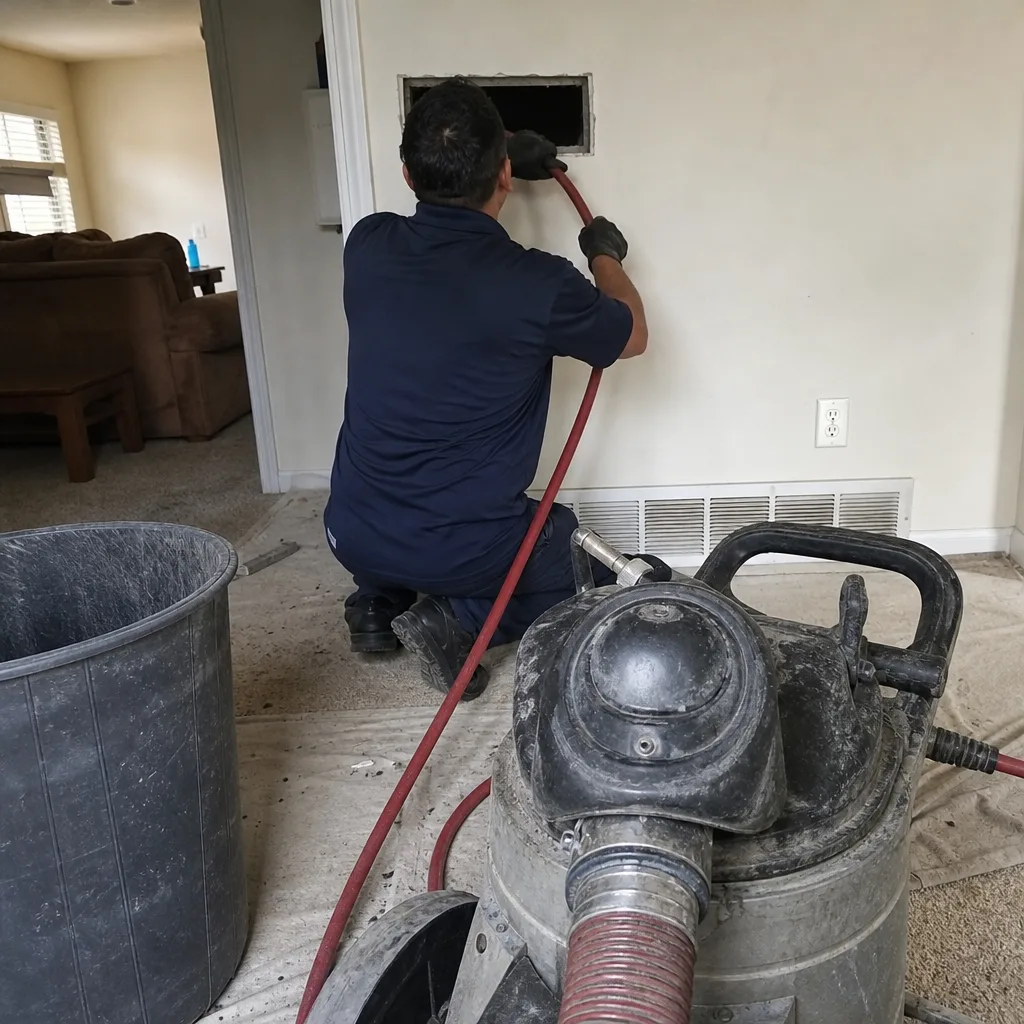
Question 3: “How do you protect registers and the rest of the house during cleaning?” The correct answer involves sealing registers, maintaining negative air pressure, and containing loose debris. The best contractors use Abatement Technologies negative-air equipment, which we deploy on every residential cleaning. Negative-air machines create a vacuum that surrounds the entire duct system, so when we loosen debris inside the ductwork, it gets pulled toward the extraction point rather than out through improperly sealed registers into your living room. Most residential cleaners skip containment entirely. They vacuum with the registers open and hope for the best. Ask this question and listen carefully to the answer.
Step 3: Check the California Contractor License (CSLB) Before Work Starts
Here’s where the line between cleaning and repair matters. In California, air duct cleaning alone does not strictly require a CSLB license. But air duct repair absolutely does. The C-20 classification covers warm-air heating, ventilating, and air-conditioning work, including repair and modification of duct systems. If a contractor identifies a disconnected section, a damaged liner, or a leaking seam and then fixes it, they’re performing C-20 work. Doing that without a C-20 license is illegal in California.
Why does this matter for a Tarzana homeowner hiring a cleaning contractor? Because cleaning and repair are deeply intertwined. A proper cleaning often reveals pre-existing problems. If your duct system has a disconnected return line in the attic (something we find regularly in older Tarzana homes), a clean-only contractor will either ignore it or attempt an unlicensed fix. A contractor with air duct repair in Tarzana capability handles the issue on the spot and legally.
Before you sign anything, go to the CSLB website and run the contractor’s business name and license number. Check three things: the license is active, the classification includes C-20 if repair work is offered, and there are no unresolved complaints or disciplinary actions. A contractor who offers repair services without a C-20 is either ignorant of the law or ignoring it. Neither bodes well.
This is the point where many cleaning-only companies fall apart. They can clean legally, but the moment they find a problem (and most systems over 15 years old have problems), they either walk away leaving the issue unresolved or break the law to earn the extra money. When we clean ducts in Tarzana, our repair capability means we can address what cleaning exposes. That’s a full solution, not a partial one.
Step 4: Require a Written Scope With These Four Specifics
Before any work begins, you need a written agreement that specifies exactly what’s being done and what isn’t. Vague contracts invite bait-and-switch invoices. Here are the four items to require in writing.
1. Scope of work by access point count or linear footage. “Clean all ducts” is meaningless. The contract should specify how many registers, returns, and access points are being serviced. On a typical Tarzana single-family home, that’s 8-14 supply registers and 2-3 returns. A specific scope means you can verify the work was actually performed at every location.
2. Pre-cleaning and post-cleaning visual documentation. The contractor should capture photos or video of the duct interiors before work starts and after it finishes. At minimum, this means camera inspection before cleaning begins. Ideally, you receive before-and-after images of representative duct sections. A contractor who won’t show you the inside of your ducts before cleaning is one who doesn’t want you to see what’s actually in there, or one who doesn’t want you to check their work afterward.
3. Written exclusions. Does the price include the main trunk line, branch runs, return plenum, and register boot cleaning? Are dryer vents included or separate? Is the air handler or furnace blower motor cleaning included? Contractors vary on what “whole-house” covers. Get the exclusions in writing.
4. Pricing structure. We operate on a flat-price-per-system model, agreed before any work starts. You know the total before we arrive, and that total doesn’t change based on what we find. Any contractor using per-vent pricing deserves scrutiny. Per-vent pricing is how a $99 “special” becomes an $800 invoice. The bait price covers 5 vents. Your house has 12. The math works against you every time. A flat price per system removes the incentive structure that drives the industry’s bait-and-switch reputation.
Step 5: Watch for These Three On-Site Red Flags During the Appointment
Your vetting doesn’t end when the contractor arrives. Here are three behaviors that should stop the job immediately.
Red Flag 1: No pre-inspection with a camera. The NADCA ACR standard requires an assessment before cleaning begins. That assessment includes visual inspection using camera equipment to document the condition of the ductwork. If the crew shows up and goes straight to cleaning without looking inside your ducts first, they’re not following the standard. A proper cleaning begins with knowing what’s in there and what condition the ducts are in. Camera inspection identifies debris type, moisture problems, mold indicators, vermin activity, and existing damage. It also sets the baseline for verifying the cleaning worked.
Red Flag 2: No register sealing before vacuum. When we clean, we seal off each register with adhesive film or magnetic covers and connect the vacuum system to create negative pressure throughout the duct run. This ensures debris moves toward the extraction point rather than escaping into your home. If you see crew members cleaning with registers open to the room, you’re not getting source-removal cleaning. You’re getting circulated dust.
Red Flag 3: A technician who can’t name the equipment model. Ask the on-site tech: “What system are you running today?” If they stare blankly or say “the vacuum,” that’s a problem. A trained technician can tell you the brand, model, and CFM rating of the equipment they’re operating. If they can’t, they’re not trained on the platform, which means they’re not performing a professional-level cleaning regardless of what the salesperson promised on the phone.
Any one of these three red flags justifies stopping work and asking the crew to leave. You’re not being difficult; you’re enforcing the standard you were promised. A legitimate air duct cleaning in Tarzana operation never trips any of these.
Step 6: Understand Realistic Pricing for Duct Cleaning in Tarzana
Let’s talk numbers, because pricing is where Tarzana homeowners get burned most often. A legitimate whole-house duct cleaning for a single HVAC system in the San Fernando Valley runs between $425 and $850. That range accounts for home size, system complexity, contamination level, and whether any additional services (like dryer vent cleaning) are included.
| Service Scope | Typical Range in Tarzana |
|---|---|
| Single HVAC system (2,000-2,500 sq ft home) | $425 – $650 |
| Larger home or heavily contaminated system | $650 – $850 |
| Dryer vent cleaning (dedicated specialty) | $150 – $250 |
| Air duct repair (per section or issue identified) | Quoted after inspection |
What’s included in that range? Camera inspection of the full duct system, source-removal cleaning using commercial equipment (Rotobrush or Nikro platform), negative-air containment during the process, and before-and-after documentation. That’s the minimum standard for a legitimate residential cleaning.
What’s not included? The $99 special. The $150 “whole house” coupon. Any price that doesn’t cover the operating cost of commercial equipment, containment gear, and trained labor. When a price is too low to cover legitimate costs, the company makes money by cutting corners you can’t see. They clean fewer vents. They skip the return lines. They blow debris into the attic instead of extracting it. You never know the difference because you never see inside the ducts.
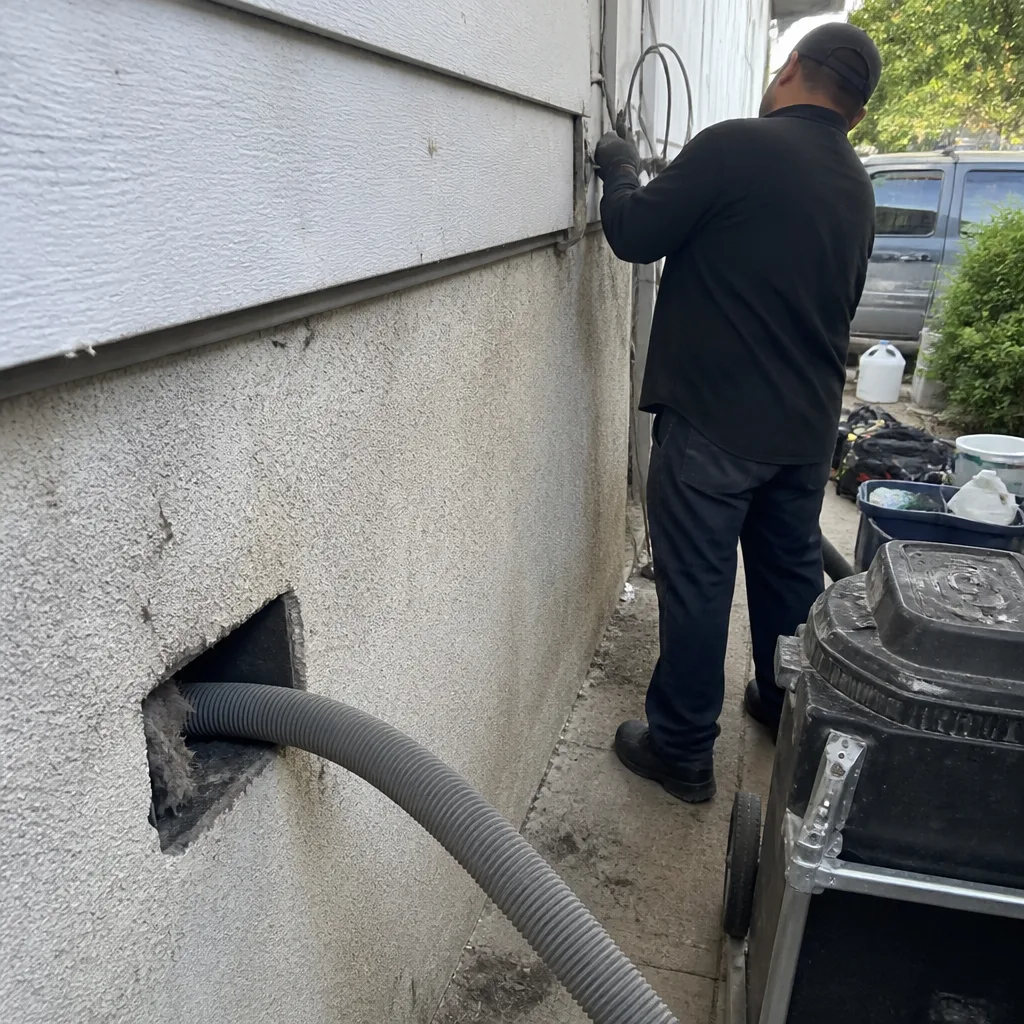
Dryer vent cleaning deserves separate mention because it’s a different service with different stakes. We treat dryer vent cleaning as a dedicated specialty, not a quick upsell. Lint accumulation in dryer exhaust lines is a fire hazard, and the National Fire Protection Association recommends annual inspection and cleaning as needed. In Tarzana’s dry climate, lint dries quickly and becomes progressively more combustible. A professional dryer vent cleaning in Tarzana removes lint from the entire run, from the dryer connection to the exterior termination point, using the same equipment-first approach we apply to HVAC ducts.
Common Mistakes to Avoid
- Hiring based on price alone. The $99 offer isn’t a deal; it’s a signal that the company either can’t operate commercial equipment profitably or won’t actually clean your ducts. In Tarzana, realistic pricing starts around $425 for a single system, and anyone charging drastically less is cutting corners you’ll never see.
- Assuming “licensed and insured” covers duct cleaning. A CSLB license is necessary for repair work, but many “licensed” contractors hold a C-20 for HVAC installation and have no specialized duct cleaning training. A license proves legal standing, not cleaning competence. Verify NADCA membership separately.
- Believing a contractor’s certification claim without checking. The NADCA directory is public and searchable. A company claiming certification that doesn’t appear in the directory is lying. The check takes three minutes on your phone.
- Skipping the written scope. Verbal agreements evaporate when disputes arise. Require a written scope with access point count, exclusions, and documentation method before any work starts.
- Treating dryer vent cleaning as an optional upsell. Dryer vent fires cause millions in property damage annually. This is not a bonus service; it’s a safety system you should maintain independently of your HVAC ducts.
- Allow per-vent pricing to dictate the final invoice. Flat-price-per-system is the only pricing structure that protects you from scope creep. If the contract is structured per vent, the final price is designed to grow.
When to Call a Professional
You should call a professional when you notice any of these: visible dust blowing from registers when the system runs, unexplained allergic reactions or respiratory irritation that worsens at home, musty or stale odors when the HVAC kicks on, consistently dusty surfaces within days of cleaning, or reduced airflow from specific registers suggesting blockage or damage. The same applies after home renovation, which introduces construction debris into returns, and when moving into a home with unknown maintenance history in Tarzana’s older housing stock. Our Air Duct Cleaning services include free estimates in Tarzana – call (866) 472-7239 to schedule an assessment.
Frequently Asked Questions
A legitimate whole-house air duct cleaning in Tarzana typically costs between $425 and $850 for a single HVAC system. The price depends on home size, number of registers, contamination level, and system accessibility. This range covers camera inspection, source-removal cleaning with commercial equipment, negative-air containment, and before-and-after documentation. Any quote below $400 for a whole system should be treated with serious skepticism. Call (866) 472-7239 for an exact quote based on your home’s specifics – estimates are free.
Cheaper quotes are cheaper because the contractor skips steps that cost money: commercial equipment, containment, trained labor, and pre-inspection. A $99 whole-house cleaning cannot cover the operating cost of a Rotobrush or Nikro system, negative-air equipment like Abatement Technologies machines, and a trained crew. To hit that price, a company must either use consumer-grade vacuums, clean only a fraction of the system, or skip containment entirely. The result is a superficial cleaning that may leave your ducts dirtier than before.
You know because you receive visual documentation. A legitimate contractor performs camera inspection before starting and captures images or video of the duct interiors after cleaning is complete. You should be able to see the difference between the before and after states of representative duct sections. At Air Duct Cleaning Tarzana, we document before-and-after conditions as standard practice, not as an optional add-on. If a contractor can’t show you inside your ducts before and after, you have no way to verify the work.
The NADCA standard recommends cleaning when you see visible mold growth, evidence of vermin activity, or significant accumulation of debris in the ducts. For most Tarzana homes, that translates to every 3 to 5 years, though the timing varies based on factors like pets, renovation history, indoor smoking, and how much the home is opened to the valley’s dusty air. Homes with multiple pets or recent construction may need cleaning more frequently. The camera inspection tells you when it’s time.
Cleaning alone falls into a regulatory gray area where unlicensed operators can legally offer the service. However, any air duct repair work – fixing leaks, reconnecting separated sections, replacing damaged liners – requires a C-20 HVAC license. A company offering both cleaning and repair must hold a C-20 license to perform the repair portion. Verify license status on the CSLB website before you sign anything, and confirm the classification includes C-20 if repair capability is claimed.
They’re separate systems with separate purposes. Air duct cleaning addresses the HVAC distribution system: the supply and return lines that move heated and cooled air throughout your home. Dryer vent cleaning addresses the exhaust line from your clothes dryer to the exterior, which accumulates lint and creates a fire hazard. Both use source-removal methodology and commercial vacuum equipment, but they require different tools and access approaches. A specialist treats them as distinct services, not a package upsell.
The Bottom Line
Hiring an air duct cleaning contractor in Tarzana comes down to verification, not trust. Verify NADCA membership directly. Ask the equipment questions that expose low-quality operators: CFM rating, contact vacuum versus whip system, containment method. Check the CSLB license if any repair work might occur, and require a C-20 classification for those repairs. Get a written scope with specific access points, exclusions, documentation commitments, and flat-per-system pricing. Watch for the three red flags: no camera pre-inspection, no register sealing, and technicians who can’t name their equipment. Do all of this, and you’ll hire a specialist who actually cleans your ducts rather than someone who just moves dirt around. For more guides & resources, visit our blog. Call Air Duct Cleaning Tarzana at (866) 472-7239 for a free estimate in Tarzana.
Written by the team at Air Duct Cleaning Tarzana, serving Tarzana since 2013.
See the difference
 Before
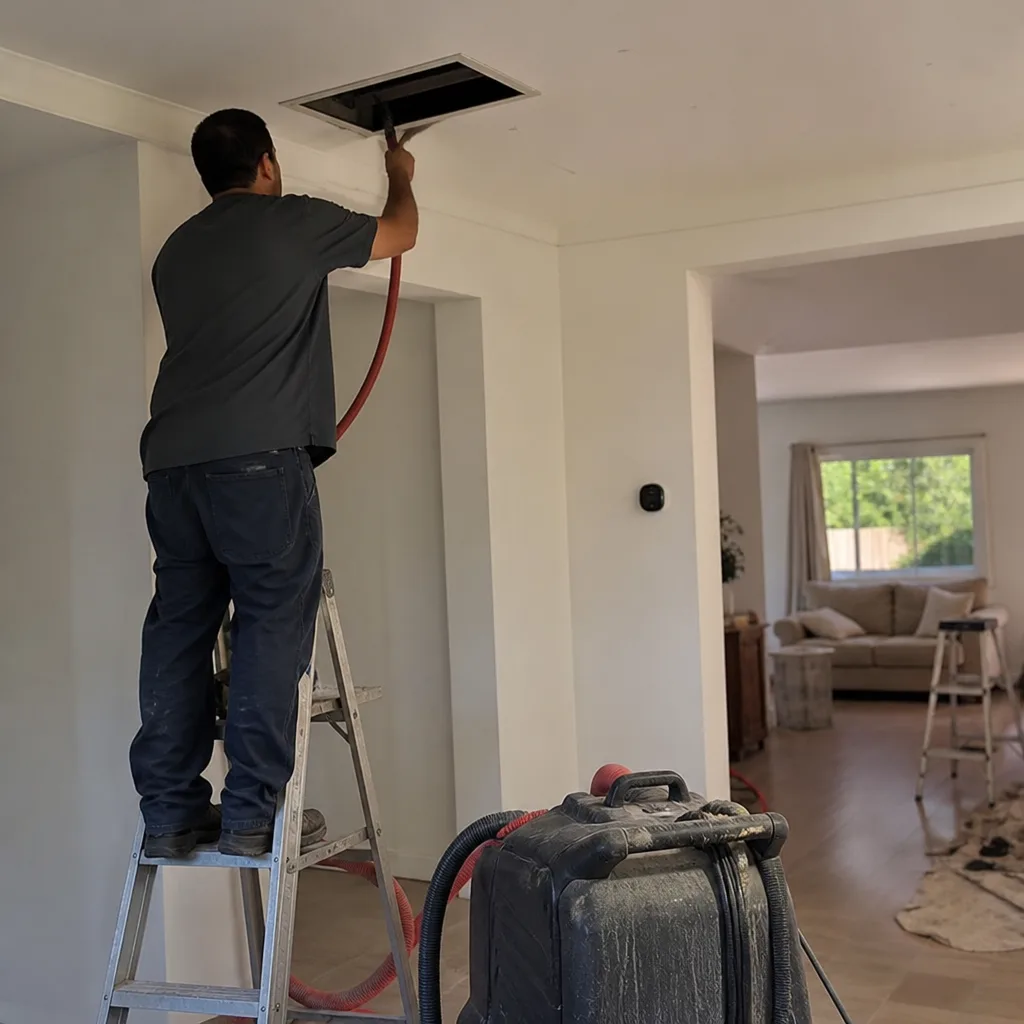 After
 Before
 After
 Before
 After