
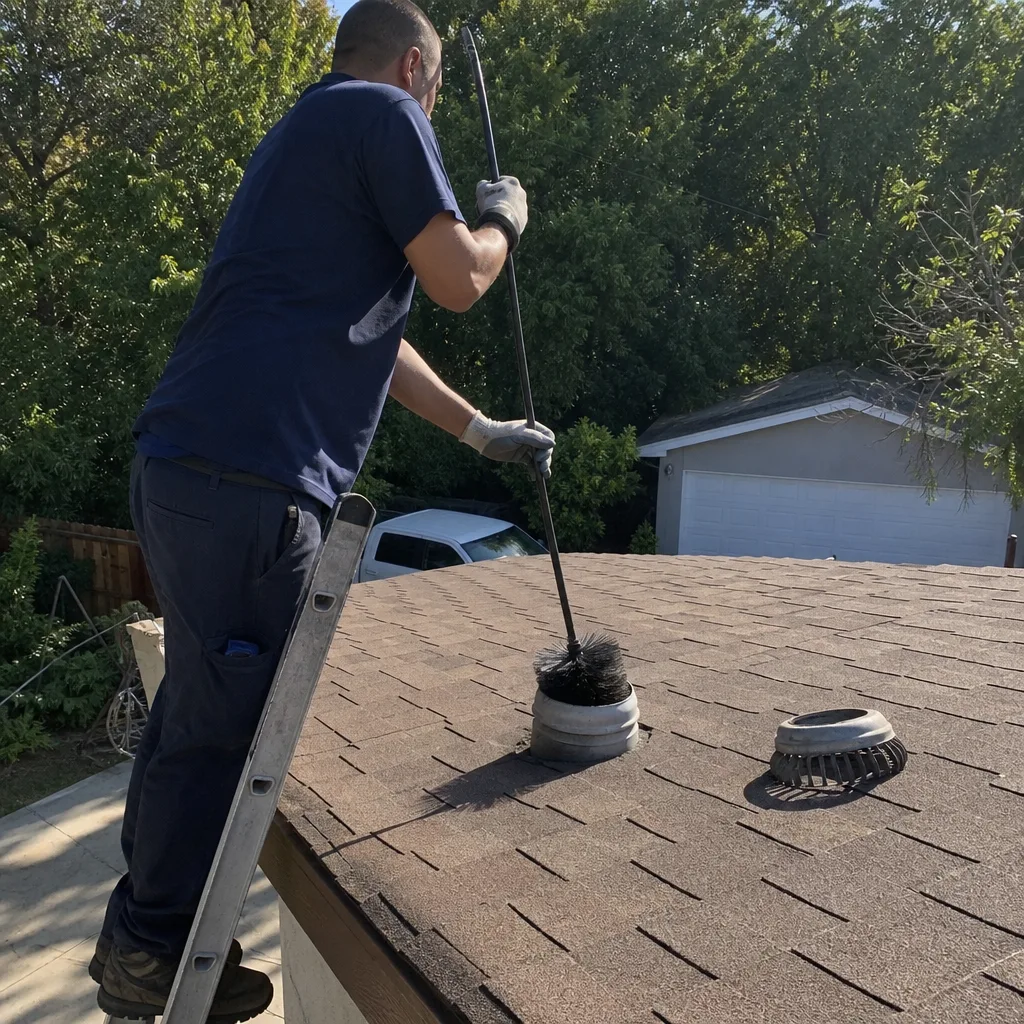
Last updated November 2, 2026
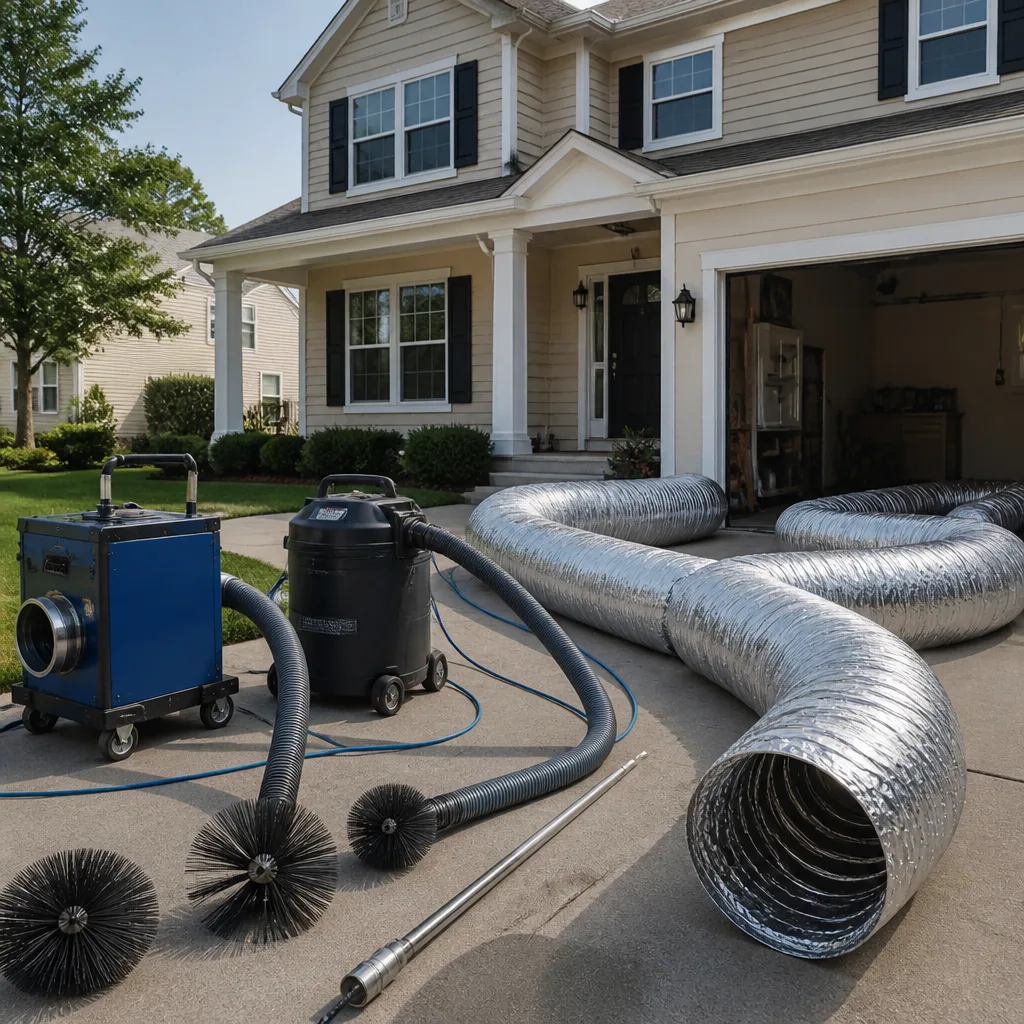 Whole-home duct cleaning
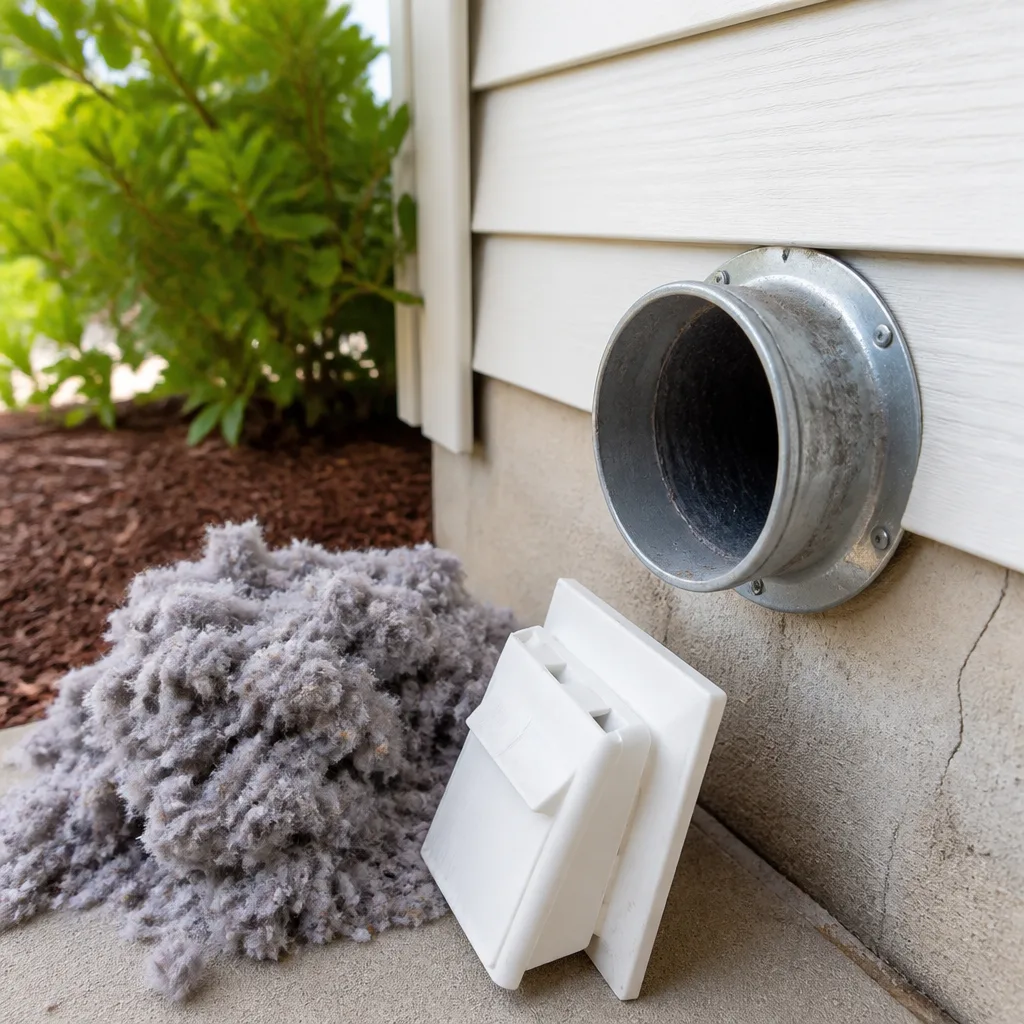 Dryer vent cleaning
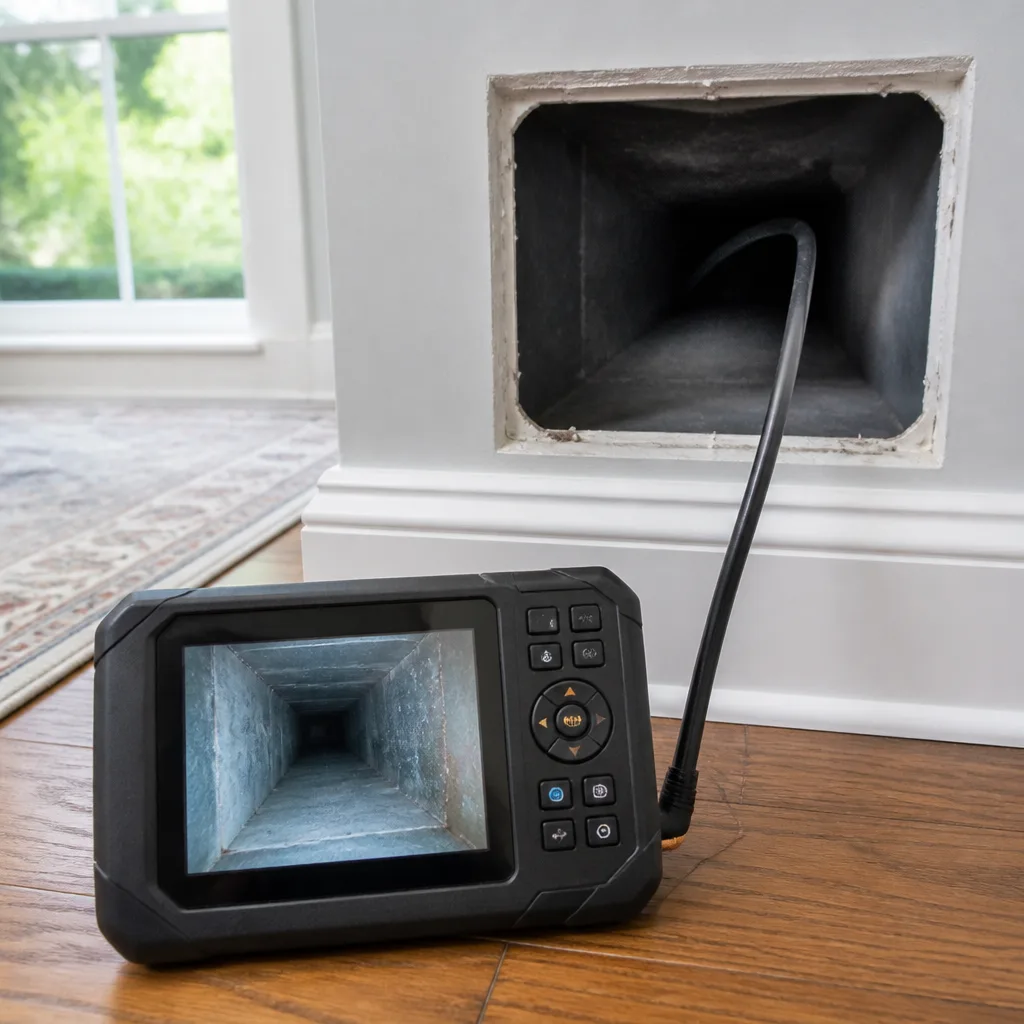 Camera inspection
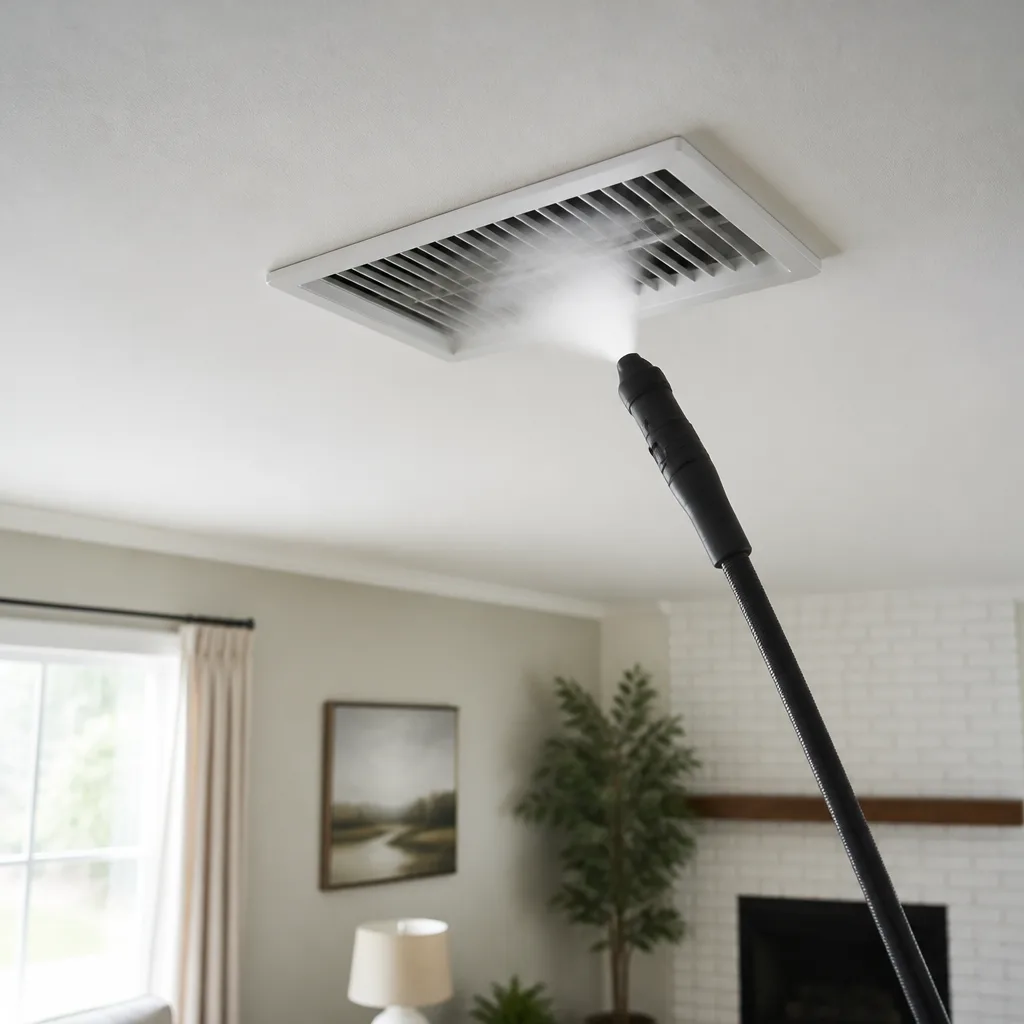 Sanitizing & deodorizing
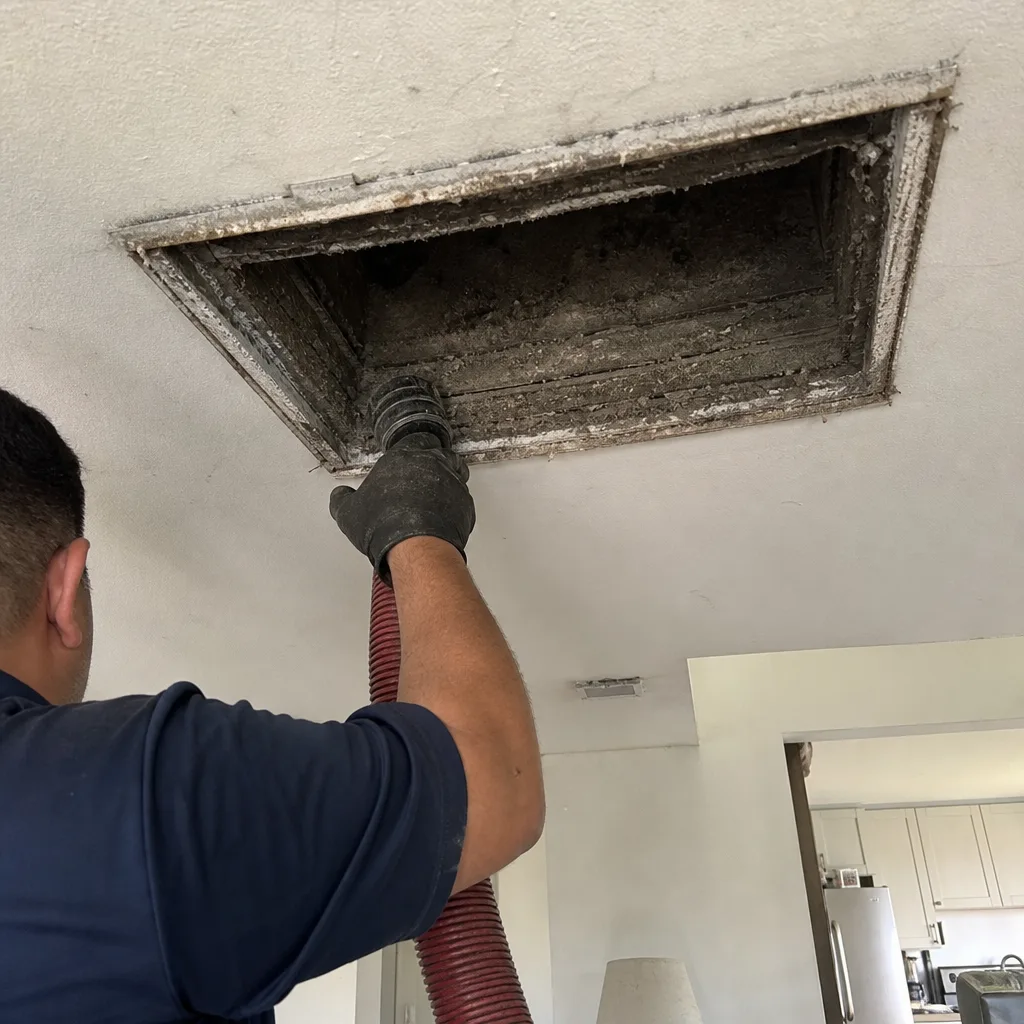
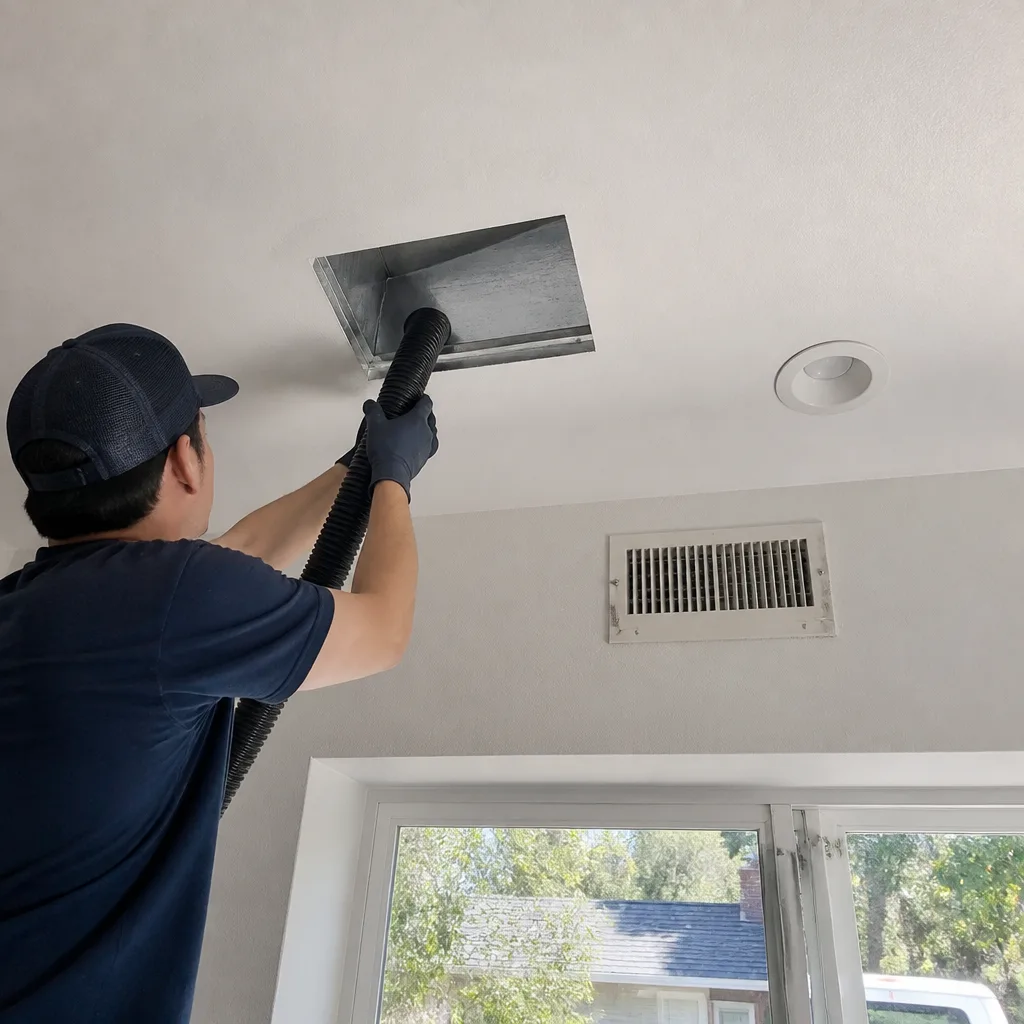
Whole-system duct and dryer vent check with before-and-after photos - you see exactly what came out of your vents
That "$99 whole-house special" is a bait ad - the real number appears once they are in your hallway, or the "clean" is a shop-vac at the register. We photograph the inside of your ducts before and after instead.
Seasonal Air Duct Cleaning Care for Tarzana: Year-Round Homeowner’s Guide
Most HVAC maintenance calendars you’ll find online are built for places with real winters. They talk about furnace prep in October, spring pollen seasons, and summer cooling tune-ups. Tarzana doesn’t play by those rules. Our HVAC systems run cooling mode roughly ten months a year, which means duct contamination accumulates at nearly double the rate those generic guides assume. This guide rebuilds the seasonal care calendar around what actually happens in Tarzana: wildfire smoke intrusions, Santa Ana wind-driven grit, and the long, unbroken cooling stretch that defines life in the west San Fernando Valley.
Quick Answer
Seasonal air duct cleaning in Tarzana should be scheduled around three distinct local stressors rather than a traditional four-season calendar. Most Tarzana homes benefit from a professional duct cleaning every 2 to 3 years, with the ideal low-use window falling between January and March, before cooling demand returns. Homes affected by wildfire smoke events or Santa Ana wind-driven debris may need inspection and cleaning on a faster cycle.
Styles & brands we work with
- Whole-home duct cleaning
- Dryer vent cleaning
- Camera inspection
- Sanitizing & deodorizing
Table of Contents
- Why Tarzana’s Climate Demands a Different Duct Care Calendar
- June Through September: The Extended Cooling Stretch
- October Through December: Santa Ana Wind Protocol
- Wildfire Smoke Events: What Actually Matters
- January Through March: The Optimal Cleaning and Repair Window
- Year-Round Localized Contamination Sources in Tarzana
- Common Mistakes to Avoid
- When to Call a Professional
Why Tarzana’s Climate Demands a Different Duct Care Calendar
Tarzana sits in the southwestern San Fernando Valley, where summer temperatures routinely cross 95 degrees and the cooling season stretches from April through October. That’s seven solid months of the blower running daily, pulling conditioned air through the return system and pushing it back through supply ducts. Every hour that air moves, it carries whatever is suspended in your home: fine dust, pet dander, cooking particulates, and whatever the Santa Anas pushed through your window seals.
The standard advice for temperate climates assumes roughly five months of heavy HVAC use per year. Tarzana homeowners run their systems nearly twice that. The practical result is that the same 2 to 3 year cleaning interval recommended elsewhere translates to roughly double the particulate loading in a Tarzana duct system over the same period. If you’ve been following a maintenance schedule written for a house in Ohio, you’re likely behind on what your ducts actually need.
There’s another factor most guides miss: the Valley’s temperature inversions. During summer months, the marine layer that keeps coastal Los Angeles mild rarely penetrates as far inland as Tarzana. Stagnant air means outdoor particulates settle closer to the ground, where they get pulled into your return system every time the AC cycles on. The combination of long run times and ground-level particulate concentrations makes air duct cleaning in Tarzana a different equation than it is in coastal communities.
We’ve inspected ductwork in Tarzana homes that had been cleaned just eighteen months prior and found accumulation levels we’d normally associate with three to four years of use in other Southern California markets. That’s not a sales line. It’s what the geography does.
June Through September: The Extended Cooling Stretch
From June through September, your HVAC system is not resting. In Tarzana, it’s common for compressors to cycle on before 9 a.m. and continue intermittently until after midnight. That’s fifteen-plus hours of daily air movement through your ductwork during peak season. The implications for duct maintenance are direct and measurable.
How extended cooling cycles affect duct contamination:
- Higher filter loading: The more air moves through the return, the faster the filter captures particulates. A filter rated for 90 days in a coastal home may need replacement in 30 to 45 days in a Tarzana summer.
- Return-side pull: Long run times create sustained negative pressure at return grilles, pulling in dust from flooring, pet areas, and the fine Valley soil that tracks into homes.
- Supply-side deposition: Particulates that pass the filter, or enter through small duct leaks, get deposited on duct walls during cooling cycles. In summer, the temperature differential between conditioned air and attic space causes moisture condensation at certain points, and that moisture makes duct interiors stickier for passing debris.
What Tarzana homeowners should do between June and September:
- Check filters monthly, not quarterly. In peak cooling season, a 1-inch fiberglass or basic pleated filter may clog within weeks. If you hold it up to a light and can’t see through it, it’s done. A clogged filter forces the blower to work harder and bypasses air around the filter frame, pulling unfiltered air into the duct system.
- Inspect return grilles for visible accumulation. Use a flashlight. If you see fuzzy buildup on the grille slats or the wall around the return, that’s what your ducts are swallowing. Vacuuming the grille weekly during peak season reduces the load.
- Watch for airflow changes. If certain rooms feel stuffier in August than they did in June, that’s often the first sign of duct restriction or a developing leak. Reduced airflow means longer run times, which accelerates the contamination cycle.
- Consider a filter upgrade during summer months. A higher MERV pleated filter captures more of the fine particulates that otherwise move into your ductwork. Check your system’s documentation for the maximum MERV rating the blower can handle without excessive static pressure. Some Tarzana systems running original builders’ blowers can’t handle above MERV 11, and pushing too high a rating can actually reduce airflow and strain the motor.
We run Air Duct Cleaning Tarzana home inspections year-round, and the highest contamination readings we see are almost always in late September and October, after a full Valley summer of heavy cycling. If you’re going to schedule a cleaning, the data points to timing it after this stretch, not before it.
October Through December: Santa Ana Wind Protocol
Santa Ana winds are Tarzana’s defining weather event. The hot, dry offshore winds that funnel through the Santa Susana Pass and down into the Valley can gust 40 to 60 miles per hour for days at a time. They carry fine dust, pollen, and micro-particulates from the mountains and high desert directly into residential areas. For duct systems, Santa Ana season is an annual stress test.
What Santa Anas do to residential ductwork:
- Pressure-driven intrusion: Sustained wind against a home’s exterior creates positive pressure zones that push outdoor particulates through every small gap in window frames, door seals, and even wall outlets. Once inside, the HVAC system’s return pulls that debris toward the ductwork.
- Attic penetration: Many Tarzana homes have attic ventilation designed for normal Valley conditions, not sustained 50 mph gusts. During strong Santa Ana events, wind-driven dust enters attics through ridge vents and eave gaps, where it can be drawn into duct joints, especially on the return side.
- Duct joint stress: Repeated high-wind cycles create pressure differentials across attic duct runs. Over time, this can loosen taped joints and pull sections apart slightly, creating new entry points for attic dust even after the winds die down.
Santa Ana wind duct care protocol:
- After any sustained wind event, check return grilles. If you tap the grille and a puff of fine dust comes out, or if you see a film of tan-colored powder on nearby surfaces, the winds drove particulates into your return system.
- Inspect attic access points for dust plumes. Open the attic hatch and look for disturbed insulation or fresh dust trails near duct runs. Santa Ana winds can shift loose-fill insulation, and if that material is disturbed near a duct joint, it gets pulled inside when the HVAC cycles on.
- Change the filter after wind events. A single strong Santa Ana episode can load a filter with the same particulate volume as a month of normal use. Run the system in fan-only mode for 30 minutes after changing the filter to move any suspended dust toward the filtration point.
- Schedule a duct inspection if you notice new dust patterns. If rooms that were previously clean suddenly show fine dust accumulation on furniture within days of a wind event, that’s a sign the pressure differentials opened a pathway into the duct system. We see this pattern consistently in Tarzana homes built in the 1970s and 1980s, when original duct tape seals are decades past their service life and give way during high-wind cycles.
Santa Ana season is also the right time to confirm your air duct repair in Tarzana needs are addressed properly. Wind-driven pressure cycles expose weak joints that normal weather never tests. A duct that holds fine in calm conditions may separate enough during a 50 mph gust event to pull in attic air for the rest of the year. We clean duct systems with Rotobrush and Nikro equipment, but when we find separation or disconnection during cleaning, we repair it right there. Wind damage doesn’t fix itself, and a taped-over joint is a temporary fix that will fail again in the next event.
Wildfire Smoke Events: What Actually Matters
Tarzana sits in a region where wildfire smoke has become a recurring seasonal reality. When smoke blankets the Valley, homeowners understandably worry about their duct systems. But the honest technical answer is more nuanced than most guides admit: during an active smoke event, duct cleaning is not the priority. Filtration is.
What wildfire smoke does inside a duct system:
Smoke particles are extremely fine, typically 0.4 to 0.7 microns, and they behave differently in a duct system than the larger household dust we normally clean. During an active smoke event, the most effective protection is capturing those particles at the filter before they enter the supply side. Once smoke particulates pass through the return and into the ductwork, some will deposit on duct surfaces, but the majority will either pass through to living spaces or be captured by the filter. The particle size means they don’t accumulate on duct walls the way household dust does.
During an active smoke event:
- Run the system fan continuously, even if cooling isn’t needed. The fan moves air through the filter repeatedly, gradually scrubbing indoor air. Set the fan to “on” rather than “auto.”
- Install the highest MERV filter your system can handle. If you have a system we’ve assessed for filter capacity, use the highest rating we’ve recommended. HEPA filtration at the air handler matters more than anything else during smoke events, and whole-system filtration solutions from brands like Honeywell and Guardsman are designed for exactly this application.
- Do not schedule duct cleaning during an active smoke event. Running professional cleaning equipment while outdoor smoke is at its peak pulls contaminated air into your home, which defeats the purpose. Wait until air quality returns to normal.
After the smoke clears:
- Replace the filter immediately. Even a high-MERV filter that handled the smoke load is now spent. Installing a fresh filter before resuming normal operation is the single most important post-event step.
- Run the fan on high for a few hours. This moves remaining suspended particles toward the new filter.
- Inspect return grilles and supply diffusers for gray film. Smoke residue can deposit on the visible portions of the system. If you see dark streaks or a fine gray powder at diffuser edges, that indicates the smoke event overwhelmed filtration enough to deposit on duct surfaces, and a professional inspection is warranted.
We see the difference between homes with proper filtration and homes running basic fiberglass filters during smoke events. The homes with real filtration come through with system interiors that look essentially unaffected. The homes with minimal filtration sometimes show gray film buildup on the first few feet of supply duct nearest the air handler. That condition is cleanable, but it’s avoidable, and the delta is entirely about what was on the filter rack when the smoke rolled in.
January Through March: The Optimal Cleaning and Repair Window
If you’re going to schedule professional duct cleaning or repair work in Tarzana, January through March is the window. Here’s why it works technically and logistically:
Cooling demand drops during these months. Tarzana still runs AC periodically in January and February, but the system operates at a fraction of summer duty. That reduced cycle time means dust suspended in the ductwork is less mobile, and cleaning removes material that would otherwise be re-distributed during active cooling cycles.
Attic access is tolerable. Summer attic temperatures in Tarzana can exceed 140 degrees, which makes duct access physically demanding for technicians and can affect the behavior of flexible duct materials during cleaning. Winter attic temperatures, typically 60 to 80 degrees, allow technicians to work more carefully and methodically. We run Rotobrush and Nikro cleaning systems that are effective in any season, but the working conditions in winter months allow for slower, more attentive passes over difficult sections.
Repair work has time to cure and settle. When we repair a disconnected duct section or replace a damaged liner, the system benefits from a period of low-demand operation while the work beds in. Scheduling repairs during summer, when the system is under daily strain, risks re-stressing a fresh repair before it’s fully set. A January repair has months of light duty ahead before the summer load returns.
The fall contamination load is fully deposited. By January, the Santa Ana dust and any wildfire-season residue from the prior months has settled onto duct surfaces where it will remain until disturbed. Cleaning in November removes only part of the seasonal load, because the winds are still active. Cleaning in February removes everything accumulated through the entire fall and winter period in a single pass.
Our recommendation for Tarzana homeowners: schedule professional duct cleaning during the January-to-March window every 2 to 3 years, and coordinate any known repair needs with that same service visit. We clean the system, identify any structural issues, and repair what’s broken in a single visit. That’s the efficient model, and it aligns with the actual seasonality of how Tarzana duct systems accumulate contamination.
Year-Round Localized Contamination Sources in Tarzana
Most generic duct cleaning guides treat the home as a sealed box with a defined contamination load. Tarzana’s housing stock and landscape introduce several localized sources that rarely appear in those guides, yet account for a meaningful share of the material we remove from local ductwork.
Pool equipment and duct contamination:
A large share of Tarzana homes have backyard pools, and pool equipment, particularly DE filters and older sand filters, generates fine particulate that behaves like atmospheric dust but with different chemistry. Diatomaceous earth from DE filters is microscopic and sharp-edged, and when it drifts into a home near a pool equipment pad, it abrades filter media and deposits on duct surfaces. If your HVAC return is on the side of the house facing the pool equipment, you’re pulling pool filtration dust year-round, not just in swimming season.
Landscaping blowers:
Tarzana’s mature landscaping means weekly or biweekly gardener visits, and the standard tool for those visits is a gas-powered blower. Those blowers move fine Valley soil, decomposed granite, and plant debris into the air where it drifts toward every nearby opening, including return grilles placed low on exterior walls. If your return is on a wall facing a regularly blown yard, you’re loading the duct system with landscape particulates on whatever schedule your gardener keeps, which is typically once a week, ten months a year.
Attached garages:
Many Tarzana homes were built with attached garages that share wall cavities with conditioned living space, and some have HVAC returns or supply runs passing through garage ceilings or walls. Garages in the Valley collect a specific mix of contaminants: brake dust, tire particulates, pesticide containers, paint and solvent residue, and whatever the Santa Anas blow under the door. When a duct run passes through garage space and has even a small leak at a joint, that garage air gets pulled into the system every time the HVAC runs. We find this in Tarzana homes regularly, especially those where the garage has been used as a workspace or storage for household chemicals.
What this means practically:
These localized sources mean that two identical Tarzana homes, side by side, can have substantially different duct contamination profiles based on what faces which direction, where the pool equipment sits, and how the garage is used. A home with a south-facing return near a blown landscape bed will load up years faster than a home with an elevated return on the opposite side. When we inspect ducts in Tarzana, we look at these property-specific factors because they determine both the cleaning interval and whether repair work is needed to seal entry points that are pulling contamination in.
Common Mistakes to Avoid
- Following a spring/fall maintenance calendar written for four-season climates. Tarzana’s system demands are continuous, and the contamination cycle follows the Santa Ana and cooling seasons, not a generic “spring cleaning” schedule. Aligning duct care with actual local conditions saves money and prevents unnecessary work.
- Running the HVAC during a wildfire smoke event with a basic fiberglass filter. A cheap filter does little to capture smoke particles, meaning the duct system and living spaces both receive the full particulate load. A quality pleated filter or the highest MERV rating your system can handle is basic protection during smoke season.
- Assuming visible dust on return grilles is just a housekeeping issue. Dust on the outside of a grille usually indicates the same material is moving inside the return duct. Fixing the symptom by wiping the grille without addressing what’s downstream leaves the system loading up unseen contaminants.
- Scheduling duct cleaning immediately after a Santa Ana wind event. The winds may recur within weeks, and whatever gets pulled in during the next event will contaminate a just-cleaned system. Wait until the wind season settles, typically January, before investing in professional cleaning.
- Using visual inspection alone to decide if ducts need cleaning. Duct interiors accumulate contamination that isn’t visible from the grille, especially in the main trunk lines. The material we pull from Tarzana ducts often has no visible indication at the return, which is why professional inspection with proper equipment matters.
- Treating duct cleaning and duct repair as the same service. They are not. A clean-only company will clean around leaks and disconnections, leaving the system pulling attic air and recontaminating within months. Full-system solutions pair cleaning with repair, because air duct repair in Tarzana addresses the source. We clean with Rotobrush and Nikro systems, and when we find damage during cleaning, we fix it, because cleaning around a leak is wasted work.
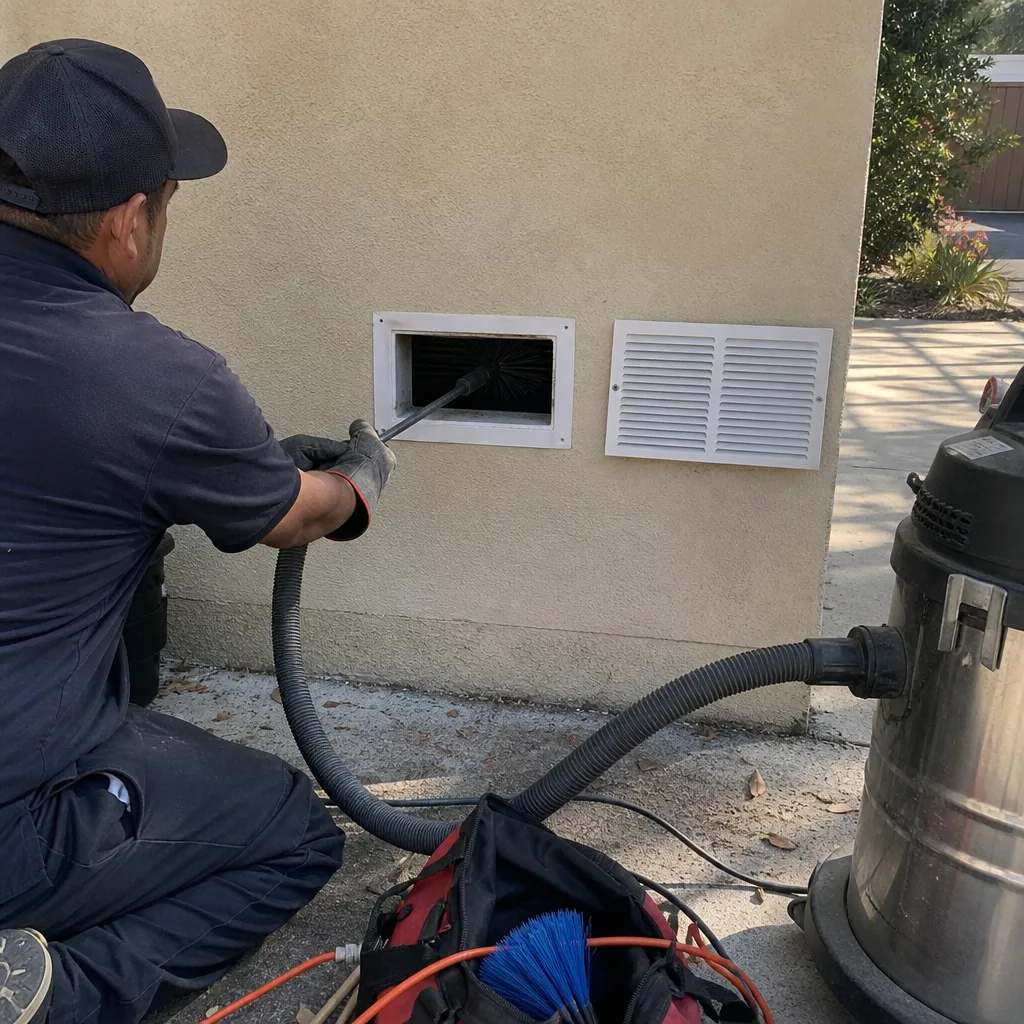
- Ignoring dryer vents until performance drops noticeably. Dryer vent fires are a leading cause of residential fires, and Tarzana’s long cooling season means many homes have dryers positioned in interior spaces with long vent runs that accumulate lint faster than short exterior-wall vents. Dedicated dryer vent cleaning in Tarzana is a fire-safety measure, not a convenience service.
When to Call a Professional
Some duct conditions are visible and obvious. Others are not. If you notice inconsistent airflow between rooms, visible dust accumulation within days of cleaning, a persistent musty or stale odor when the system runs, or attic dust trails near ductwork, that’s the moment to bring in a specialist rather than continuing to run the system and hope the issue resolves. The same applies after significant wildfire smoke events if you find gray film at supply diffusers, and after Santa Ana wind seasons if new dust patterns appear in rooms that were previously stable. Air Duct Cleaning in Tarzana runs professional-grade Rotobrush and Nikro systems with Abatement Technologies negative-air containment, so loosened debris doesn’t recirculate into your living space during the cleaning process. Air Duct Cleaning Tarzana offers free estimates in Tarzana. Call (866) 472-7239 to schedule an inspection.
See the difference
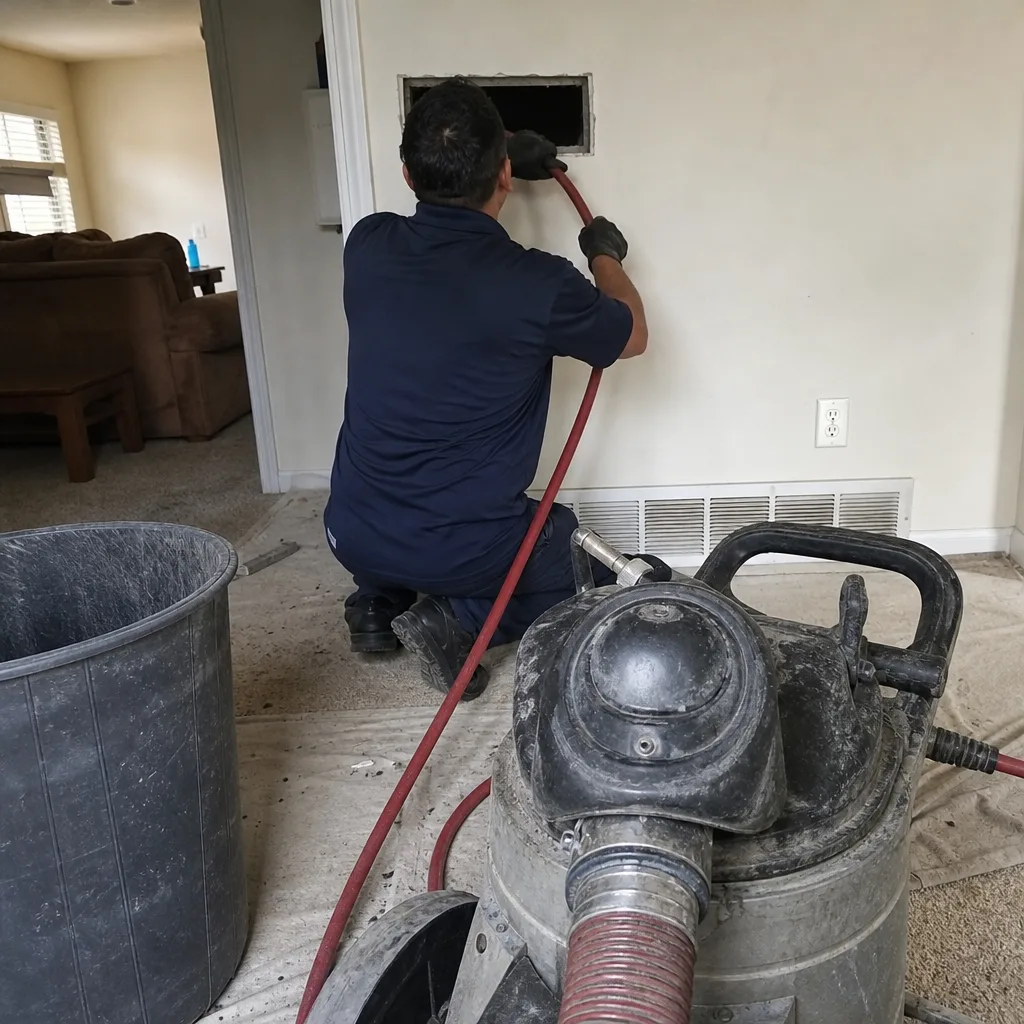 Before
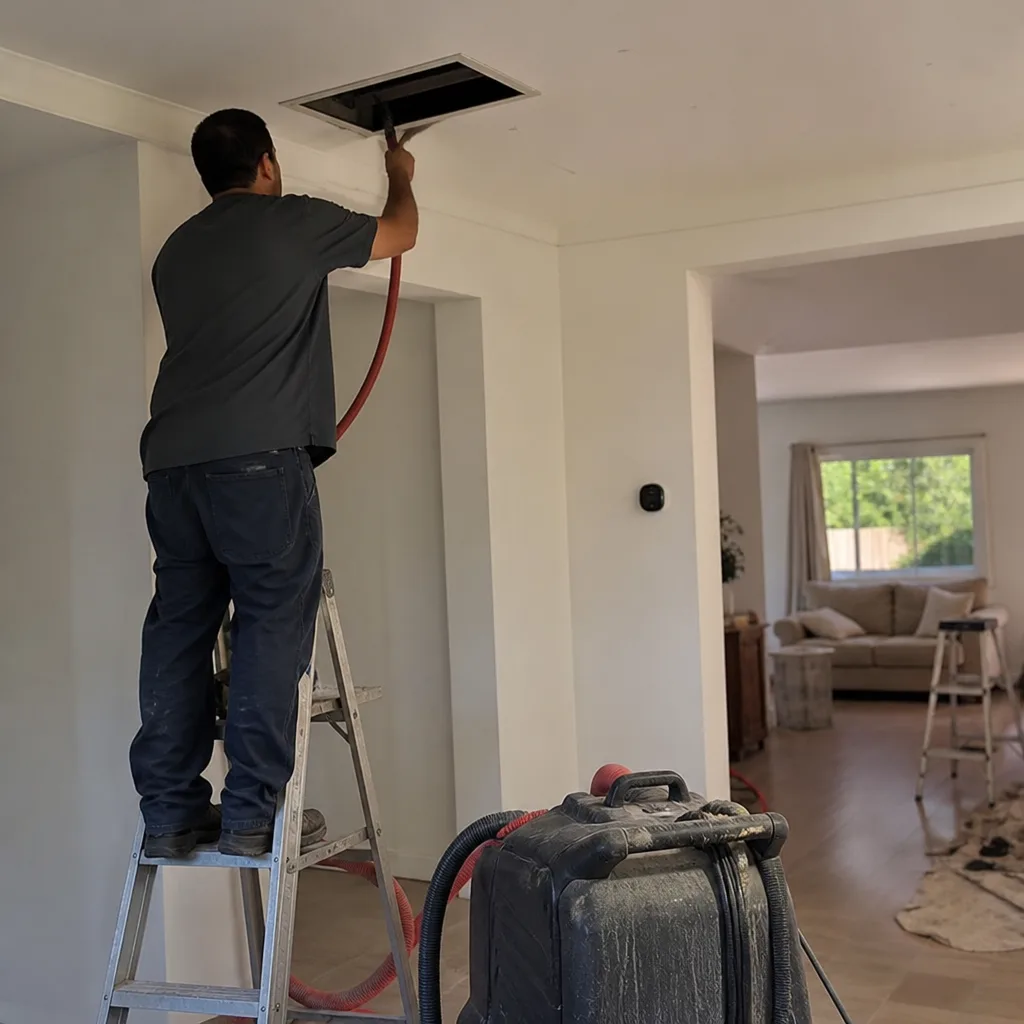 After
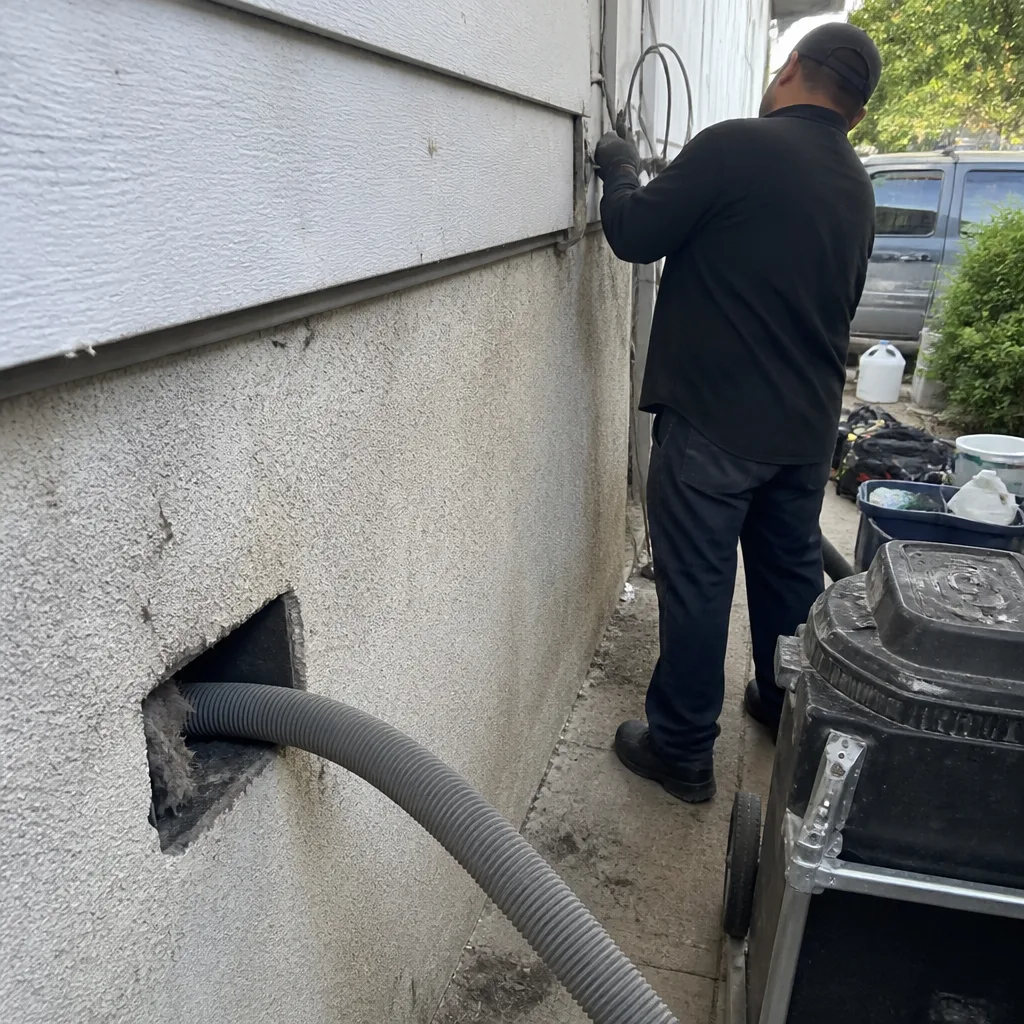 Before
 After
 Before
 After
Frequently Asked Questions
Most Tarzana homes should schedule professional air duct cleaning every 2 to 3 years, due to the extended cooling season and the annual Santa Ana wind cycle loading more particulates into duct systems than typical for other Southern California communities. Homes with pool equipment near returns, heavily used attached garages, or repeated wildfire smoke exposure may need more frequent service.
Wildfire smoke does not typically cause permanent damage to duct materials, but it can leave fine gray residue on duct surfaces that requires professional cleaning to remove fully. The more important factor is what filter was in place during the event; homes running proper filtration typically show minimal or no duct surface impact after smoke clears.
Tarzana’s inland Valley location means longer cooling seasons, more days of stagnant air, and direct exposure to Santa Ana wind-driven particulates from the mountains and high desert. Coastal communities benefit from marine air that suppresses dust suspension; Tarzana gets the dust, and the continuous HVAC operation pulls it into the duct system.
Consumer vacuum equipment cannot reach the interior surfaces of main trunk lines and branch runs where contamination actually accumulates. Professional systems like the Rotobrush and Nikro platforms we operate use powered agitation and negative-air containment to remove material throughout the duct run, not just at the grille opening, and do so without recirculating loosened debris into living spaces.
Filters capture material passing through the return, but they don’t address particulates that enter through duct leaks, settle during low-use periods, or accumulate in sections downstream of the filter. In Tarzana’s continuous-use environment, filter replacement reduces the contamination rate but doesn’t eliminate it, and periodic professional cleaning remains necessary to remove what filtration can’t touch.
January through March is the optimal window for duct cleaning in Tarzana because cooling demand is lowest, attic temperatures are workable, and the full Santa Ana and cooling season contamination load has fully deposited and is ready to be removed in a single service. Scheduling during this window also allows any needed duct repairs to settle before summer load returns.
The Bottom Line
Tarzana’s duct systems do more work than most of the country’s, and they do it in an environment that actively pushes particulates into homes for much of the year. The practical response is not a rigid calendar of maintenance tasks, but an awareness of what your system is actually experiencing: seven months of heavy cooling, recurring Santa Ana wind events, occasional wildfire smoke, and property-specific contamination sources that most guides never mention. Clean the ducts when the local conditions say they need it, repair damage when it’s found, and keep proper filtration in place year-round. That’s the whole game, and it’s what keeps Tarzana duct systems moving clean air instead of Valley dust.
Written by the team at Air Duct Cleaning Tarzana, serving Tarzana since 2013.