
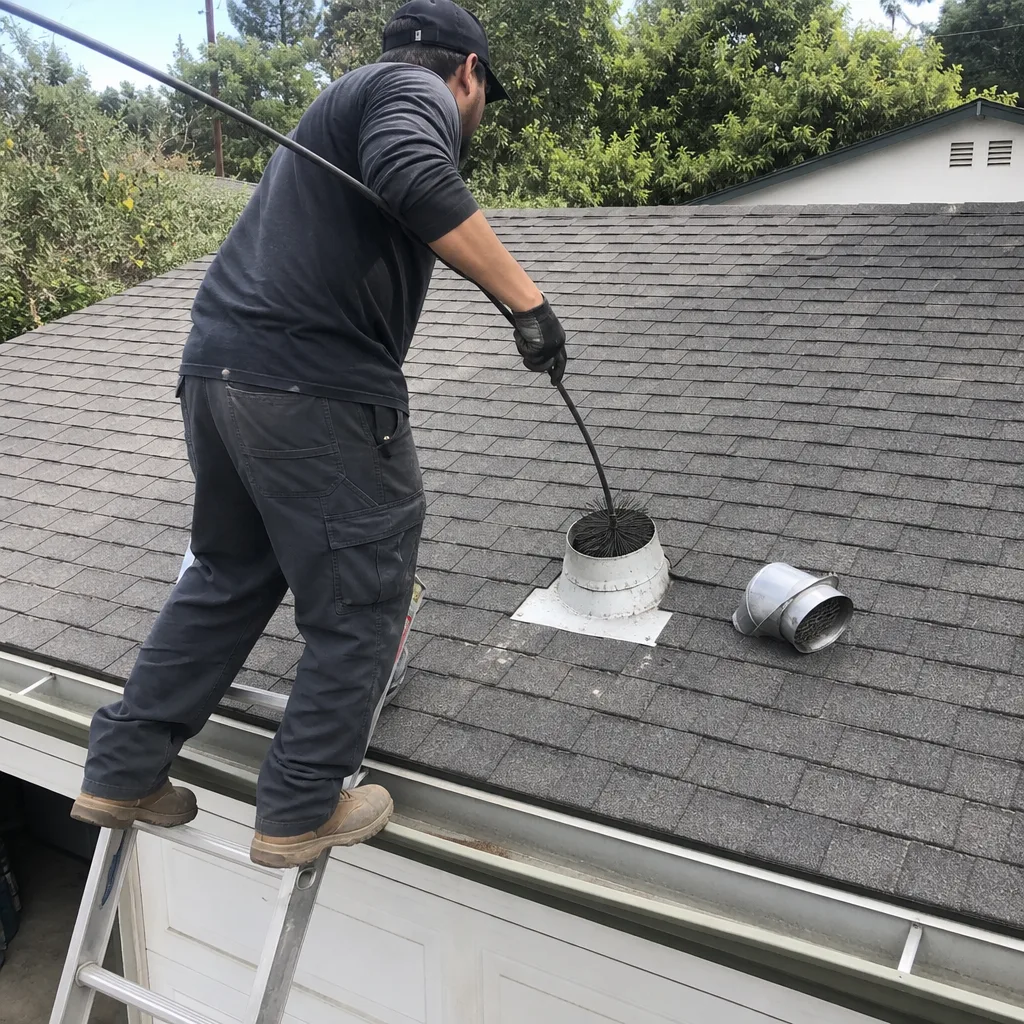
Last updated November 2, 2026
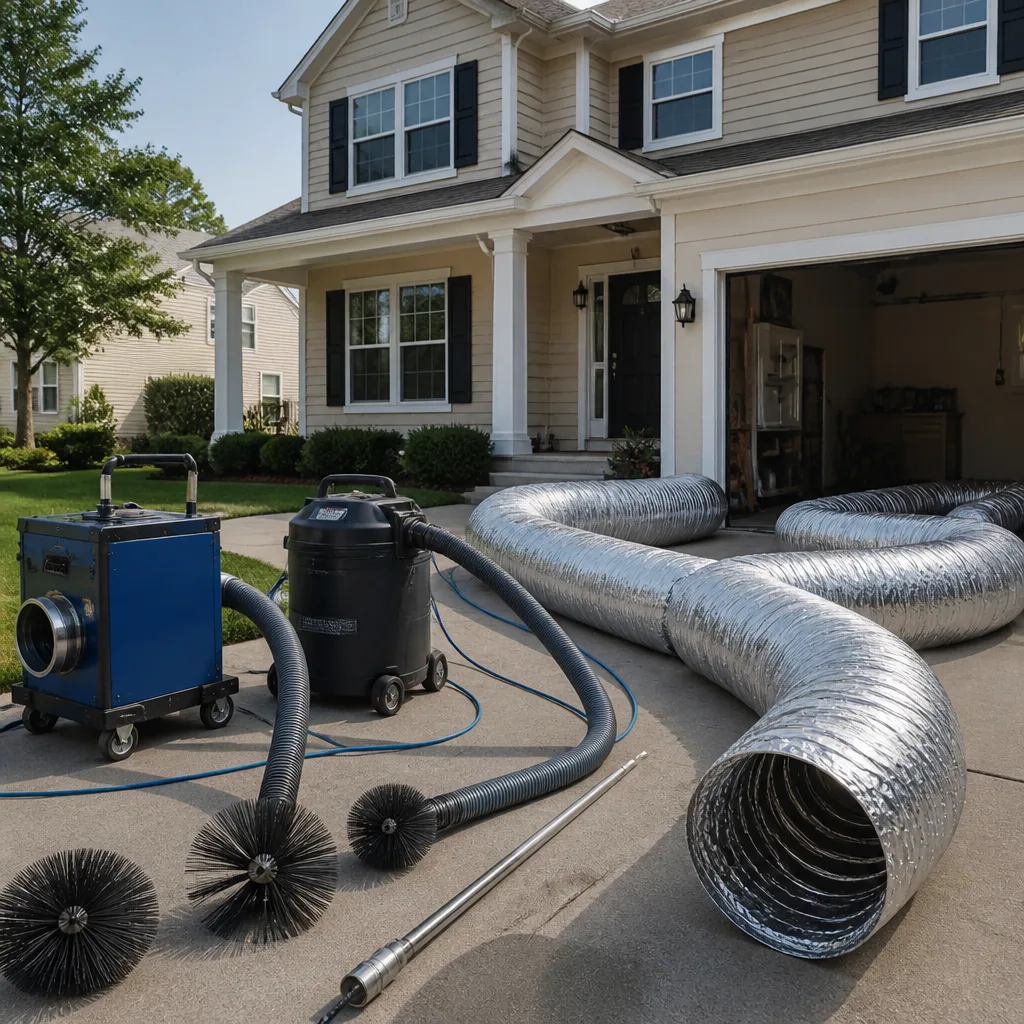 Whole-home duct cleaning
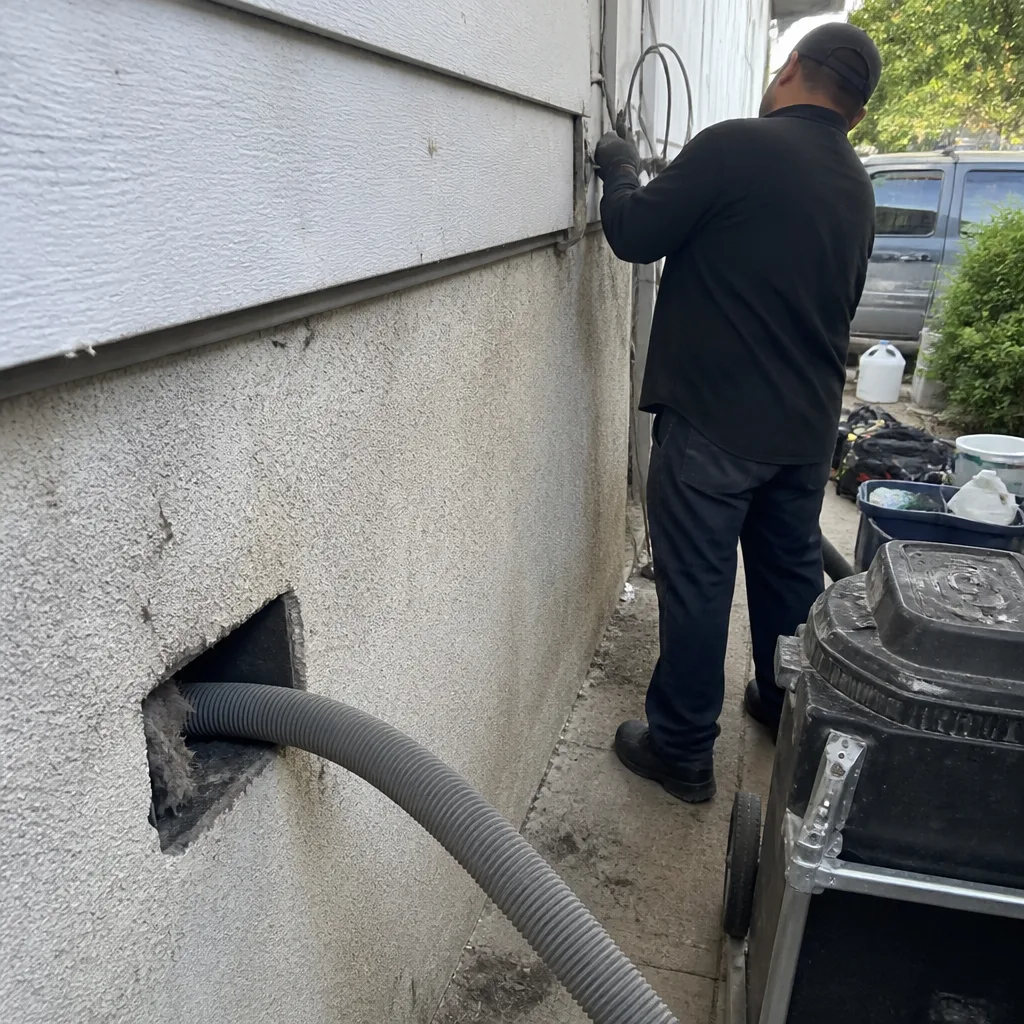
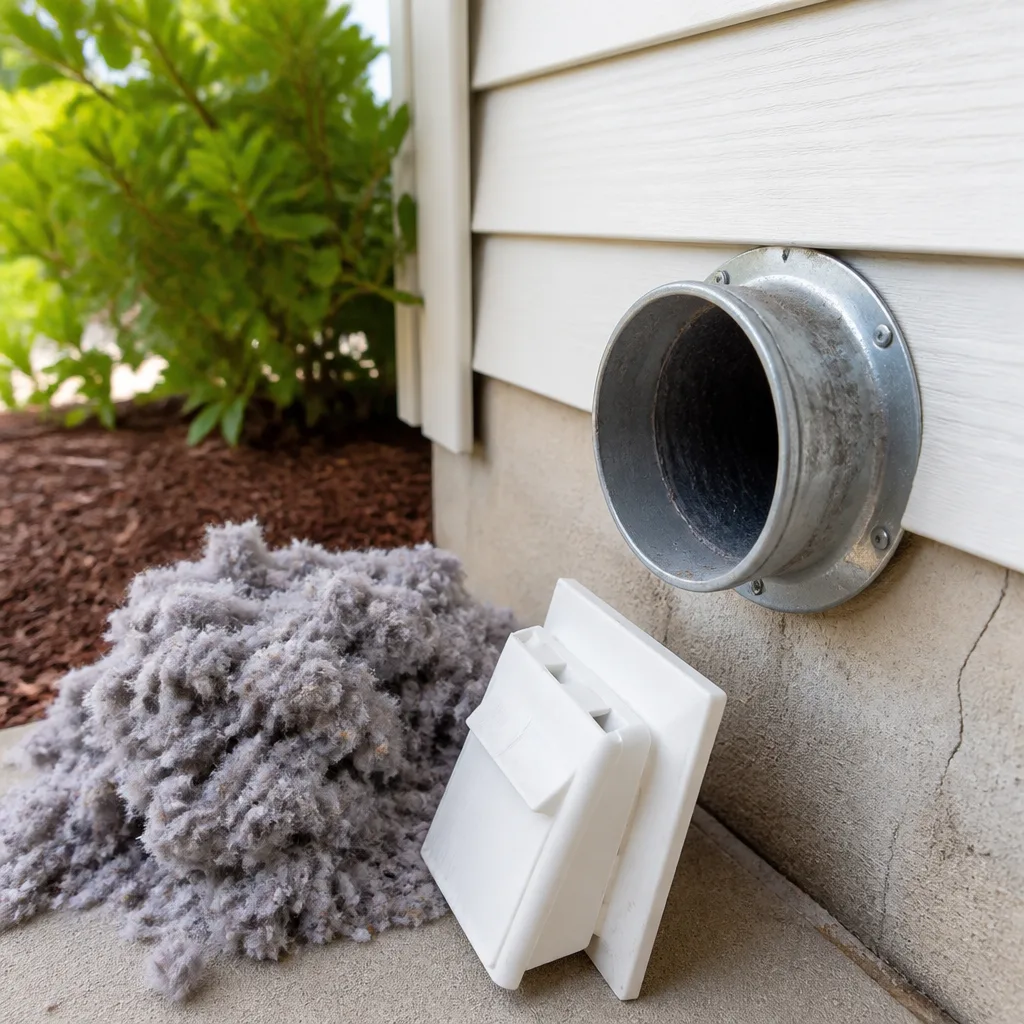 Dryer vent cleaning
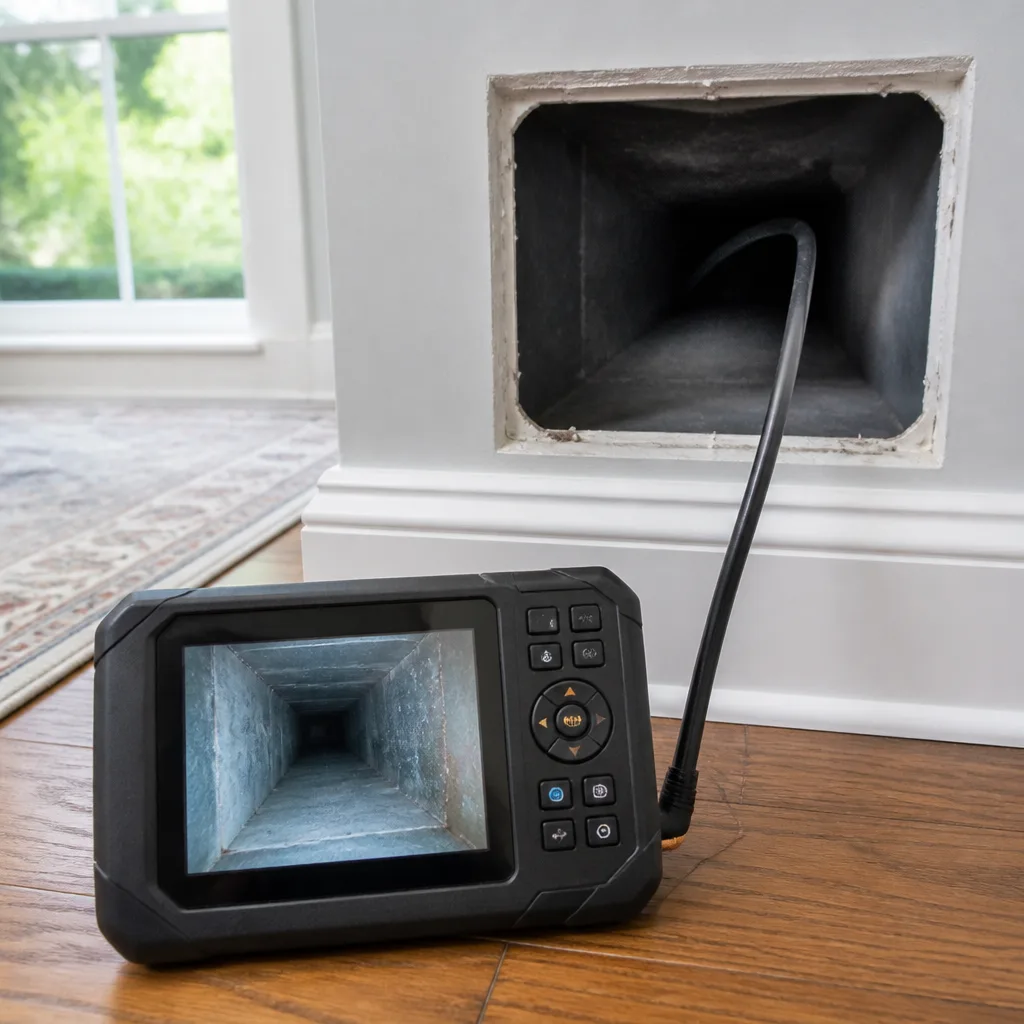 Camera inspection
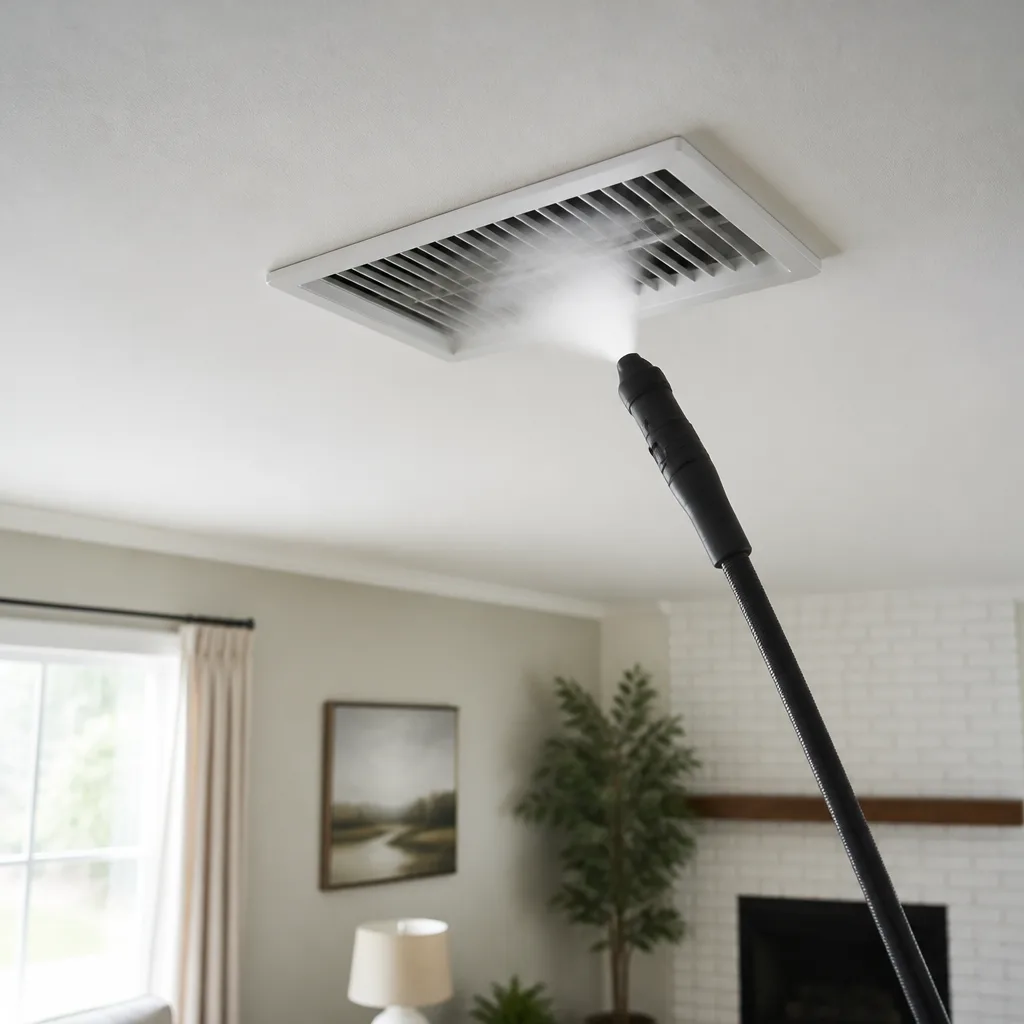 Sanitizing & deodorizing
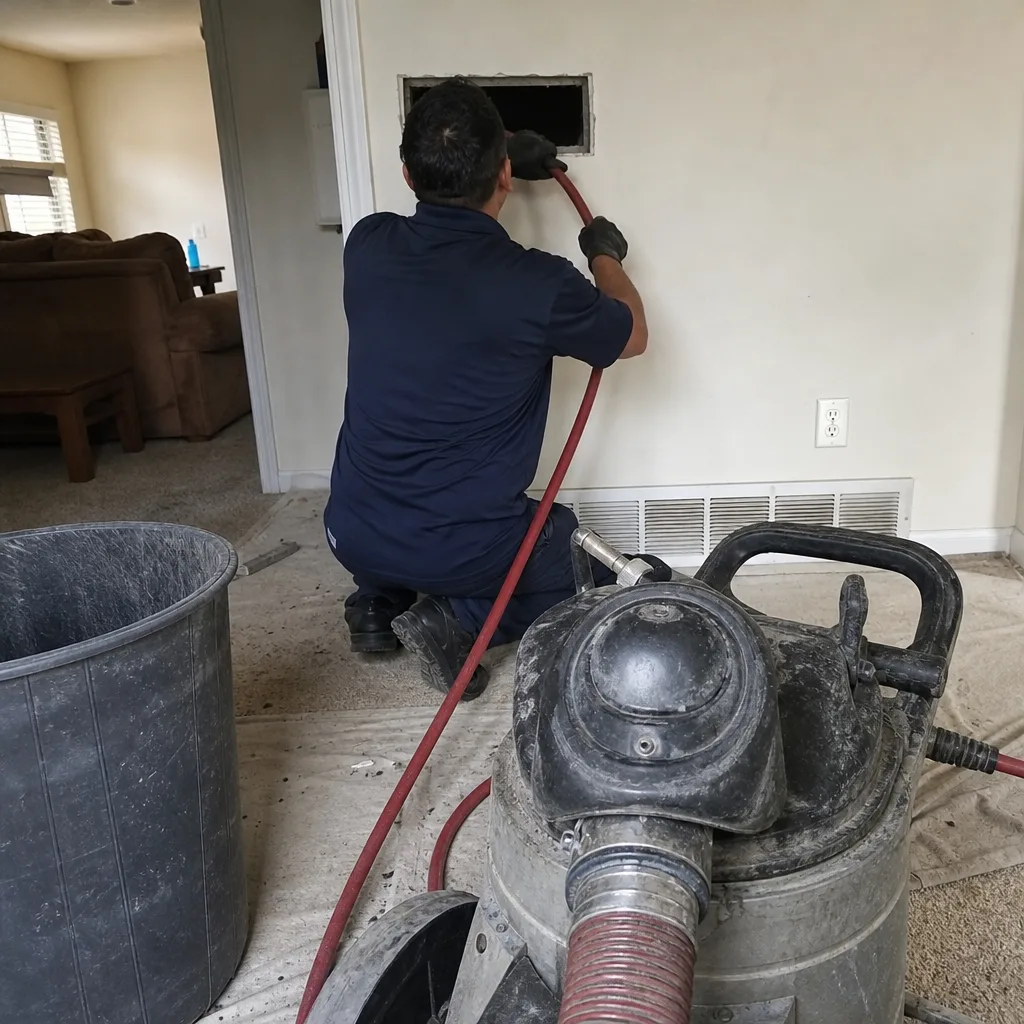
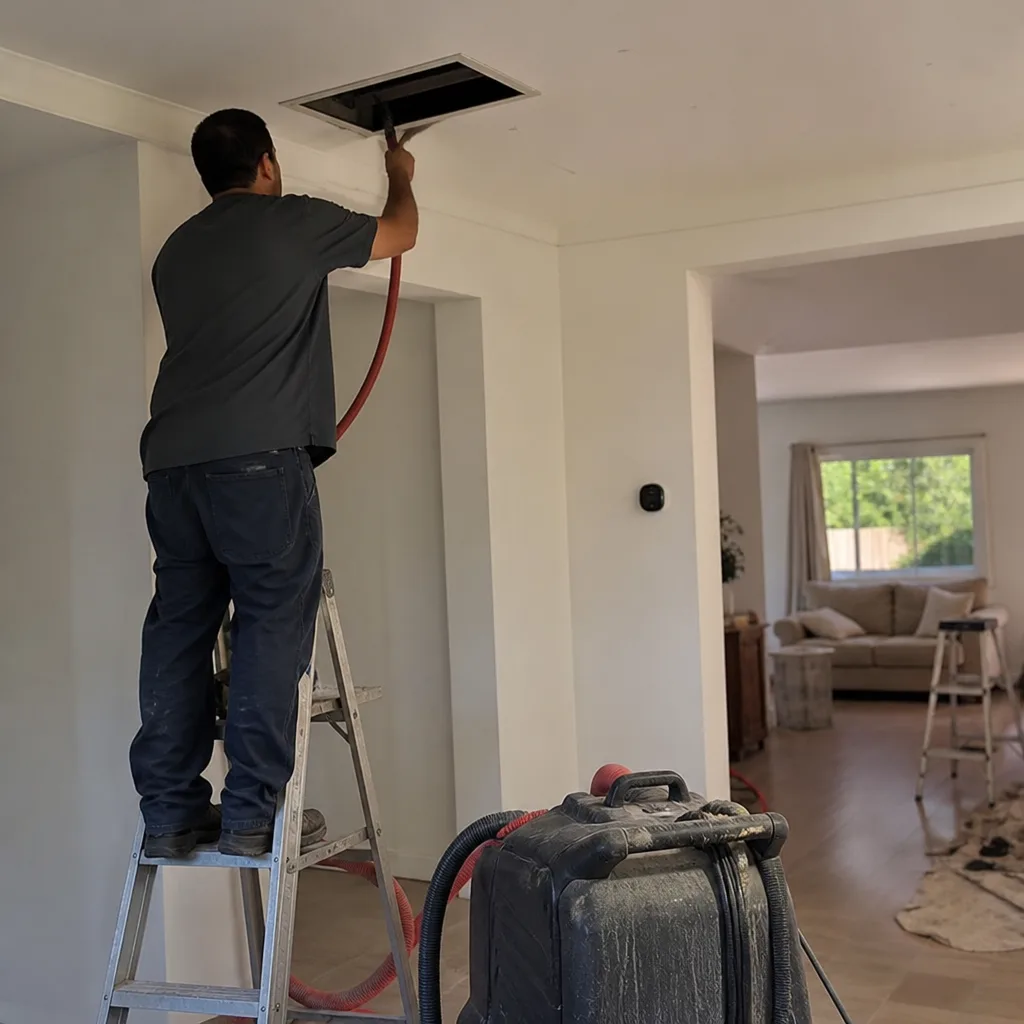
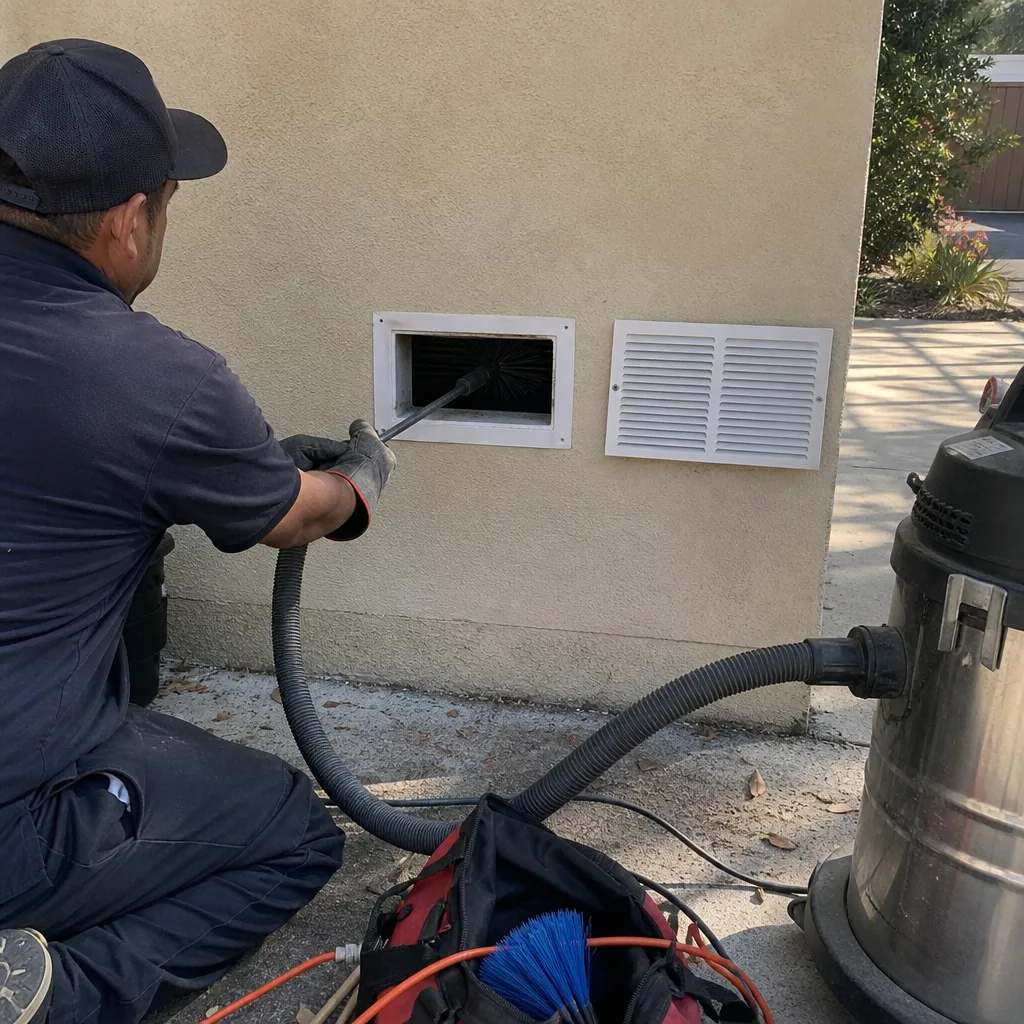
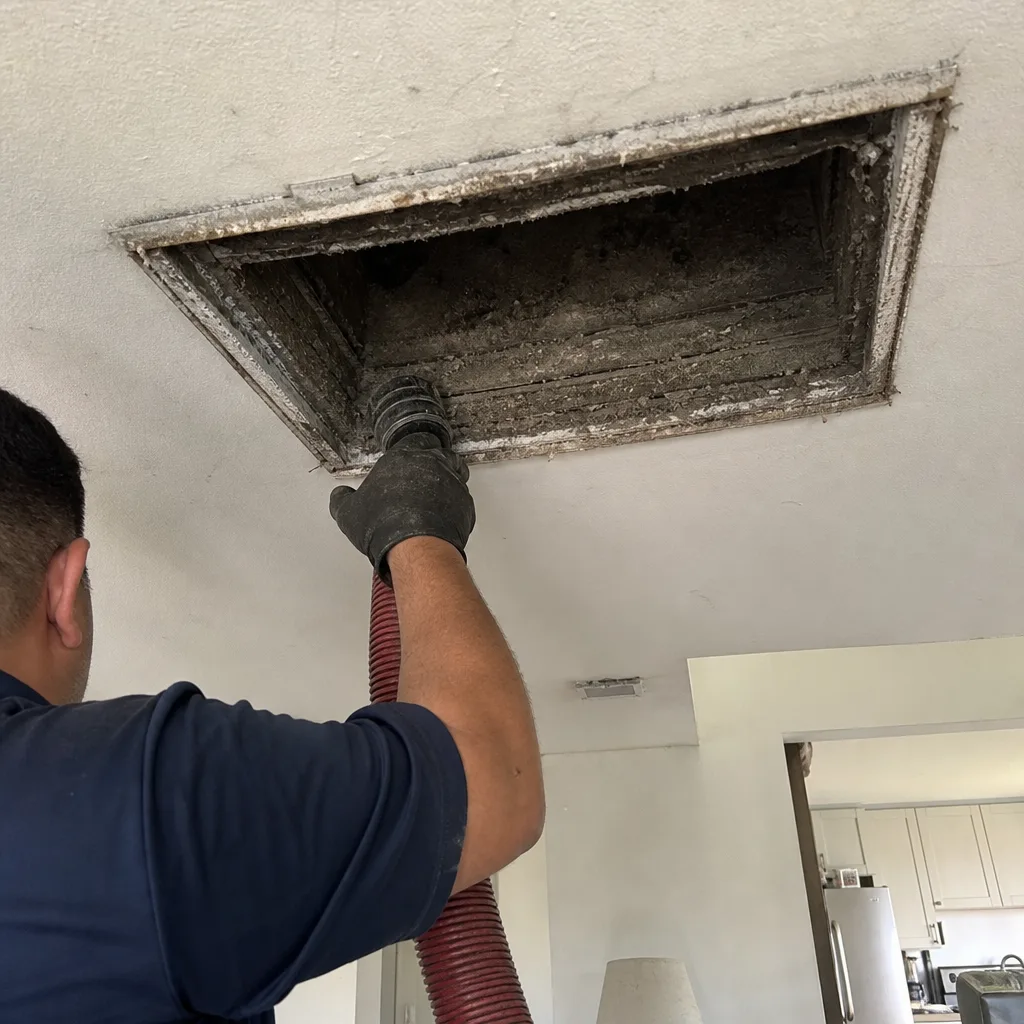
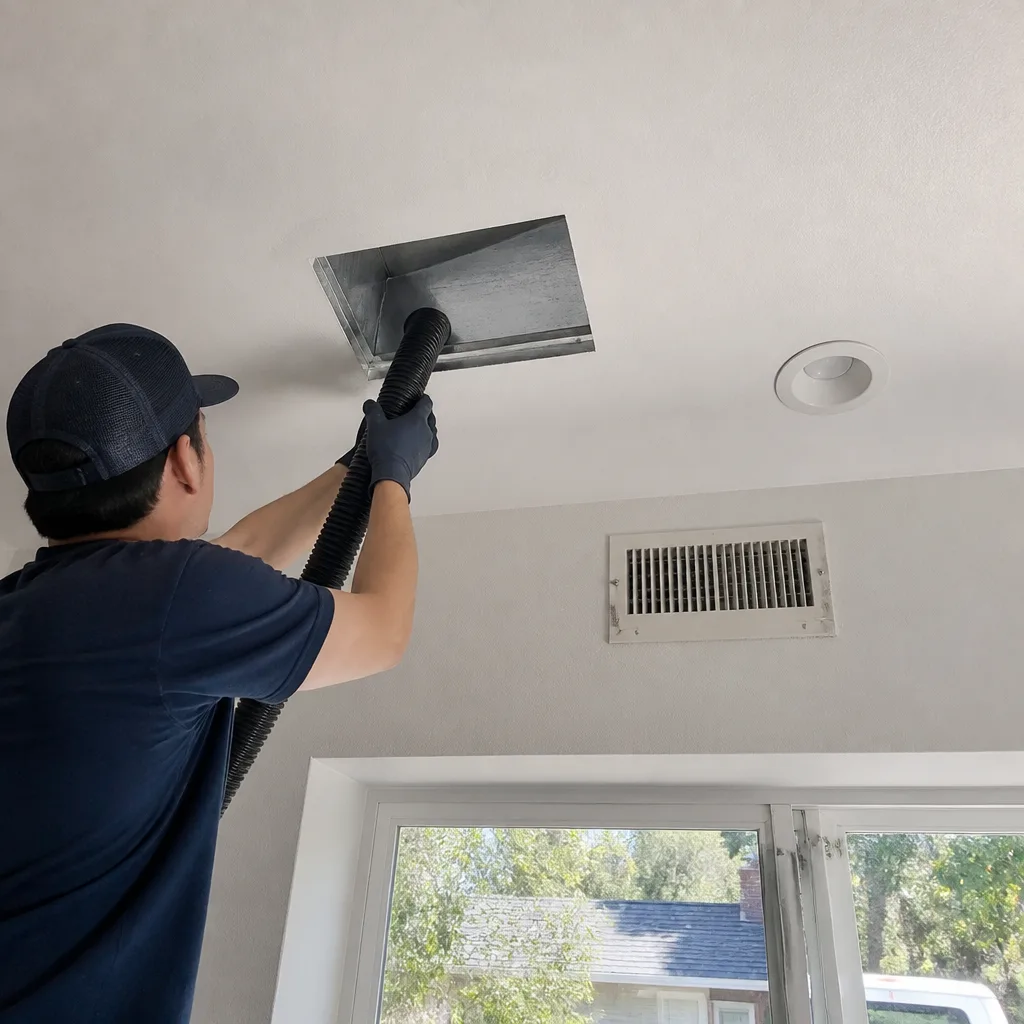
Whole-system duct and dryer vent check with before-and-after photos - you see exactly what came out of your vents
That "$99 whole-house special" is a bait ad - the real number appears once they are in your hallway, or the "clean" is a shop-vac at the register. We photograph the inside of your ducts before and after instead.
Air Duct Cleaning Maintenance Checklist for Tarzana Homeowners
A clogged filter is visible. A collapsing flex duct section in a 105°F Tarzana attic is not, and it’s circulating debris every time the system runs. Most maintenance guides stop at “change your filter every 90 days,” which is like checking your tire pressure and ignoring a bent axle. The real job of a maintenance checklist is condition monitoring: teaching you what to inspect with your own eyes and which findings mean “log it and move on” versus “call a professional this week.” This guide walks through monthly homeowner checks, seasonal Tarzana-specific protocols, and the decision points where DIY observation ends and a specialist with Rotobrush or Nikro equipment should take over. By the end, you’ll have a working system for tracking duct health through fire season, heat waves, and everything the San Fernando Valley throws at your home.
Styles & brands we work with
- Whole-home duct cleaning
- Dryer vent cleaning
- Camera inspection
- Sanitizing & deodorizing
Quick Answer
A proper Air Duct Cleaning maintenance checklist for Tarzana homeowners includes monthly register and filter-pressure inspections, seasonal post-wildfire and post-Santa Ana wind checks, and attic observations for disconnections and seal failures. Most of the checklist is visual and safe to do yourself; what matters is knowing which observations are normal aging and which indicate a leak, blockage, or contamination problem requiring a professional with containment equipment. Tarzana homeowners should perform the full checklist quarterly and call a duct specialist for system evaluation every 2 – 3 years.
Table of Contents
- Monthly Homeowner Checklist: What to Inspect Without Tools
- The Filter Differential Check That Tells You More Than the Filter Itself
- Post-Santa Ana Wind Season: Why Tarzana Ducts Take a Beating
- Post-Wildfire Smoke Event Protocol for Your Duct System
- Duct Seal Integrity: Spotting Failed Joints Before They Become Duct Repair Jobs
- Attic Access: What a Homeowner Can Safely Observe
- The Decision Tree: Log, Monitor, or Call a Specialist
- Common Mistakes to Avoid
- When to Call a Professional
- Frequently Asked Questions
- The Bottom Line
Monthly Homeowner Checklist: What to Inspect Without Tools
You don’t need a technician for most monthly duct observations. What you need is a consistent routine and a small notebook or phone note where you log what you see. Start with every register and return grille in the house. Remove each register cover (most lift off or unscrew with a standard screwdriver) and look at the inside surface of the duct opening. Normal findings include a light film of gray-white dust that’s been there for months. Concerning findings include black or green speckling, visible debris like pet hair or construction dust accumulating inside the duct mouth, or a musty smell that intensifies when you remove the cover. Log any register that looks different from the others; patterned differences across rooms often point to localized duct problems rather than whole-system issues. You have now completed the most informative 15-minute check in this entire guide, and it costs nothing.
Checking for Airflow Changes
Once the registers are inspected, stand quietly near each supply register while the system runs. You’re listening for changes: a room that used to get strong airflow but now gets a weak stream, a register that whistles when the door to that room is closed, or a return that pulls hard enough to hold a tissue against the grille in some rooms but barely in others. These changes indicate shifts in duct balance, potentially from disconnected sections, crushed flex duct, or a deteriorating seal that’s letting conditioned air leak into an attic rather than reach the room. Note the date and the specific register every time you observe a change. Duct problems rarely announce themselves with a dramatic failure; they present as slow pattern drift that only becomes obvious when you have logged the change over time.
The Filter Differential Check That Tells You More Than the Filter Itself
Most homeowners change their filter on a calendar schedule and assume that’s sufficient. Tarzana’s dust load, driven by the Santa Ana winds in fall and fire-season particulates in summer, means filter lifecycle isn’t predictable by dates alone. A differential pressure check is the better metric, and it’s simple to observe: hold a clean tissue against the return grille with the system running, then do the same after replacing the filter. If the tissue’s pull is dramatically stronger after the new filter goes in, the old filter was loaded up and choking airflow. If the pull is about the same and the old filter still looked relatively clean, your ducts are likely the restriction, not the filter. In that case, log the observation and consider professional evaluation. Tarzana homeowners at higher elevations near the Santa Monica Mountains often see faster filter loading from wildland dust; if your filter consistently loads heavily within 30 days, your ducts may be pulling unfiltered air in through leaks, bypassing the filter entirely. Filter brands vary, but the principle is constant: filter resistance is a diagnostic, not just a maintenance interval.
Post-Santa Ana Wind Season: Why Tarzana Ducts Take a Beating
Tarzana sits in a geography that gets scrubbed by hot, dry Santa Ana winds every fall. These winds don’t just carry airborne dust; they push it into attic vents, soffit gaps, and any opening in the building envelope. For duct systems, the concern is infiltration: dust and fine grit settling into duct insulation, drifting through attic planes, and in some cases getting drawn into duct leaks under negative pressure. After a significant Santa Ana event, a homeowner should perform one specific ritual: walk the attic perimeter with a flashlight (if access permits and it’s safe to do so) and observe where dust has settled. If you can see wind-driven dust settled in the attic, that same dust is now working against your filters. The post-Santa Ana protocol is to inspect outside vent hoods for accumulated debris, check that vents aren’t partially blocked, and run the fan for a cycle with all registers open to observe whether any new smells or particulates have entered. Some Tarzana homeowners notice a distinct dry, dusty odor from their registers after prolonged wind events; if it persists beyond a day or worsens, log it as a possible seal leak.
A Step-by-Step Post-Wind Inspection
- Check exterior vents first. Walk the perimeter of the house and look at every vent hood: dryer, bath fan, kitchen exhaust, and any passive attic vents. Wind pushes debris against these openings. Clear what’s visible from ground level only; don’t climb on the roof.
- Run the blower with all registers open. Stand near each supply register. You’re smelling for dust, smoke, or anything that wasn’t there before the wind event.
- Inspect the return grilles for new dust patterns. Fresh wind-driven dust often shows as a lighter, finer layer than the household dust you normally see.
- Log every observation with a date. Post-wind changes that persist for more than a week suggest the dust has settled somewhere in the system rather than passed through.
For a broader look at how this fits into professional cleaning cycles, see our guide to Air Duct Cleaning in Tarzana, which covers what full-system equipment can remove versus what homeowner observation can only flag.
Post-Wildfire Smoke Event Protocol for Your Duct System
Wildfire smoke in Tarzana is no longer an anomaly; it’s a recurring seasonal reality. When smoke settles over the Valley for days, your HVAC system pulls it through the return, the filter, the blower, and into the ducts. Smoke particles are extremely fine (well under 1 micron for the most penetrating fraction), which means typical filters only capture a percentage, and what passes through can coat the inside of duct liners and insulation. After a significant smoke event, we recommend a specific sequence – detailed further in our Air Duct Cleaning Troubleshooting: Common Problems and How to Fix Them – starting with the return filter first, even if it was recently replaced. Smoke particles quickly load filters with a dark, oily residue. If the filter shows a visible gray or brown film, the system has been doing work and the ducts may have been coated internally. Next, open a few register covers and wipe the inside duct surface with a clean white cloth. If the cloth comes back with a pale gray smear, smoke particulates have reached the duct surfaces. A light pale gray after a smoke event is common; a heavy dark residue that persists is a reason to log and call a specialist. The protocol ends with running the fan (not the compressor, just the circulation fan) for 30 – 60 minutes with a clean filter installed and all registers open, then repeating the register wipe check. This tells you whether the residue is residual or actively recirculating.
Duct Seal Integrity: Spotting Failed Joints Before They Become Duct Repair Jobs
Duct systems in Tarzana homes go through extreme thermal cycling: attic temperatures in the summer can exceed 140°F, and winter nights drop into the low 40s. That’s a 100-degree swing repeated hundreds of times over the life of a home. Every joint where two duct sections meet is a stress point. Duct tape (the classic silver fabric tape, not the product category) fails under these conditions: the adhesive dries out, the tape peels back, and the joint starts leaking. Professionally sealed joints use mastic, a brush-on compound that stays flexible and holds through thermal cycling. As a homeowner, you can observe seal integrity from accessible areas without opening walls. In the attic, where most duct runs live in Tarzana’s single-story ranch homes and two-story traditional builds, look for joints where tape edges are peeling, tape has turned brittle or flaked, or you can see a gap where two duct sections meet. On accessible duct runs in closets or garage ceilings, run a hand near joints while the system is running (be careful around any sharp metal edges) and feel for air movement. Air escaping at a joint means conditioned air is heating or cooling the attic instead of your rooms, which is a leak you should log.
When you find failed seals, the fix is often straightforward for a professional with duct-repair capability. That’s where our Air Duct Repair in Tarzana service applies: mastic resealing and section reconnection that restores duct integrity where tape has failed.
Attic Access: What a Homeowner Can Safely Observe
Not every Tarzana attic is walkable. Many are tight, hot, and hazardous with truss chords, electrical lines, and in some older homes, vermiculite insulation that should not be disturbed without testing. Safety caveat: do not enter a tight attic alone, do not walk on joists you’ve never walked before, and do not attempt this in summer heat. What you can safely observe from the access point or with a good flashlight includes insulation displacement and obvious duct disconnections. Insulation should lie evenly across the attic floor. If you see a rounded trench or a flattened area where insulation has been pulled back, that’s often a sign an animal (roof rats are common in Tarzana’s mature trees) has been nesting near the warmth of the ducts, or someone walked through recently for a service visit. Displaced insulation over duct runs may not seem like a duct problem, but it changes the thermal environment around the duct, potentially causing condensation in humid months. Obvious disconnection is easier to spot: a flex duct that has pulled off a register boot or a wye fitting leaves a visible opening. In our experience, the most common disconnection type we see in Tarzana attics is a flex duct sagging and kinking over time, pulling off its connection under its own weight. If you see a duct run that curves sharply and flattens at the bend, or one that lies across a truss member with a visible kink, log it. Some homeowners do this inspection quarterly with a selfie stick and a phone on video mode, which is a practical, low-risk approach that captures visual evidence without entering the attic.
The Decision Tree: Log, Monitor, or Call a Specialist
Every checklist finding falls into one of three response tiers. The decision is not “is this a problem” but “does this require professional action now, or can it be logged for the next professional evaluation?”
Tier 1: Log and Continue Monitoring
- Light gray dust layer on register interiors that wipes clean with a damp cloth
- Filter loads faster than typical but replacement restores normal airflow
- A faint dry smell from registers for a day or two after a Santa Ana wind event that clears
- Insulation displacement with no other suspicious signs (animals, droppings, duct damage)
- One register in one room with slightly weaker airflow that hasn’t changed for months
Tier 2: Log and Schedule Professional Evaluation This Quarter
- Black or green spotty growth on more than one register interior or around the register boot
- Musty odor that persists beyond a week and intensifies when the fan runs
- Visible duct tape peeling or failure at multiple joints
- Air movement felt at duct joints while the system runs
- Post-smoke residue that remains after two weeks of normal system operation with a clean filter
- Duct sections visibly kinked or flattened in the attic
Tier 3: Call a Specialist This Week
- Any register blowing weak air consistently while others blow strong
- A flex duct visibly disconnected at any fitting
- Rodent noise in the attic combined with debris falling from registers
- Unexplained musty smell in one room only, strongest near the register
- A persistent burning or electrical smell from any register (turn the system off and call; this is not confined to duct issues)
- Moisture staining on any ceiling area near a register
This decision tree works because it separates what requires diagnosis from what simply requires documentation. Duct systems don’t fail on schedules; they fail on conditions. A homeowner who logs findings for two years can show a professional exactly when a musty smell started, which rooms were affected, and how the airflow changed. That history cuts diagnostic time and gets the fix right the first time. For professional evaluations that include full-system cleaning and inspection in one visit, start with our main Air Duct Cleaning Tarzana home page, which covers the equipment and approach we use on every job.
Common Mistakes to Avoid
- Changing the filter and assuming that’s maintenance. The filter protects the blower, not the ducts. Ducts need observation, not just filter swaps. Tarzana’s dust load from wind and fire season makes observation essential, not optional.
- Skipping the post-wind-event check because “the house doesn’t feel dusty.” Dust that enters the duct system doesn’t always reach living spaces immediately. It accumulates in duct liners and releases over months.
- Ignoring one weak register because “it’s been like that for years.” That’s exactly how disconnected duct sections present. A room that never gets enough airflow is often a duct problem, not an HVAC sizing problem, especially in older Tarzana homes with original ductwork.
- Using duct tape to patch a duct seam yourself. Consumer duct tape fails under attic heat cycles. Mastic is the professional standard, and a poor tape patch can make a future professional repair harder by leaving adhesive residue.
- Waiting until a full “duct cleaning” sale or coupon shows up in the mailbox to address logged findings. A discount mailer doesn’t mean a system doesn’t need attention, and Tarzana’s low-cost duct cleaning offers are typically the exact shop-vac operations that a professional equipment company like ours is not.
- Relying on a furnace tune-up visit to evaluate the duct system. General HVAC technicians often don’t get into the ducts beyond the filter slot. The ducts are a distinct system and need a dedicated inspection.
- Assuming a smoky season is “over” once the visible haze clears. Smoke particles persist in duct insulation and return pathways long after the sky looks blue over Tarzana, then release gradually as the system runs.
When to Call a Professional
Any Tier 3 finding from the decision tree warrants a professional call. More broadly, if you’ve logged any Tier 2 finding for two consecutive quarters and it hasn’t resolved, a specialist evaluation is the next step. You should also call a professional before resuming normal system operation after a fire season if you observed smoke residue inside register interiors, even if the smoke event was weeks ago. Duct cleaning in these situations requires containment and proper permits; see our write-up on Air Duct Cleaning Permits, Codes & Inspections in CA: What You Need to Know. The right professional operation uses negative-air equipment (we run Abatement Technologies units on-site) to capture loosened debris and prevent it from recirculating into living spaces during cleaning. Air Duct Cleaning Tarzana offers free estimates for Tarzana homeowners. Call (866) 472-7239 and have your observation log ready; the more detail you provide, the more targeted the evaluation.
Dryer vents are governed by a separate checklist from the HVAC ducts, with their own fire-safety timeline. For the dedicated specialty and when to schedule, see our Dryer Vent Cleaning in Tarzana page.
Frequently Asked Questions
Professional air duct cleaning in Tarzana is typically warranted every 2 – 3 years, but the specific interval depends on what the homeowner’s monthly observations show, including post-wildfire smoke residue, Santa Ana wind dust infiltration, pets, and any logged Tier 2 findings that don’t resolve. Homes that clear a smoke event or that show persistent particulate issues may need it sooner. Call (866) 472-7239 for an assessment if your log shows persistent dust or odors.
A professional duct cleaning using Rotobrush or Nikro systems combined with negative-air containment removes accumulated dust, construction debris, pet hair, smoke residue, and lint-like material from the interior duct surfaces. The equipment agitates and extracts debris from the full length of the ducts, while Abatement Technologies negative-air machines prevent loosened material from circulating into the home.
Filter replacement protects the blower and captures large particles, but it does not remove material that has already settled inside the ducts, and a leaky duct system can pull unfiltered air around the filter entirely. Monthly observations tell you what’s happening inside; filter changes alone miss the slow accumulation that becomes a visible problem only after years.
Visible disconnected sections, persistent weak airflow in one room, air movement felt at joints, and collapsed or kinked flex runs in the attic indicate a structural problem that cleaning won’t fix and that requires professional duct repair to restore system integrity.
Wildfire smoke residues coat duct interior surfaces and may remain for months or years without professional cleaning, particularly in the duct insulation. The residue is not permanent damage in most systems, but it requires agitation and extraction with professional equipment to remove thoroughly, and the longer it remains, the more likely it contributes to persistent odors.
Dust accumulation differences between similar homes in Tarzana often trace to duct leakage, attic sealing quality, and the specific location relative to open land and wind corridors, which means a home that is unusually dusty despite regular filter changes may have a duct system pulling attic air through leaks. A professional evaluation can identify the difference and prioritize repair or cleaning accordingly. Call (866) 472-7239 for a free estimate.
The Bottom Line
A duct maintenance checklist for Tarzana homeowners works when it functions as a condition log rather than a chore list. Monthly register inspections, filter differential observations, and odor logging catch the slow changes that matter. Post-Santa Ana and post-wildfire checks address the specific seasonal forces that impact Valley homes. Attic observations of seal failures and disconnections turn invisible problems into documented findings. And the decision tree transforms those findings into action: log, schedule, or call now. The checklist costs nothing to run and gives you a meaningful record every time you call a professional. For more guides & resources, explore our blog. That’s what separates a homeowner who guesses from a homeowner who knows.
Written by the team at Air Duct Cleaning Tarzana, serving Tarzana since 2013.
See the difference
 Before
 After
 Before
 After
 Before
 After