
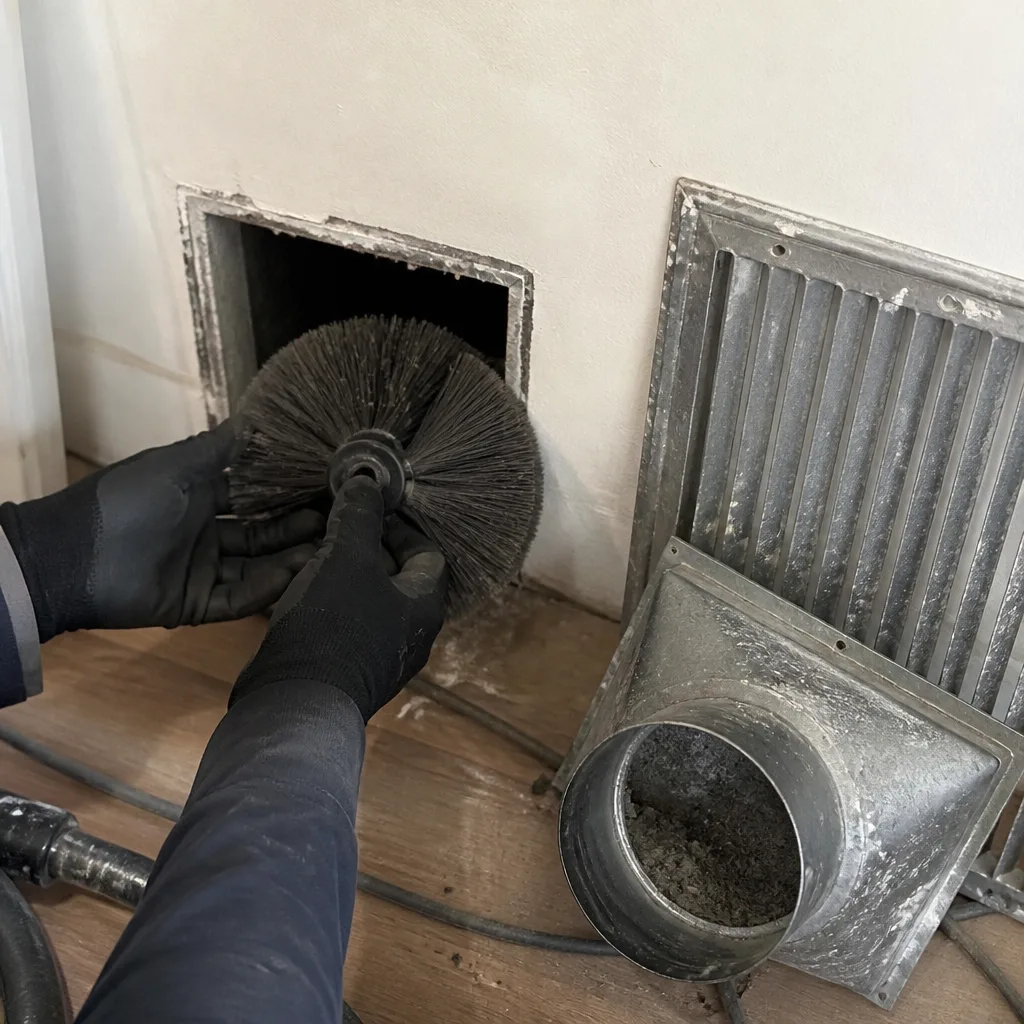
Last updated November 2, 2026
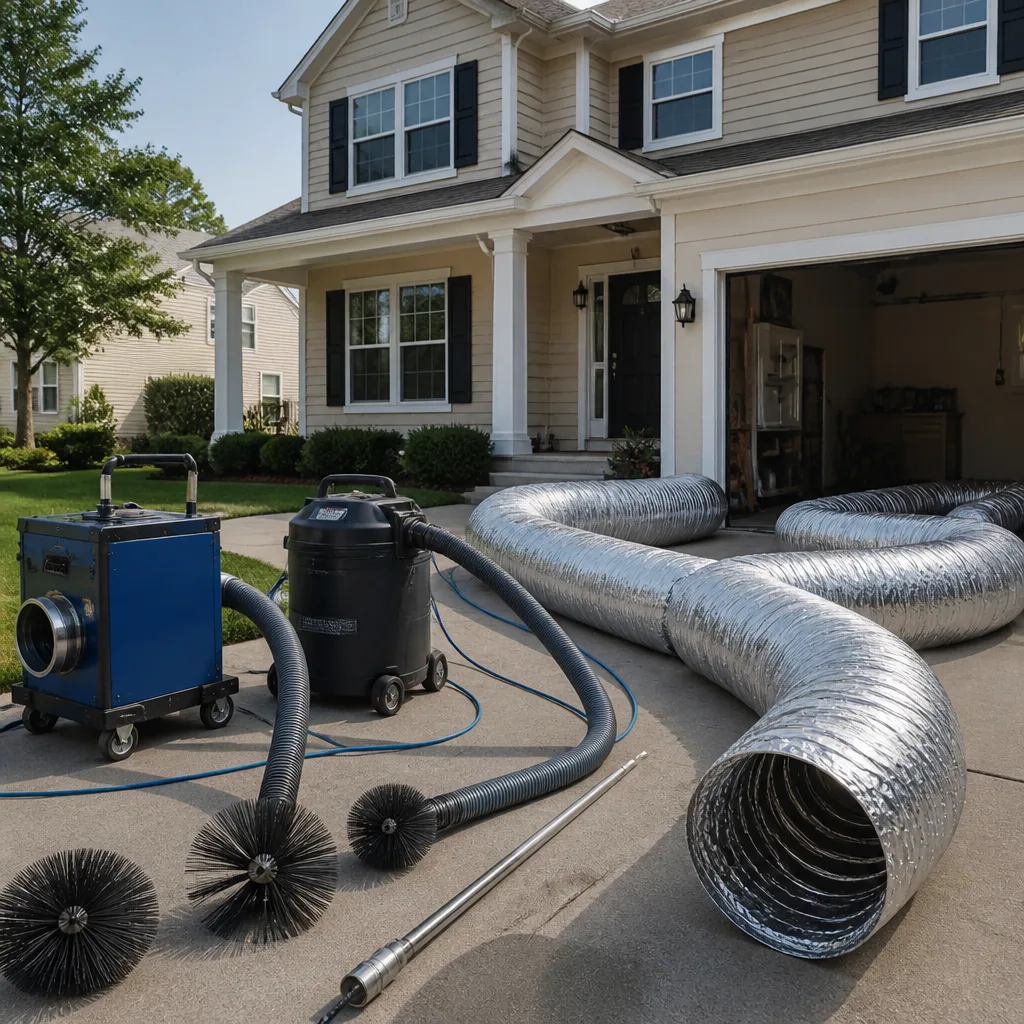 Whole-home duct cleaning
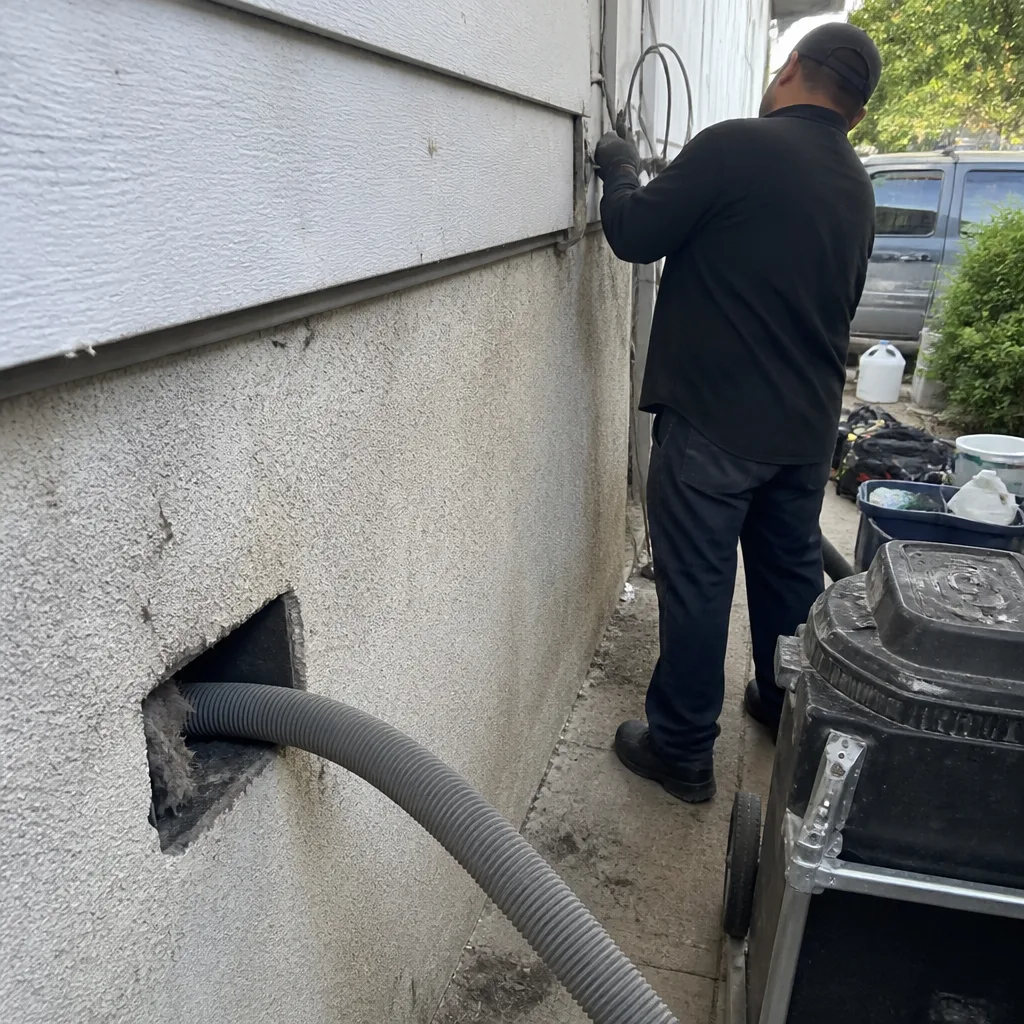
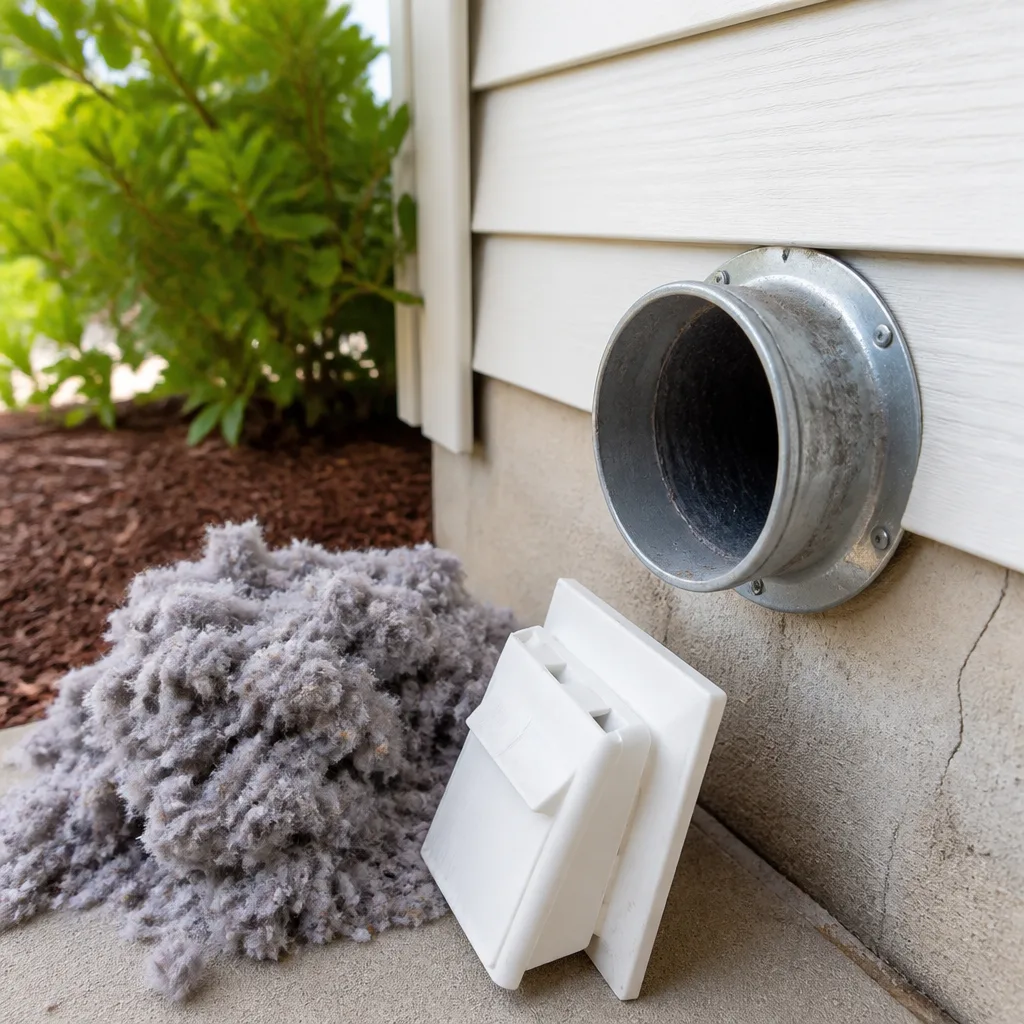 Dryer vent cleaning
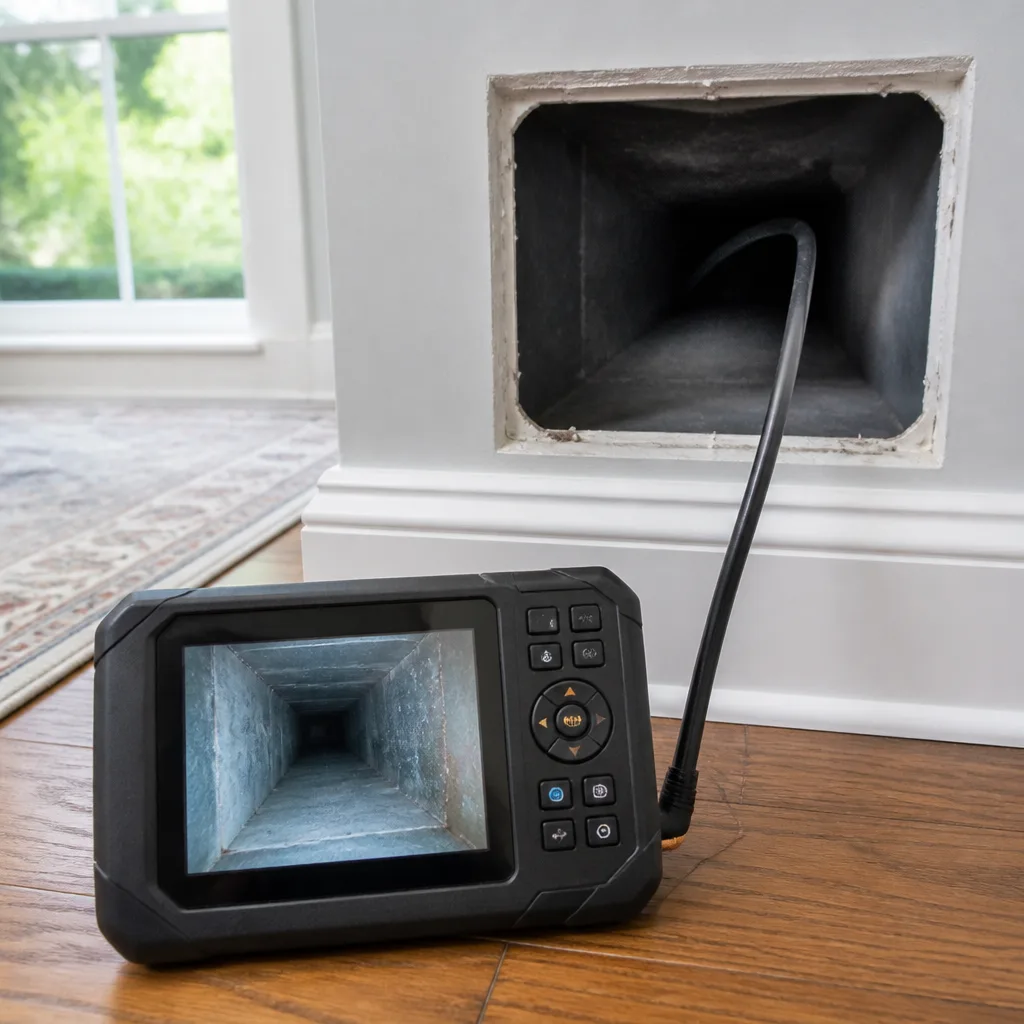 Camera inspection
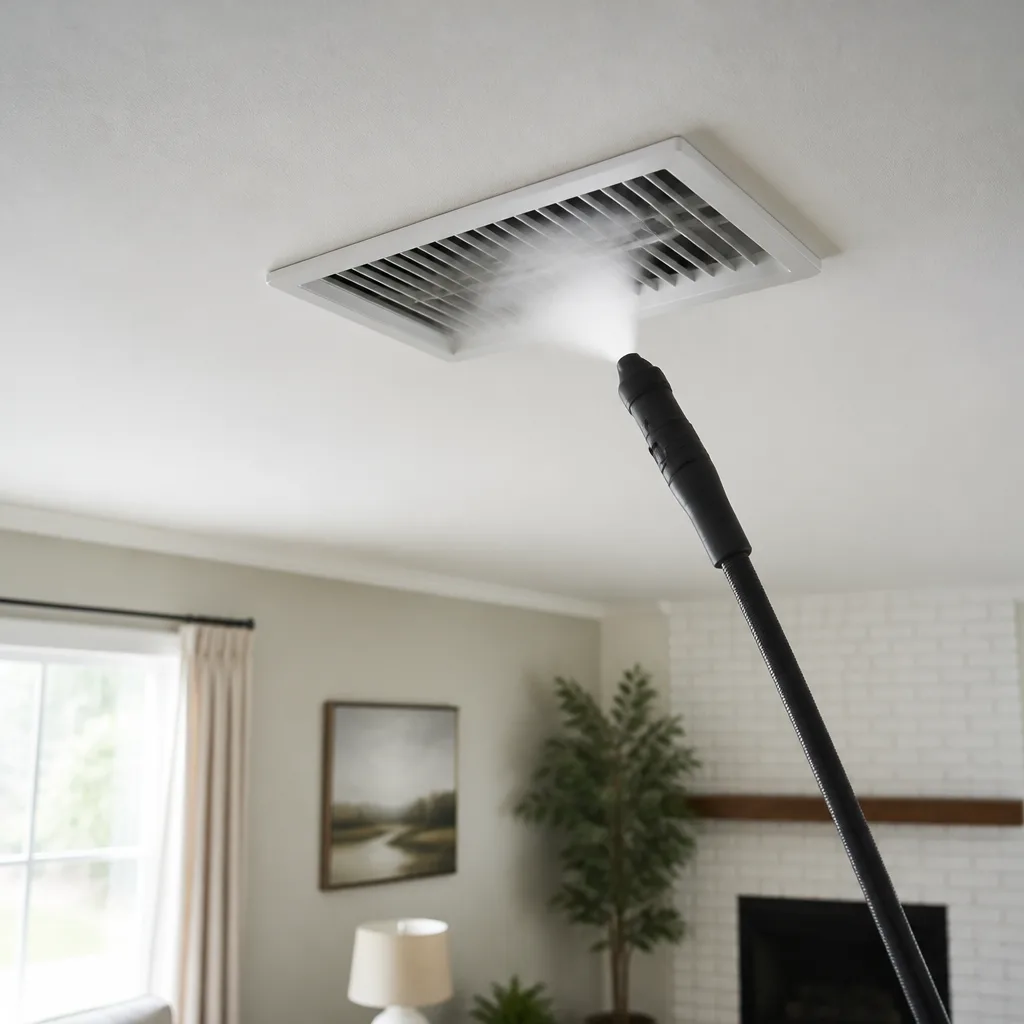 Sanitizing & deodorizing
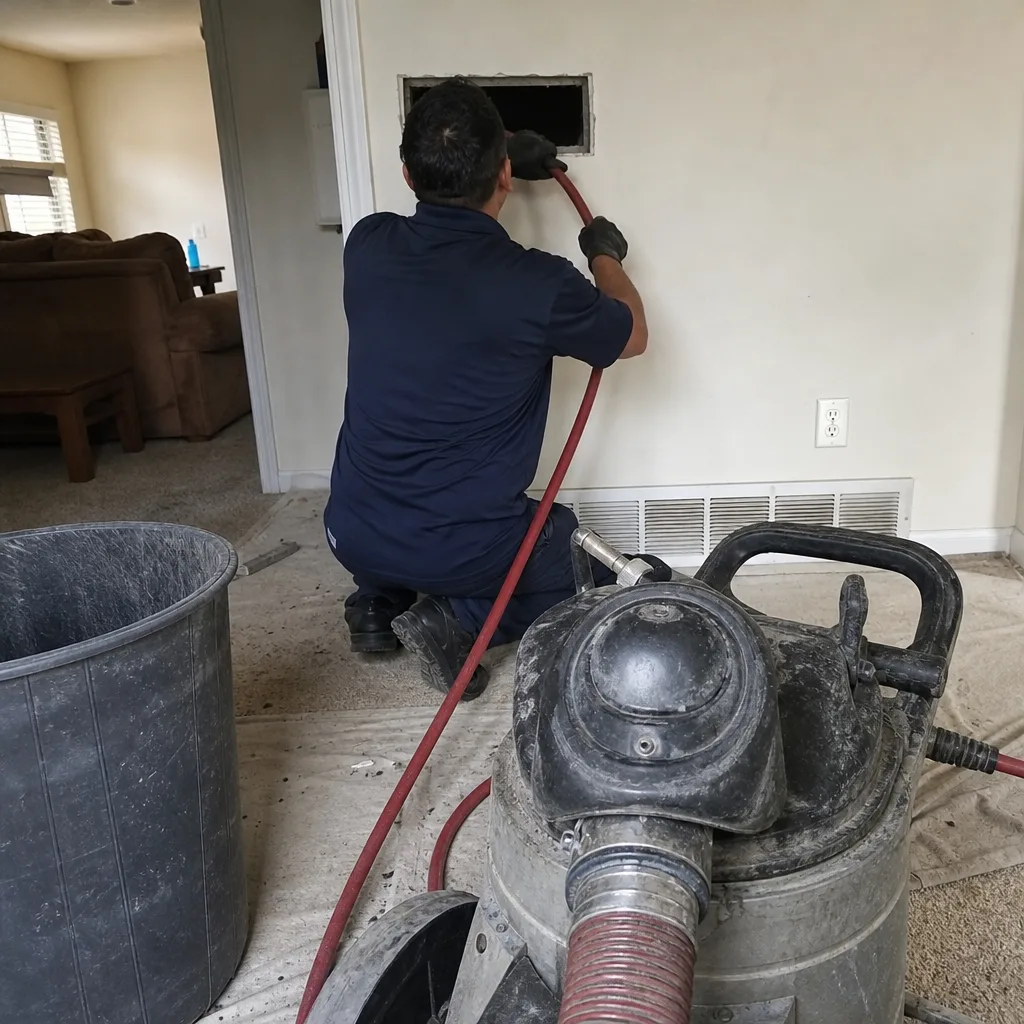
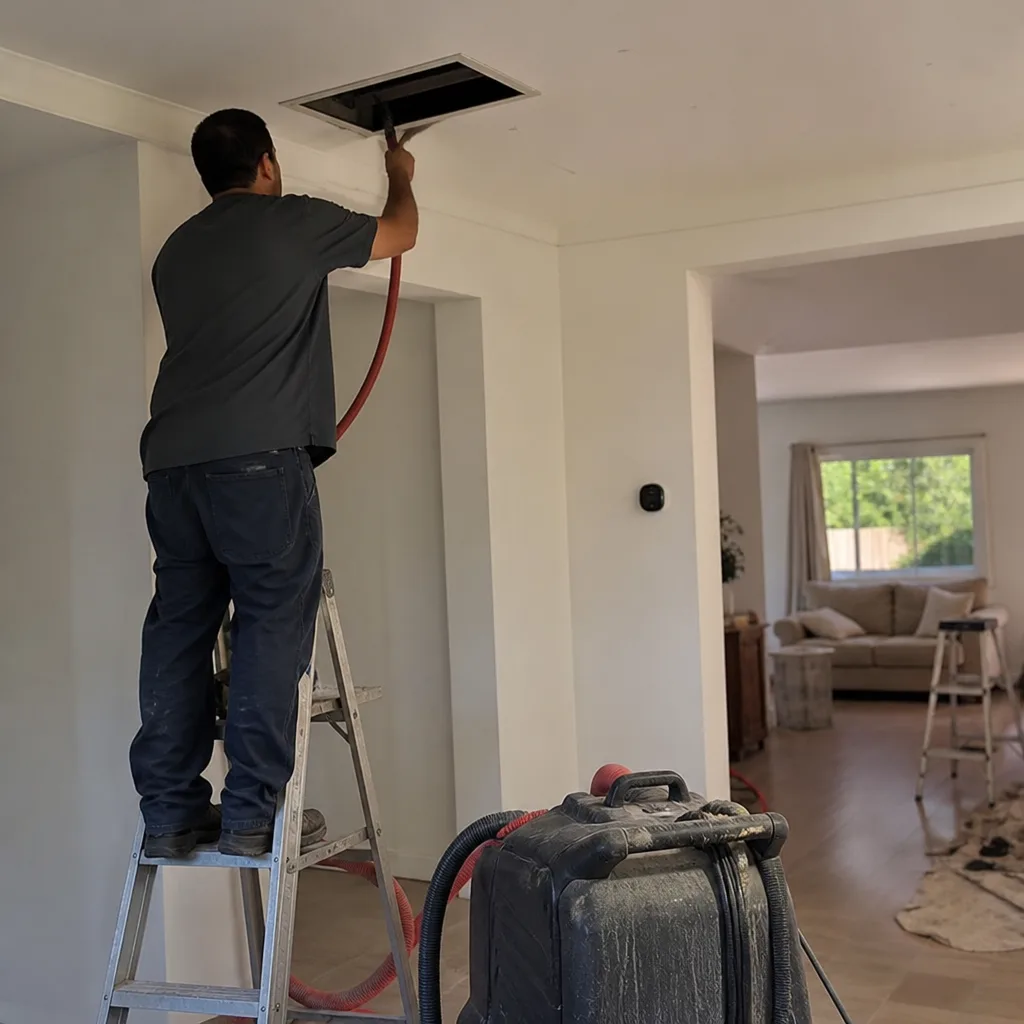
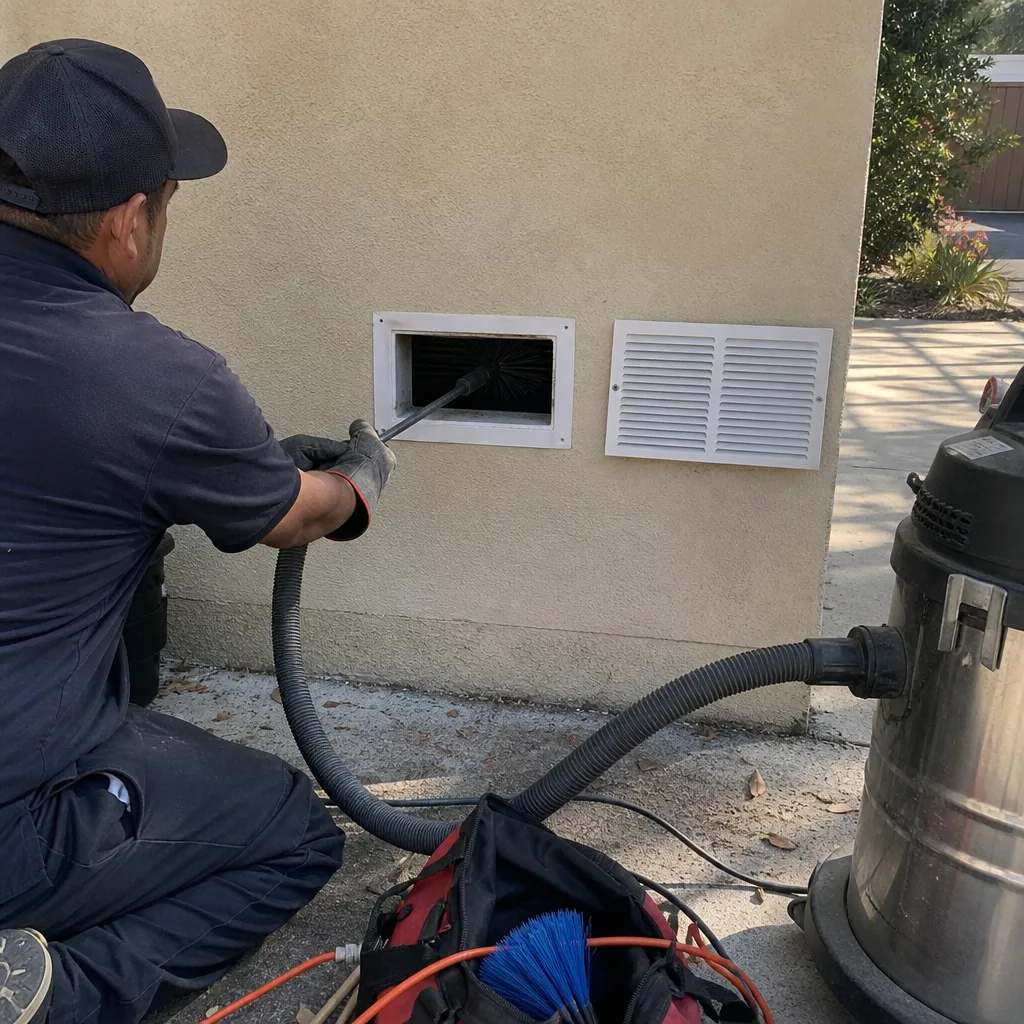
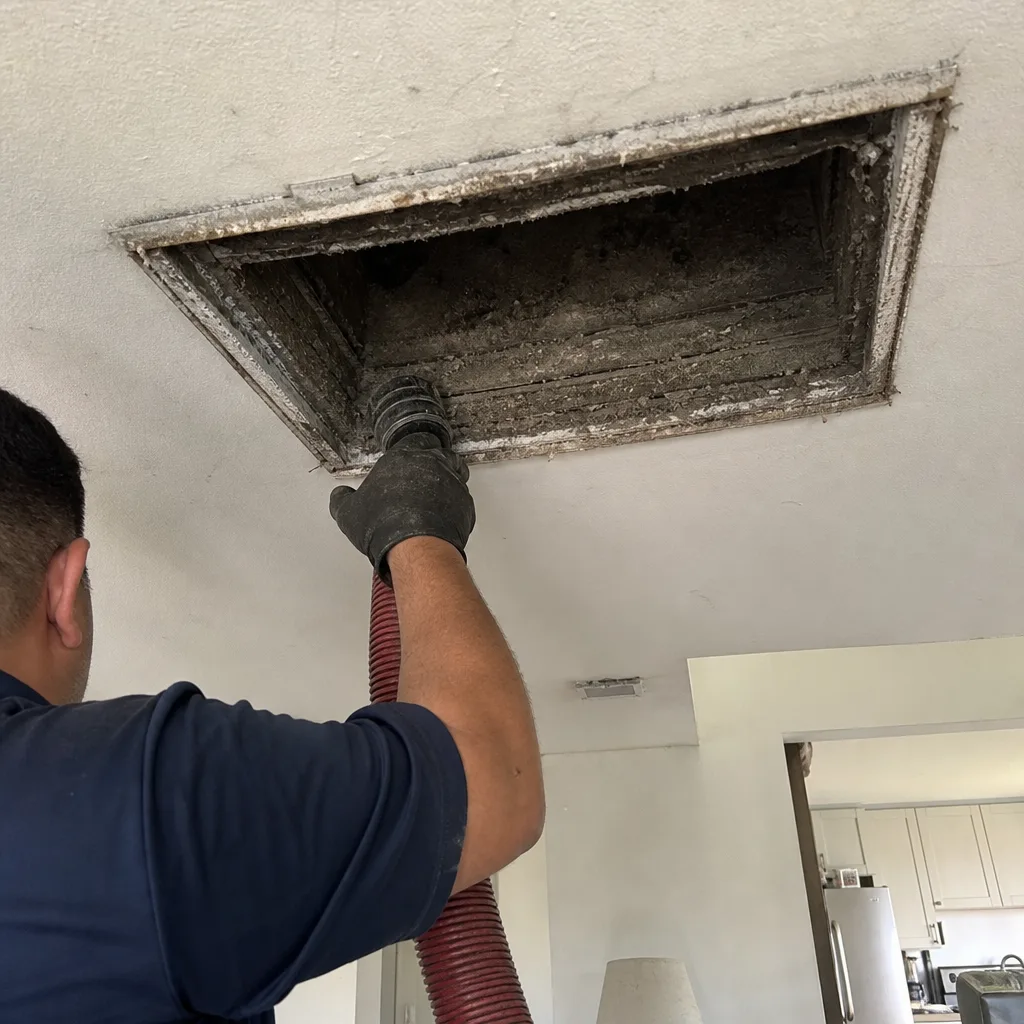
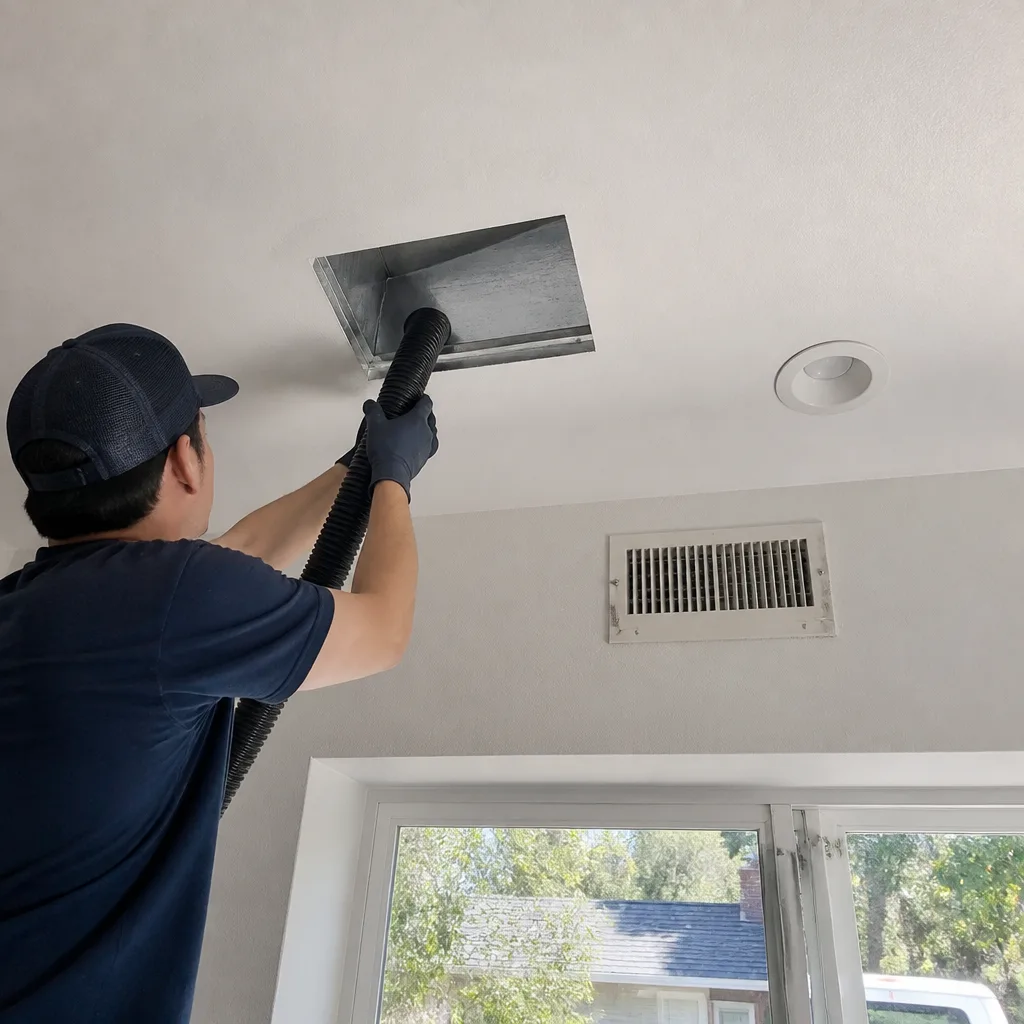
Whole-system duct and dryer vent check with before-and-after photos - you see exactly what came out of your vents
That "$99 whole-house special" is a bait ad - the real number appears once they are in your hallway, or the "clean" is a shop-vac at the register. We photograph the inside of your ducts before and after instead.
Air Duct Cleaning Troubleshooting: Common Problems and How to Fix Them
If your home smells mustier two weeks after a duct cleaning than it did before, the cleaner didn’t create the problem. They likely dislodged settled mold spores from duct liner that was already colonized. The actual fix isn’t another cleaning. It’s encapsulation or liner replacement. This guide explains why most post-service complaints are diagnostic signals, not service failures, and gives you a systematic way to read them. We’ve spent years working on Air Duct Cleaning across Tarzana, where summer heat and the Santa Ana season push HVAC systems hard enough to expose every weak point in a duct run. By the end, you’ll know what your system is telling you and what actually needs to happen next.
Styles & brands we work with
- Whole-home duct cleaning
- Dryer vent cleaning
- Camera inspection
- Sanitizing & deodorizing
Quick Answer
Most Air Duct Cleaning Warning Signs: A Tarzana Homeowner’s Reference Guide problems that appear after service are not cleaning failures. They are underlying conditions the cleaning exposed: disturbed mold on duct liner, dislodged connections in flex duct, or debris that settled near the heat exchanger. The correct response is rarely another cleaning. It is targeted repair, liner treatment, or component replacement, identified through the diagnostic signals described below.
Table of Contents
- Post-Cleaning Odor: What Each Smell Actually Means
- Reduced Airflow After Cleaning: Three Causes Most Companies Miss
- The Register Debris Test: Reading Dust Color and Texture
- Pressure Differential Symptoms: When Rooms Stop Balancing
- How to Document Duct Problems So Contractors Take You Seriously
- Common Mistakes to Avoid
- When to Call a Professional
- Frequently Asked Questions
- The Bottom Line
Post-Cleaning Odor: What Each Smell Actually Means
Odors after a duct cleaning fall into three categories, and each points to a different root cause. Knowing which one you’re smelling determines whether you need a repair, a liner treatment, or simply a conversation with the company that did the work. In Tarzana, we see all three regularly, because homes here cycle between closed-up air-conditioned summers and open-window shoulder seasons, which shifts humidity inside duct runs and activates what was dormant.
The Burnt or Hot-Dust Smell
A burnt smell, or the odor of hot dust that appears when the furnace first kicks on, usually means debris was dislodged during cleaning and settled near the heat exchanger or on the blower motor housing. This is more common in systems where the return side was heavily contaminated and the cleaning crew did not run the blower long enough after agitation to pull loose material through the filter. The fix is straightforward: run the fan on continuous mode for two to four hours with a fresh filter installed. After that, inspect the blower compartment. If the smell persists, the debris may have adhered to the heat exchanger surface and needs manual removal.
The Musty or Mildew Smell
A musty odor that appears within days of cleaning is the one we treat most seriously. Duct liner, the fiberglass insulation bonded to the inside of many sheet metal ducts, absorbs moisture over time. When a Rotobrush or Nikro agitation head passes over colonized liner, it disturbs the surface layer of mold and releases spores into the air stream. The cleaning did not cause the mold. It exposed it. The correct next step is a visual inspection of the liner using a camera scope. If colonization is light and localized, antimicrobial treatment may be sufficient. If the liner is saturated or crumbling, the section needs liner replacement or encapsulation, which is a repair function, not a cleaning function. That distinction is why Air Duct Repair in Tarzana is a core part of what we do rather than an afterthought.
The Chemical or Solvent Smell
A sharp chemical odor after service typically comes from sanitizer or sealant applied too heavily, or applied to a system that was not adequately dried before the blower was turned back on. Some companies spray antimicrobial foggers as an upsell. When applied to accumulated dust rather than cleaned metal, the chemical binds to the dust and off-gasses for weeks. The fix is patience and ventilation, and in some cases a second cleaning with dry agitation and negative-air extraction to remove the saturated particulate. In our experience, chemical treatments are rarely necessary on a properly cleaned duct system. They are often a substitute for inadequate mechanical agitation.
Reduced Airflow After Cleaning: Three Causes Most Companies Miss
Reduced airflow after a duct cleaning is usually blamed on the cleaning itself, but the more we inspect post-service airflow complaints in Tarzana homes, the more we find three specific mechanical causes that have nothing to do with how thoroughly the ducts were brushed. Each requires a different fix, and none is solved by cleaning again.
Dislodged Flex Duct Connection
Flex duct, the insulated flexible tubing used extensively in Southern California attic installations, is connected to supply plenums and register boots with zip ties or metal clamps. Over a decade or more in Tarzana’s attic heat, those connections loosen. The vibration and physical contact from a cleaning head can finish the job. One end of the flex run slips partially off, and conditioned air spills into the attic instead of the room. The symptom is one room, or one group of rooms, suddenly weaker than before. The fix is a reconnection: pull the flex back over the collar, secure it with a proper tensioning tool or clamp, and seal it with mastic. This is a repair, not a cleaning.
Collapsed Inner Liner
Flex duct has two layers: an outer vapor barrier and an inner plastic liner. When the inner liner tears or detaches, it can collapse inward like a collapsed artery, partially blocking airflow. A cleaning that disturbs the flex run can cause a partially detached liner to fold over completely. The symptom is a dramatic drop in airflow to one specific register, sometimes accompanied by a flapping noise when the blower cycles. The fix is replacement of the damaged flex section. No amount of cleaning restores a collapsed liner.
Unsealed Access Panel
Professional duct cleaning requires cutting access holes in the ductwork, usually in the main trunk line, then sealing them with metal patches and foil tape or mastic after the work is done. If a panel is not fully sealed, or if the patch leaks, the system draws attic air into the return side or pushes conditioned air into the attic on the supply side. The result is a whole-system airflow reduction that is easy to diagnose with a smoke pencil or pressure test. This is one reason we use Abatement Technologies negative-air equipment during every cleaning: the containment discipline it enforces means the system is sealed and verified before we leave, not patched and hoped for.
The Register Debris Test: Reading Dust Color and Texture
One of the most useful diagnostic tools you have is already falling out of your supply registers. The color and texture of the debris at your vents tells you where contamination is still active in the system. This test is especially useful in Tarzana, where fine desert dust from the Valley floor and the Santa Ana winds makes it easy to distinguish between fresh environmental dust and older, embedded contamination.
How to Run the Test
- Remove the register cover from a supply vent in the room where the problem is most noticeable.
- Wipe the inside of the register boot with a white cloth or paper towel.
- Examine the color, texture, and smell of what you collect.
- Repeat at a register in a room that seems normal, and compare.
What the Debris Tells You
- Fine gray-tan dust, evenly distributed: This is ambient dust drawn from the living space and returned through the system. It is normal and points to filtration, not duct contamination. Upgrade filters, don’t reclean ducts.
- Dark gray or black, gritty, oily residue: This is often soot from the heat exchanger or years of accumulated cooking aerosol. It indicates the return side was not fully cleaned, or the system has never been properly agitated. It means another cleaning with proper equipment is likely warranted.
- Fibrous, pink or yellow insulation fragments: This is duct liner shedding. It means the liner is degrading and the duct surface itself is coming apart. Cleaning will make this worse, not better. The duct section needs liner repair or replacement.
- White or gray flaky material that smells musty: This is mold or mildew growth on the liner or in the duct. The musty odor will usually accompany it. This is a liner issue, not a debris issue, and requires treatment or replacement.
- Sandy grit, brown or tan, mostly at the bottom of the register boot: This is construction debris or roof material that has been in the ducts since the home was built or renovated. It is inert but should be removed mechanically. It will continue to accumulate at registers until the duct runs are cleaned completely.
The register debris test is something we encourage every homeowner to do before calling any duct company. It separates cleaning problems from repair problems in about ten minutes, and it gives you a factual baseline for the conversation.
Pressure Differential Symptoms: When Rooms Stop Balancing
If rooms that were previously comfortable are now uneven – one bedroom is stuffy while the hallway feels fine – you are describing a pressure differential problem, not a cleanliness problem. Duct systems are designed to deliver specific air volumes to each room based on the size and position of the supply runs. When something changes the resistance in one run, the whole system shifts, and rooms that were balanced go out of balance.
What Causes Pressure Shifts After Cleaning
The most common cause is an unsealed return. If the cleaning involved opening the return plenum and a panel was left partially open, the system is now drawing air from the attic or garage instead of the living space. This reduces the air available to the supply side, and the farthest rooms suffer first. The symptom is predictable: rooms at the end of the trunk line get weaker, while the rooms closest to the air handler seem normal or even stronger.
The second common cause is a damaged or disconnected supply branch. If one flex run comes off, the system is now dumping a portion of its total airflow into the attic. The remaining runs receive proportionally more air, so some rooms may actually feel stronger than before while one room is dead. If you have one bedroom that is suddenly weak while the rest of the house feels normal or stronger, suspect a disconnected branch, not a cleaning problem.
Diagnosing the Source
- Feel the airflow at each register while the system is running. Note which rooms feel weaker and which feel stronger than before.
- Check the return grille. Is it drawing air with normal force? If the return seems weak, suspect an unsealed return panel.
- Check the rooms farthest from the air handler. If they are the weakest, the problem is on the supply side.
- Inspect visible flex duct in the attic. Look for sagging, which indicates a disconnected or heavily damaged run.
The fix for a pressure differential is almost always mechanical: seal the panel, reconnect the flex, or replace the collapsed section. This is exactly the kind of issue that separates a specialist from a cleaning-only company. We identify the problem during the cleaning, because our process includes a post-service airflow check at each register. If you are working with a company that does not do this, ask why.
How to Document Duct Problems So Contractors Take You Seriously
Homeowners who call a duct company about a post-service problem are often dismissed. They are told the issue is normal settling, or that another cleaning will fix it, or that the smell will fade. The difference between a homeowner who gets a real response and one who gets blown off is documentation. Here is how to build an evidence file that forces a serious response, drawn from what we have seen work for Tarzana homeowners.
Step 1: Photograph the Register Boots
Remove each register cover and photograph the inside of the boot with your phone. Use flash. Capture the color and texture of any debris. If you can, insert the phone camera into the boot and photograph up into the duct run. These photos establish the condition of the ducts immediately, not from memory.
Step 2: Record Airflow Measurements
Hold a tissue or lightweight strip of paper in front of each register while the system runs. Photograph or video the result at each register. A register with normal airflow will hold the tissue nearly horizontal. A weak register will let it droop. This creates a visual, room-by-room airflow map.
Step 3: Photograph the Access Panels
If the cleaning company cut access holes, photograph every panel. Look for obvious gaps, peeling tape, or spots where the patch does not sit flush with the duct surface. These are prime suspects for leaks.
Step 4: Note the Odor Description Precisely
Do not say “it smells bad.” Say “there is a musty odor at the register in the northeast bedroom, strongest when the system first turns on, fading after about ten minutes.” Specificity makes the problem real to a technician, not just a complaint.
Step 5: Create a Timeline
Write down the date of the cleaning, the date you first noticed each symptom, and the rooms involved. If the problem has worsened, say so. A timeline shifts the conversation from opinion to pattern.
When a homeowner presents this level of documentation, a competent Air Duct Cleaning in Tarzana company knows they are dealing with someone who will not accept a brush-off. You get a real inspection and a real answer. The companies that still dismiss you after this documentation are the ones you do not want working on your system anyway.
Common Mistakes to Avoid
- Rebooking another cleaning without diagnosing the real problem. If the first cleaning exposed a liner issue or a disconnected flex run, a second cleaning will expose it again and you will pay twice for nothing. Diagnose first.
- Ignoring a musty smell that appears after cleaning. This is not normal settling. It is a mold signal from the duct liner or a moisture source. It will not fade on its own and it generally worsens with continued use.
- Accepting a chemical fogging as a fix for a mechanical problem. If your airflow is weak or your liner is shedding, a sanitizer fog does nothing except add a chemical smell. The mechanical issue remains.
- Running the system continuously hoping the smell will burn off. If the odor is coming from colonized liner or saturated dust, running the blower just circulates the contaminant through the house. Confirm the source before you keep the fan running.
- Choosing a company based on the lowest bid without asking about equipment. A shop-vac attached to a register is not duct cleaning. Ask specifically about the agitation system and whether negative-air containment is used. In Tarzana, we run Rotobrush and Nikro platforms with Abatement Technologies negative-air equipment, and we are happy to explain why that matters.
- Delaying a fix when the register debris test shows liner fragments. Degrading liner only gets worse. Each system cycle sheds more fiberglass into the air stream. The longer you wait, the more extensive the repair.
- Not photographing the problem before calling the company back. Memory fades and so do the visual signatures. Photographs are evidence a company cannot argue with, and they establish the timeline clearly.
When to Call a Professional
Some duct problems are easy to identify on your own. Fixing them is another matter. Call a professional when the register debris test shows liner fragments or musty-smelling material, when one specific room has lost airflow while others remain normal, when you can hear flapping or rattling from inside a flex run, or when the odor after cleaning persists beyond a week of normal use. These are all signals of duct damage or contamination that simple cleaning cannot resolve. A specialist with repair capability can identify the exact failure and fix it at the root. If you are in the Tarzana area and want a real diagnosis rather than another cleaning pitch, Air Duct Cleaning Tarzana home service includes the full inspection and repair evaluation that most clean-only companies do not offer. Call (866) 472-7239 for a free estimate.
Frequently Asked Questions
A proper residential duct cleaning in Tarzana takes three to five hours for a typical single-system home. Anything significantly faster, especially under two hours, means the company is not doing full mechanical agitation, not cleaning all supply and return runs, or not using negative-air containment. Speed is not a feature in duct cleaning. Thoroughness is.
A smell that gets worse after cleaning is almost always a disturbed contaminant, not a new problem. Musty smells indicate disturbed mold on the duct liner. Burnt smells indicate debris near the heat exchanger. Chemical smells indicate excessive sanitizer application. The fix differs for each, and none is resolved by simply letting the system run.
Professional cleaning with proper equipment does not damage properly installed ductwork. However, aging flex connections, degraded liner, and rusted metal can fail when agitated. This is not caused by the cleaning. It is exposed by it. The right company will identify these weak points during the inspection and discuss repair options before proceeding, not discover them after the fact.
Run the register debris test. If you find fibrous insulation fragments, musty-smelling material, or sand-like construction debris, you likely need repair or a more aggressive mechanical cleaning than a standard service provides. If one room is suddenly weaker than others, suspect a disconnected or collapsed flex run. These are repair signals, not cleaning signals.
Cheaper quotes typically come from companies using portable vacuums or shop-vacs instead of truck-mounted or professional portable systems like Rotobrush or Nikro units, and from companies that skip negative-air containment. For help selecting a qualified provider, see our Choosing the Right Air Duct Cleaning Brand: A Buyer’s Guide for Tarzana. They may also skip access panels entirely and work only through registers, which leaves the main trunk line untouched. The price difference is equipment and thoroughness. You are not paying for the same service.
Yes, particularly in Tarzana, where summer cooling seasons run long and Santa Ana winds push fine dust into homes repeatedly. Ducts that go years without cleaning accumulate Valley dust, construction debris from home flips, and household particulate. If you have not had your ducts cleaned and you notice persistent dust accumulation on furniture within days of wiping, a professional cleaning with proper agitation and negative-air containment is a reasonable investment. Call (866) 472-7239 for an exact quote, estimates are free.
The Bottom Line
Post-cleaning problems are signals, not failures. A musty smell points to the liner. Reduced airflow points to a mechanical connection. Debris at the registers points to a specific contamination source. Reading these signals correctly saves you from paying for repeat cleanings that cannot fix a repair problem. The right duct company runs professional equipment like Rotobrush and Nikro, uses negative-air containment like Abatement Technologies, and can fix what it finds, from flex reconnections to liner replacement. If you are working with a company that only cleans, you are working with half a solution. In Tarzana, we built our service around the other half. If you have duct problems, diagnose them first. Then call someone who can actually fix what you find. For more guides & resources, explore our blog.
Written by the team at Air Duct Cleaning Tarzana, serving Tarzana since 2013.
See the difference
 Before
 After
 Before
 After
 Before
 After