
Last updated November 2, 2026
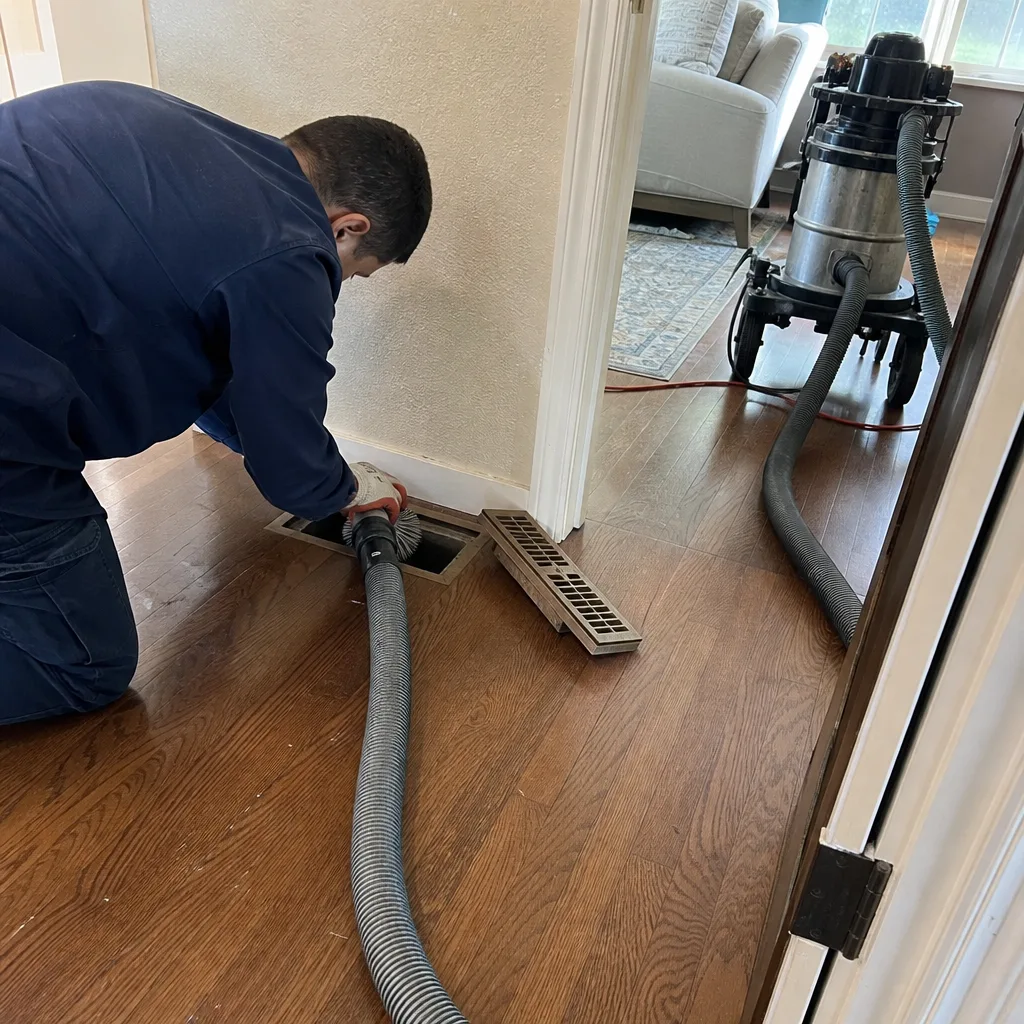
 Whole-home duct cleaning
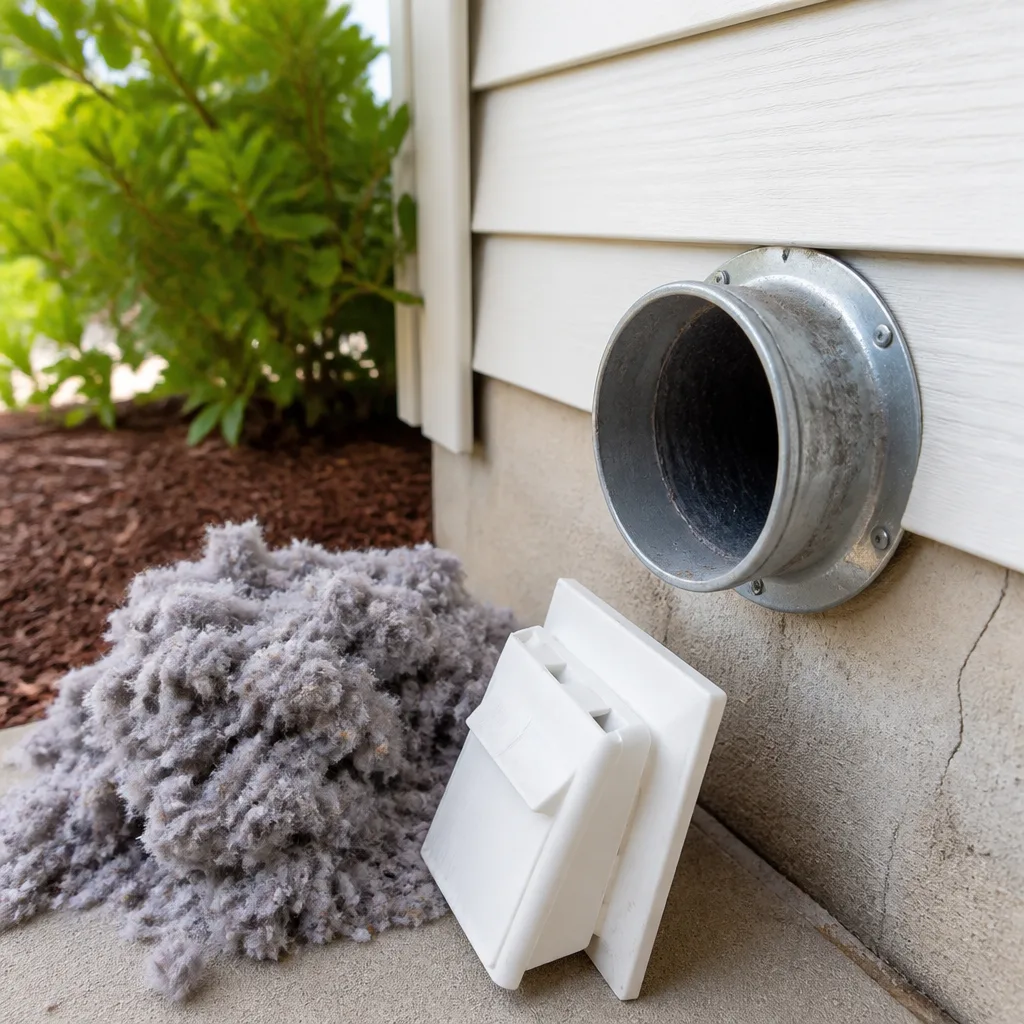 Dryer vent cleaning
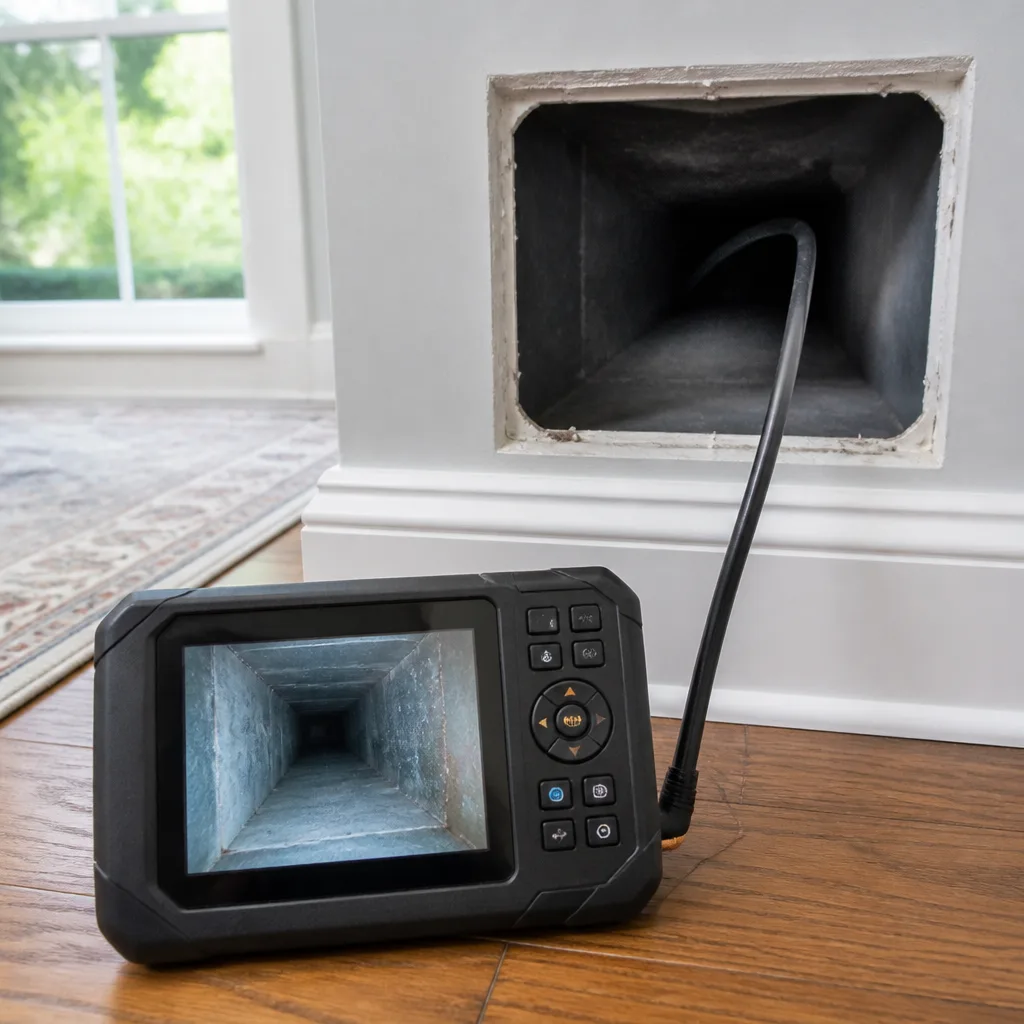 Camera inspection
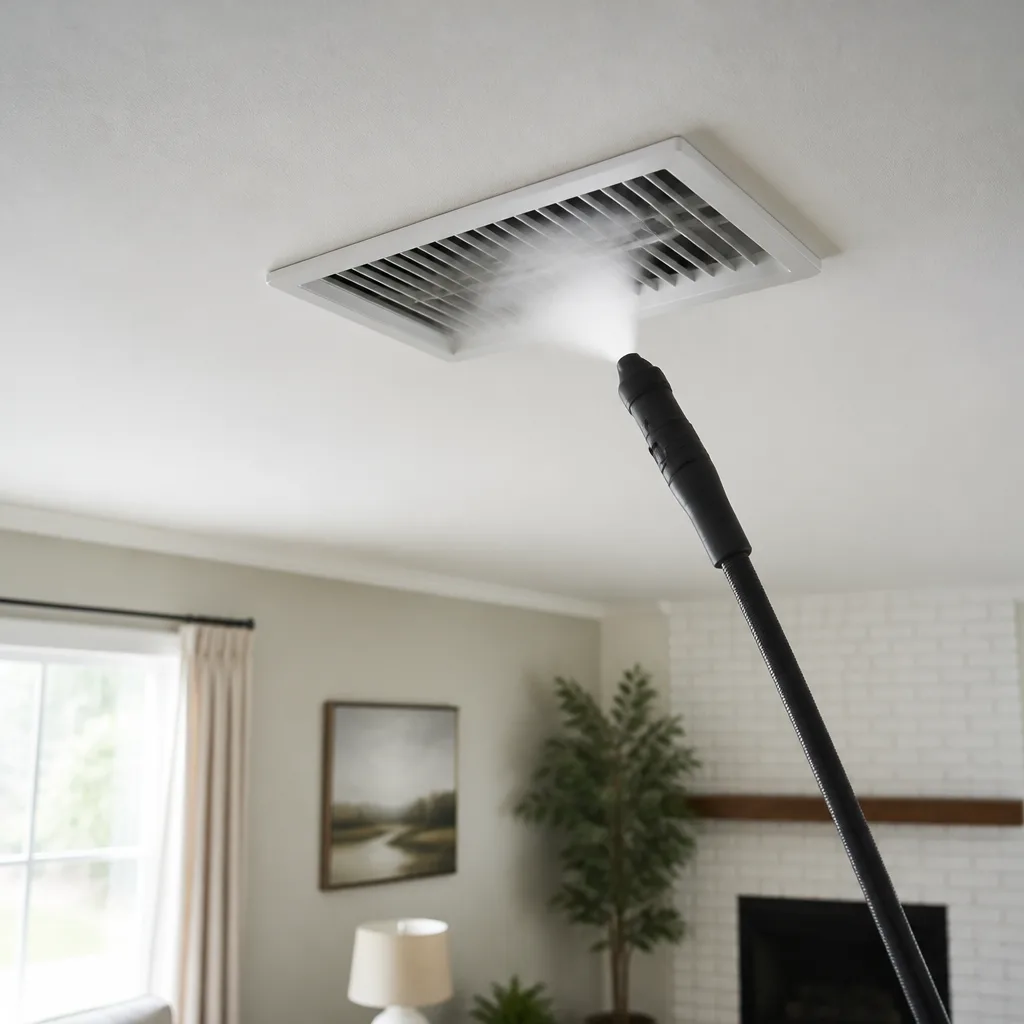 Sanitizing & deodorizing
Whole-system duct and dryer vent check with before-and-after photos - you see exactly what came out of your vents
That "$99 whole-house special" is a bait ad - the real number appears once they are in your hallway, or the "clean" is a shop-vac at the register. We photograph the inside of your ducts before and after instead.
The Complete Air Duct Cleaning Guide for Tarzana Homeowners
A 1,800-square-foot Tarzana ranch built in the 1970s can have three distinct duct materials in a single system: galvanized trunk lines, flex branch runs added in the ’90s, and fiberglass duct board near the air handler. Each requires a different brush pressure and vacuum configuration to clean without causing damage. Most guides skip this entirely. This one maps the actual variables Tarzana homes introduce: San Fernando Valley heat cycles, post-wildfire particulate, older ranch-style duct layouts, and attic-run flex duct that behaves differently than rigid sheet metal. Understanding your specific system and local conditions is what separates a useful cleaning from a wasted service call.
Quick Answer
Our Air Duct Cleaning services in Tarzana typically cost $450 – $900 for a full single-family system, depending on the number of furnaces and the duct material mix, and take 3 – 6 hours with professional negative-air equipment. A legitimate cleaning removes debris with contained vacuum systems, not by blowing it around with a shop vac, and should include an inspection that identifies leaks and damaged sections before any agitation begins. The right equipment and inspection sequence matter more in Tarzana than in most markets, because Valley heat cycles and wildfire particulate accelerate duct deterioration here.
Styles & brands we work with
- Whole-home duct cleaning
- Dryer vent cleaning
- Camera inspection
- Sanitizing & deodorizing
Table of Contents
- Why Tarzana Duct Systems Are Different
- What Air Duct Cleaning Actually Involves
- Duct Materials in Tarzana Homes: A Field Guide
- Equipment That Matters: Rotobrush, Nikro, and Negative-Air Containment
- The Inspection Sequence: What Should Happen Before Any Agitation
- Wildfire Ash and HEPA Filtration: When Standard Collection Isn’t Enough
- How Often Does Tarzana Ductwork Really Need Cleaning?
- Signs Your Ducts Need Attention
Why Tarzana Duct Systems Are Different
Tarzana sits in the southwestern San Fernando Valley, where summer temperatures routinely cross 100°F and winter nights can dip into the low 40s. That’s a 50°F-plus seasonal swing, and duct systems feel every degree of it. Metal expands and contracts through each cycle. Flex duct’s inner liner, typically a thin polyethylene or mylar shell over fiberglass insulation, degrades faster under repeated thermal stress. Duct tape and mastic joints flex, crack, and separate. The result is a higher baseline of small leaks in Tarzana attic ductwork than in coastal Los Angeles neighborhoods with more moderate temperature ranges.
There’s also the geography. Tarzana’s boundary with the Santa Monica Mountains puts many homes downwind of wildfire seasons. The Woolsey Fire in 2018 and the Creek Fire in 2017 both pushed significant ash and fine particulate into Valley air. That material makes its way into attics through passive ventilation, gets pulled into return-air ducts, and then circulates through the entire system. Homes that have never cleaned their ducts since those fires are often running systems with a measurable ash layer inside the return plenum and on the blower fan blades.
Housing stock adds another variable. Tarzana developed heavily between the 1950s and 1970s, and many of those original ranch homes are still standing with additions and partial HVAC retrofits layered on top. That’s why one system can contain three generations of duct materials. A cleaning approach that treats every duct as if it were identical will leave material behind, damage something, or both.
For a full walkthrough of what a proper cleaning looks like in this specific market, see our guide to air duct cleaning in Tarzana.
What Air Duct Cleaning Actually Involves
At its core, air duct cleaning is a two-part process: agitation and contained collection. Agitation means physically dislodging debris from duct walls. Collection means pulling that debris out of the system and into a collection device without letting it recirculate into your living space. Skip either half and the job is incomplete.
The process on a typical Tarzana single-family home looks like this:
- System access: Technicians cut or open access points at the supply plenum, return plenum, and sometimes at branch-line end caps. These access points are patched with metal and sealed with mastic afterward, never left open.
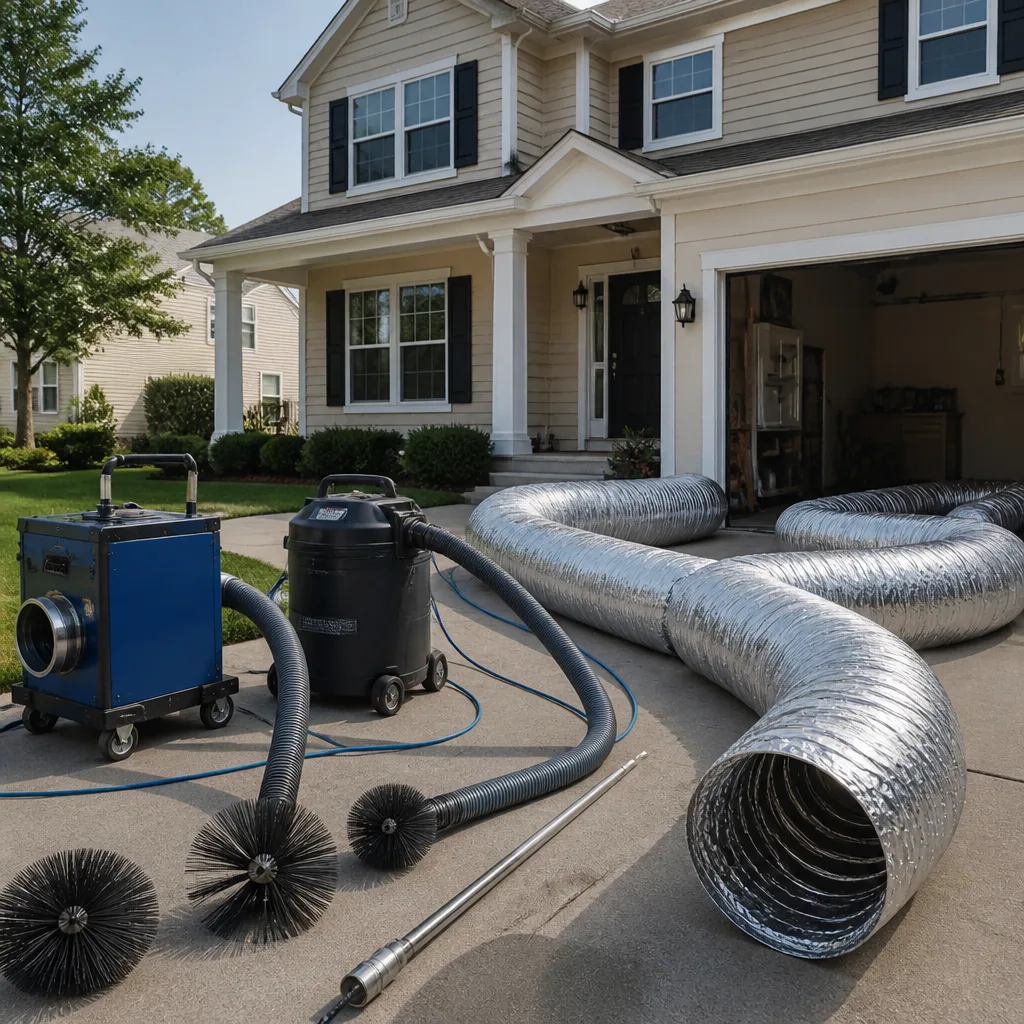
- Negative-air setup: A high-CFM vacuum unit is connected to the system, typically at the main trunk line, creating continuous negative pressure that captures loosened debris during the entire cleaning sequence. We use Abatement Technologies negative-air equipment for this, which is the same containment approach used in commercial and restoration projects.
- Agitation per duct section: Rotating brushes, compressed-air whips, or mechanical agitators run through each trunk line and branch run to dislodge caked dust, lint, and the fine film that accumulates on duct walls. The brush type and speed depend on the duct material.
- Component cleaning: Registers, grilles, return-air boxes, and the blower compartment are cleaned separately with HEPA-filtered vacuums and wipe-down of accessible surfaces.
- Final inspection: A camera is run through the system before patching to verify the duct walls are clean and no damaged sections were missed during the inspection phase.
What you should not see is a technician sealing off one vent, pointing a shop-vac hose at another, and calling it done. That approach is ineffective on any system, but especially so on long-run ranch-style layouts that dominate Tarzana’s residential streets. Those systems need sustained negative pressure to move debris from 30 or 40 feet of branch duct back to a central collection point.
Duct Materials in Tarzana Homes: A Field Guide
We can’t clean what we haven’t identified. Before any brush touches any duct, the material type determines the cleaning protocol. Here’s what’s commonly found in Tarzana homes and how each is handled differently:
Galvanized Sheet Metal (Pre-1980 Systems)
Original equipment in most Tarzana homes built before 1980. Galvanized steel trunk lines and rigid branch runs are durable and resistant to damage, but they accumulate a fine, sometimes damp dust film that adheres to the zinc coating. Aggressive nylon brushes can remove it. Steel wire brushes can scratch the galvanizing and expose the underlying metal to moisture over time, so brush pressure is controlled. This material is the most forgiving during cleaning, provided joints and seams are inspected first.
Flex Duct (1990s Additions and Retrofits)
Flexible duct with a thin inner liner over fiberglass insulation is everywhere in Tarzana additions built in the 1980s and 1990s. The liner is vulnerable. Too much brush pressure or the wrong brush head can tear it, which turns a cleaning service into a repair job. We use gentler agitation on flex runs and more of it, letting dwell time do the work instead of force. Flex duct also sags when not supported every four to five feet, and low spots trap debris that no vacuum will reach until the sag is corrected.
Fiberglass Duct Board
Found near air handlers and in some short plenum sections. The interior surface is fibrous; aggressive brushing can disturb the fiberglass matrix and send fibers into the airstream. Cleaning this material is slower and often done with soft-bristle tools and vacuum collection only, no aggressive mechanical agitation. In some cases, deteriorated duct board should be replaced rather than cleaned, which is where our air duct repair capability in Tarzana becomes relevant.
Modern Sheet Metal with Mastic-Sealed Joints
Newer construction and complete replacements, typically post-2000. These systems are efficient to clean because the interiors are smooth and joints are properly sealed. The cleaning challenge is accessing them without disturbing the mastic seals, which dry brittle over time but can be re-sealed after access points are patched.
Identifying your system’s material mix before scheduling a cleaning saves time and prevents damage. A technician who doesn’t check is guessing.
Equipment That Matters: Rotobrush, Nikro, and Negative-Air Containment
The difference between a meaningful duct cleaning and a cosmetic one is almost entirely equipment. Two systems dominate the professional market, and they solve different problems:
- Rotobrush systems combine a rotating brush head with integrated vacuum collection in a single portable unit. They’re effective on branch runs and lighter debris loads, especially in flex duct where the integrated vacuum keeps the liner from bearing the full load of agitation. They’re also the right tool for systems with limited access points, common in Tarzana’s older single-story ranch layouts where original trunk lines run through tight attic spaces.
- Nikro systems are the standard for heavy-duty and restoration-grade cleaning. They typically pair high-torque agitation tools with powerful negative-air collection units. On systems where the debris load is substantial, war and tear is already visible at registers, or wildlife intrusion has occurred, Nikro-caliber equipment does the work faster and more thoroughly than lighter platforms.
But the core of proper containment isn’t the agitation tool. It’s the negative-air vacuum system. A truck-mounted or portable negative-air unit pulling 2,000 to 4,000 CFM at the collection point creates directional airflow through the ducts from every open register back toward the vacuum. This ensures that when a brush dislodges debris somewhere in a 35-foot branch run, that debris is carried to the collection point rather than allowed to settle back into low spots or, worse, escape into the attic or living space.
We use Abatement Technologies containment equipment on every job, which is a meaningful distinction. Many residential cleaners skip true containment entirely, running positive-pressure blowers through the system and counting on register filtering to catch what gets blown out. That approach fails on long Tarzana duct runs because positive pressure loses velocity at the far ends of the system, and debris settles before it ever reaches the register.
On the air-quality product side, we’re also trained on Honeywell and Aprilaire equipment, which means the recommendations we make after a cleaning (whether for filtration upgrades or humidity management) are grounded in how those systems interact with ductwork, not generic sales talking points.
The Inspection Sequence: What Should Happen Before Any Agitation
No brush should touch a duct until the system has been inspected. Not a quick glance at the registers: a real inspection, with a camera, run through the entire system before and during the cleaning. Here’s the sequence a specialist should complete:
- Return-side inspection: Camera through the return plenum and return-air box. This is where pet hair, carpet fiber, and the densest debris accumulate, and it’s the most common location for fiberglass duct board deterioration.
- Supply trunk line inspection: Looking for visible leaks, separated joints, disconnected branch runs, and areas where insulation has fallen away or been disturbed by rodents.
- Branch run sampling: Selected branch lines, especially in flex duct, are inspected for sagging, kinking, tears, or collapse. This is where the material-type differences show up first.
- Blower compartment and coil box: The blower fan blades and evaporator coil (if accessible) are checked for dust and debris buildup. This area is cleaned separately from the ductwork itself.
- Filter and media check: The existing filter is inspected for type, condition, and fit. Mismatched or bypassing filters are a common cause of premature duct contamination.
Skipping this sequence has real costs. A separated branch run in an attic might be pulling in 130°F attic air in July, which means you’re paying to cool your attic while the cleaning crew works inside the system. A torn flex liner means the cleaning process itself could release fiberglass particles into the airstream. A collapsed section of duct means the vacuum can’t reach past the collapse, leaving half the system uncleaned. When we clean, we inspect first. If something’s broken, we fix it
Wildfire Ash and HEPA Filtration: When Standard Collection Isn’t Enough
Wildfire ash is not ordinary household dust. It’s fine, abrasive, alkaline, and chemically active, and it doesn’t behave like lint or pet hair in a duct system. After the Woolsey Fire in November 2018, significant ash settled across Tarzana and the broader west Valley. Homes in the direct smoke path, even those with no visible ash intrusion, often had a persistent gray-black film inside return ducts and on blower components.
Standard vacuum collection with a negative-air unit captures most particulate, but ash particles are small enough to pass through standard bag and cartridge filters. That’s where HEPA-filtered collection matters.
Here’s when HEPA collection is warranted for Tarzana homes:
- Post-wildfire cleaning: If the system hasn’t been cleaned since Woolsey or more recent fire seasons, and the home is within established smoke-drift corridors, HEPA collection should be specified.
- Visible fine particulate: If you wipe a register and see dark, fine, clingy residue rather than normal gray dust, that’s a signal for HEPA.
- Homes with existing respiratory sensitivity: Even low concentrations of fine particulate can trigger symptoms in sensitive occupants. HEPA collection reduces recirculation risk during the cleaning itself.
- Abatement Technologies negative-air setups: When paired with HEPA final-stage filters, these units catch sub-micron particles that would otherwise be discharged back toward the home or attic.
Not every cleaning requires HEPA, but in Tarzana’s wildfire-exposed housing stock, it’s a question that should be asked and answered before the job starts.
How Often Does Tarzana Ductwork Really Need Cleaning?
The generic industry answer is “every 3 to 5 years.” The honest answer for Tarzana is: it depends on four things.
- Filtration quality: Homes with well-fitted, high-efficiency filters (MERV 11 or above, properly sized to the filter slot) can go longer between cleanings. Most Tarzana homes we see are running lower-efficiency fiberglass or basic pleated filters, which pass more particulate into the supply side.
- Occupancy and pets: Multiple pets, especially dogs that shed heavily, accelerate return-duct loading. So do homes with new carpet, recent renovation work, or active kids tracking in Valley dust.
- System condition: A system with well-sealed ductwork stays cleaner than one with leaking joints pulling attic air. This is one reason we emphasize duct repair as a core service in Tarzana: cleaning a leaking system only treats the symptom.
- Environmental exposure: Homes near major thoroughfares, construction activity along Ventura Boulevard, or wildfire smoke corridors accumulate debris faster than quieter residential pockets.
As a practical matter, we recommend an inspection every 2 to 3 years for most Tarzana single-family homes, with cleaning performed when the inspection shows visible accumulation at the return plenum or measurable debris on the supply side. There’s no upside to cleaning a clean system. But a dirty system left alone doesn’t stay static; it continues loading, and the older the home, the faster the debris accumulates.
Signs Your Ducts Need Attention
Some Tarzana homeowners call us because they’ve read a guide like this one and know it’s time; for more guides & resources, see our blog. Others call because something is clearly wrong. Here are the signs that shouldn’t be ignored:
- Visible dust at registers: Dust accumulating around supply registers within days of cleaning them is a supply-side indicator. The visible dust isn’t the problem; it’s evidence of what’s inside the ducts.
- Uneven airflow between rooms: When some rooms heat or cool quickly while others lag, it’s often a duct problem: a disconnected branch run, a collapsed flex section, or a damper that’s failed. Cleaning may not solve it, but inspection will identify it.
- Musty odor on startup: If the HVAC system smells when it first kicks on but the odor dissipates, it’s usually organic matter in the ducts or coil area. This isn’t a filter problem.
- Post-fire ash film: As covered above, a dark fine film at registers after wildfire seasons means the system took on particulate and likely hasn’t been cleaned since.
- Recent renovation or construction: Drywall dust gets everywhere, including the ducts. If you’ve renovated and didn’t have the ducts cleaned after, you’re breathing what’s left of the remodel.
- Utility bills creeping up: A system with restricted airflow from debris-loaded coils and blowers works harder. It’s not always the culprit, but it’s a cheap thing to rule out with a camera inspection.
Common Mistakes to Avoid
- Hiring a cleaner who doesn’t inspect first. Agitation without inspection means guessing at the duct material, missing separated sections, and potentially damaging flex liner. In Tarzana’s mixed-material systems, this is how small problems become expensive repairs.
- Accepting a per-vent price without a defined scope. The industry’s worst reputation comes from low per-vent pricing that balloons once the technician defines “the system” generously. A real quote identifies the system’s configuration upfront.
- Believing any cleaning removes all allergens. Cleaning removes accumulated particulate. It doesn’t eliminate allergens that are actively entering the home through open windows, poor filtration, or leaks. A system cleaned and then run with a low-grade filter recontaminates quickly.
- Ignoring dryer vents. Lint accumulation in dryer vents is a fire hazard, and it’s not addressed by HVAC duct cleaning. In Tarzana homes where dryers are often located in interior closets with long vertical vent runs, dryer vent cleaning in Tarzana is its own service.
- Postponing repair because the ducts are “clean enough.” Cleaning a system with a disconnected branch run wastes half the service. The leak still pulls attic air. The system still loses efficiency. Clean plus broken is still broken.
- Using filter upgrades as a substitute for cleaning. A better filter slows future buildup. It does nothing for what’s already inside. If you’re considering a Honeywell or Aprilaire filtration upgrade, do it after the cleaning, not instead of it.
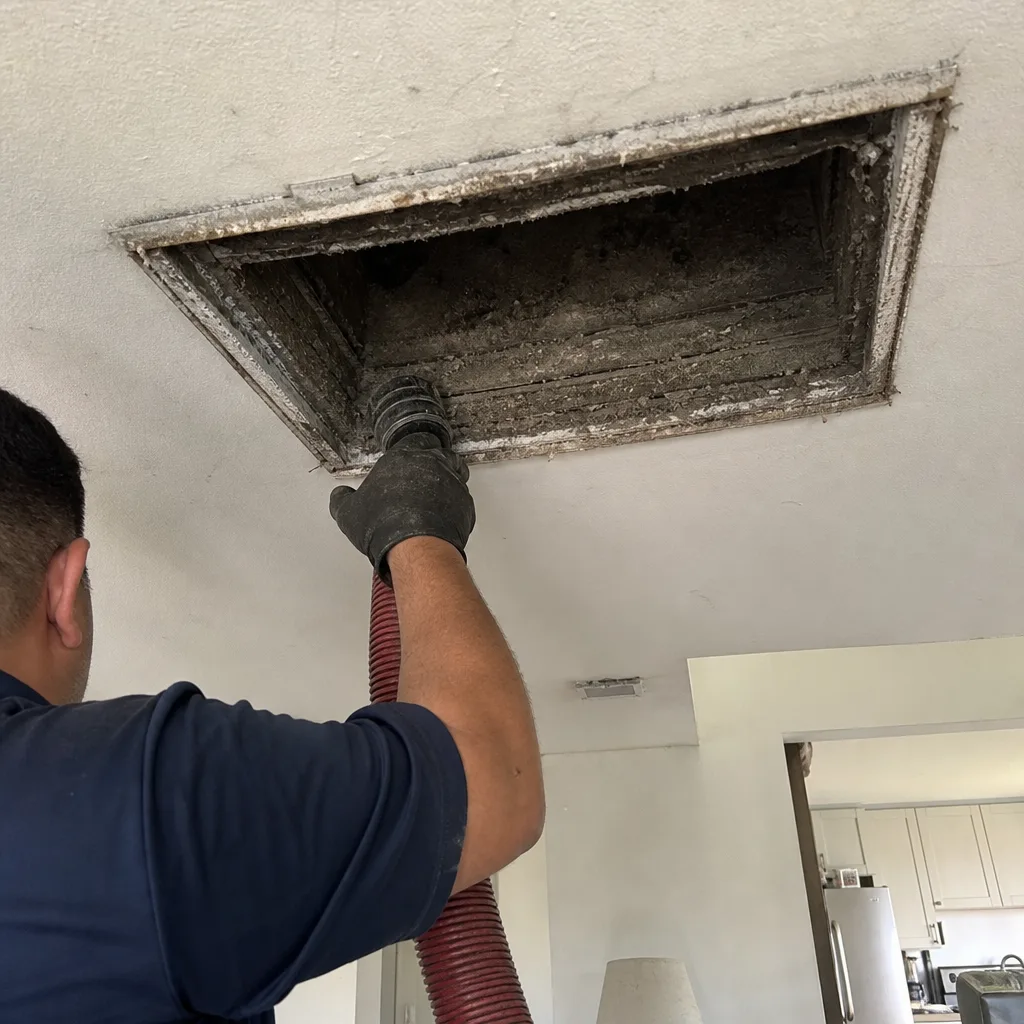
See the difference
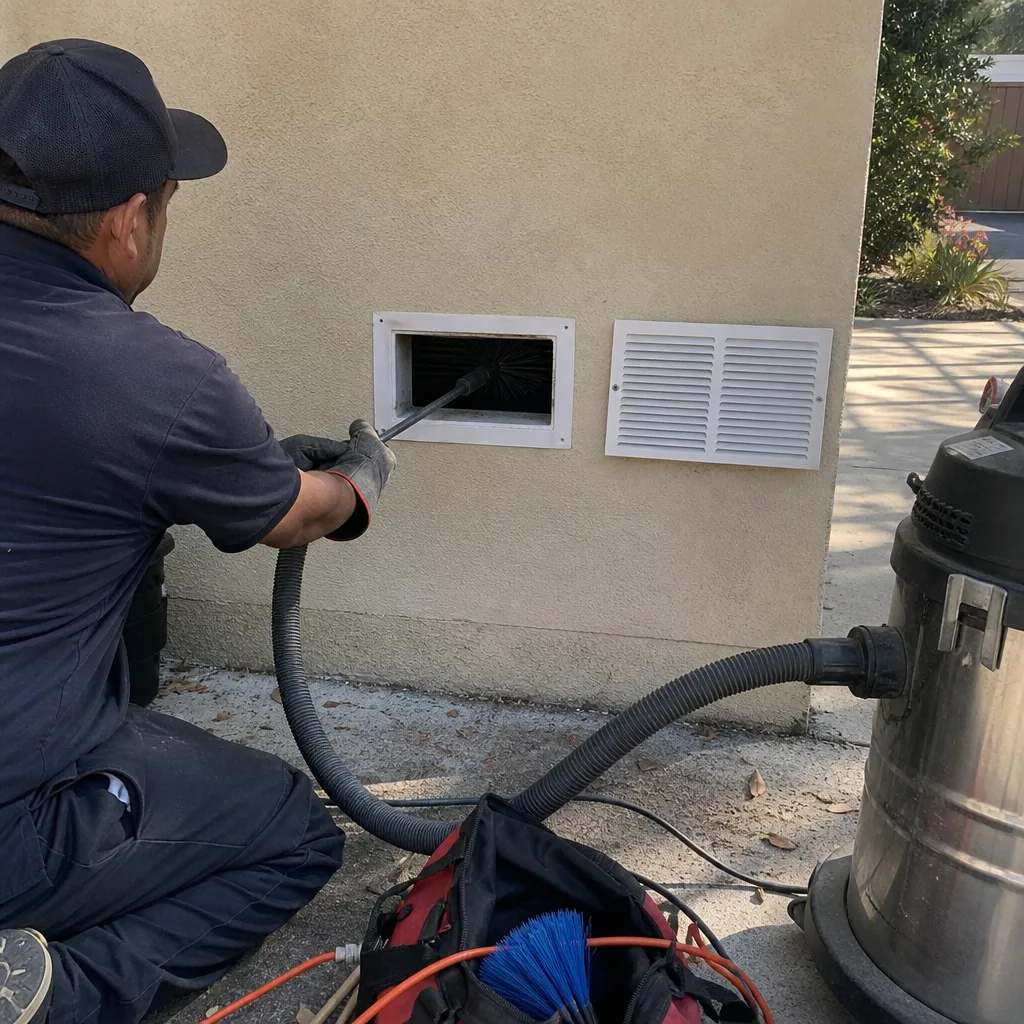
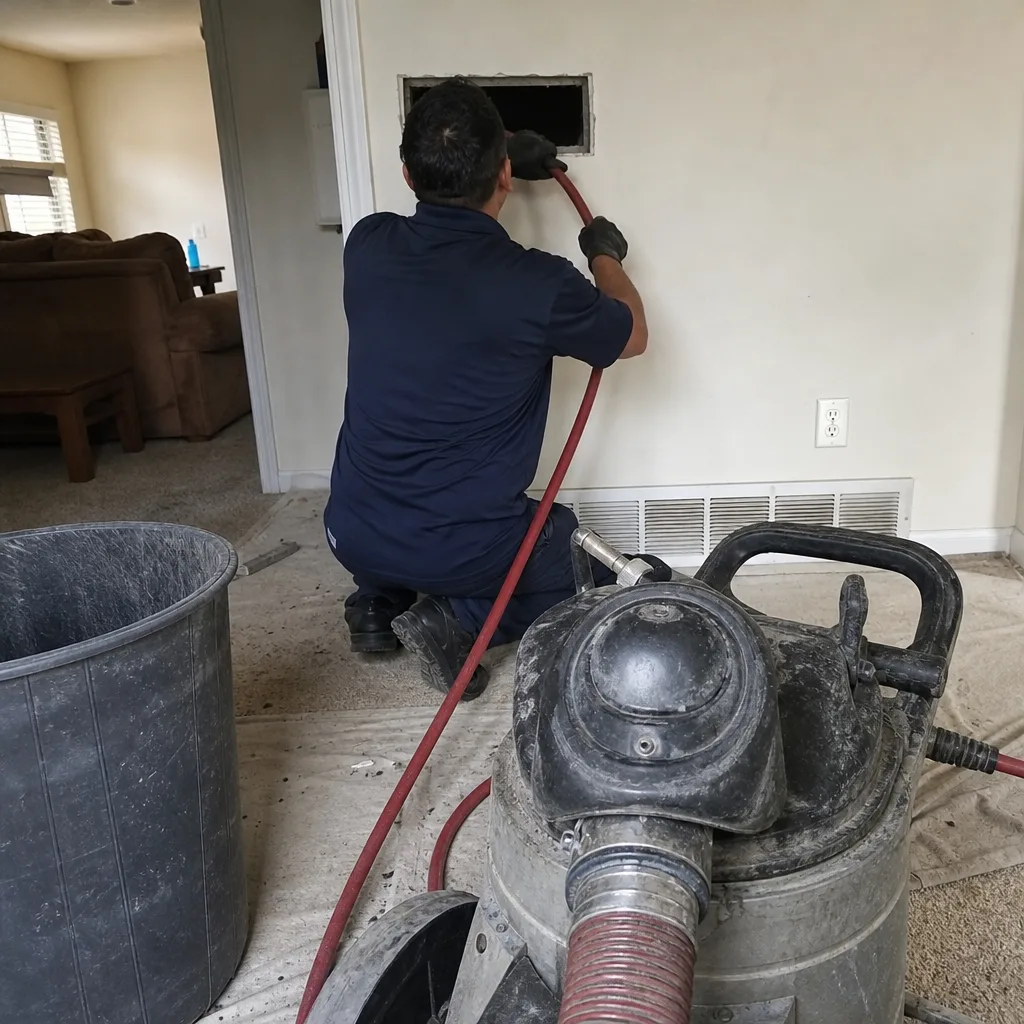 Before
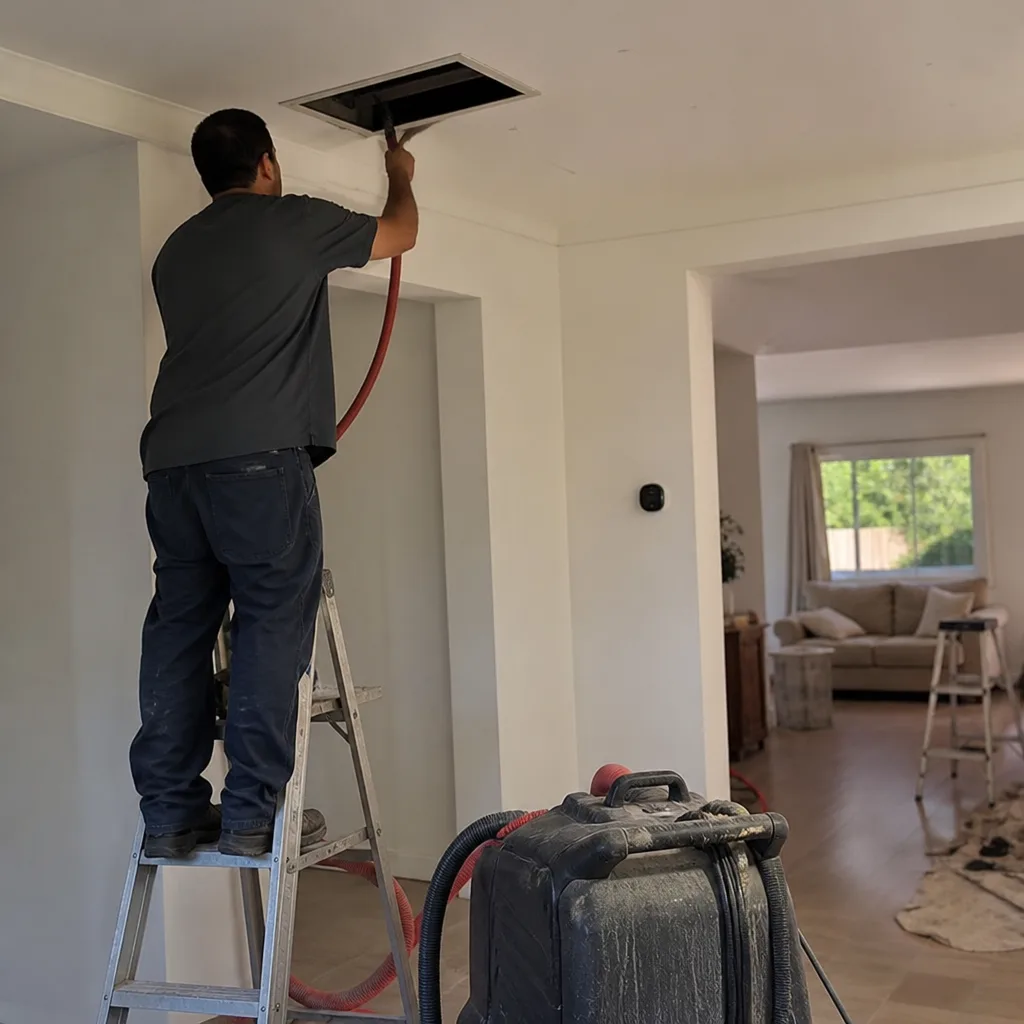 After
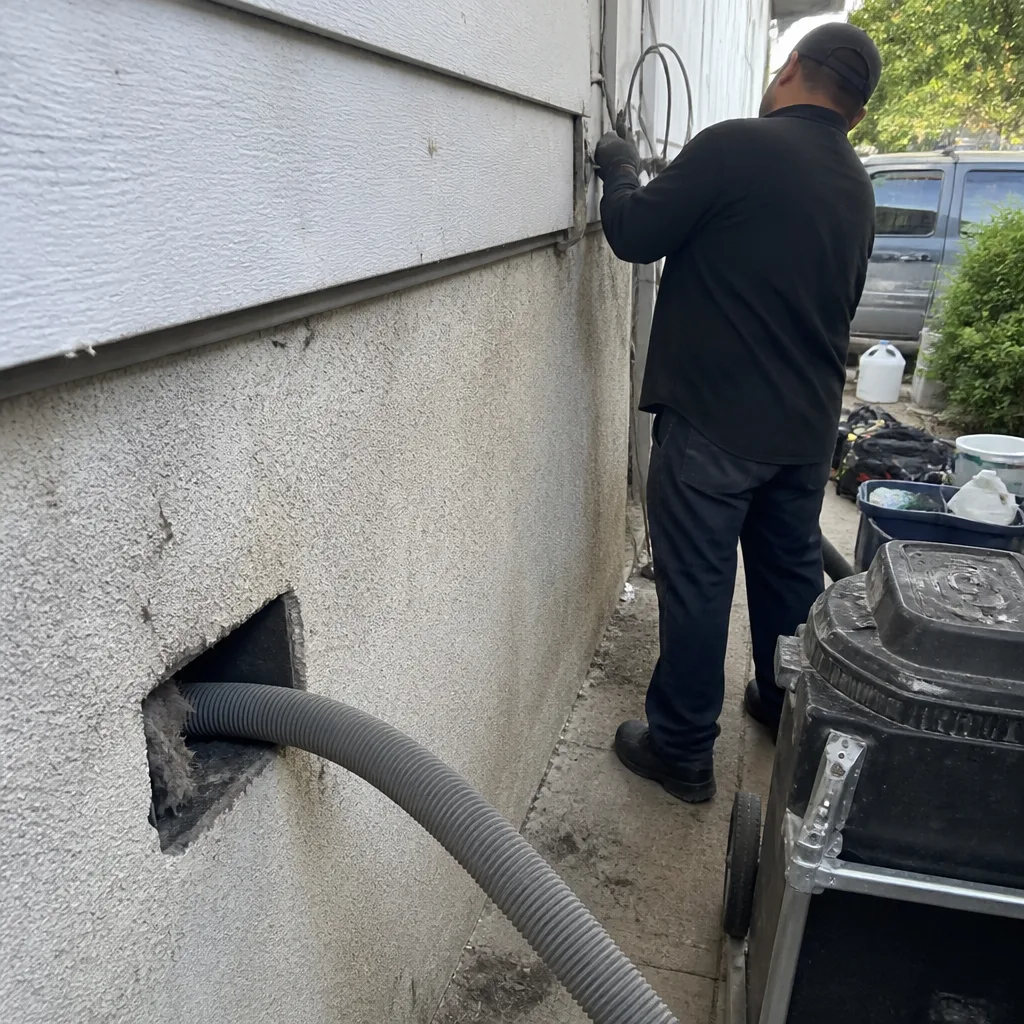 Before
 After
 Before
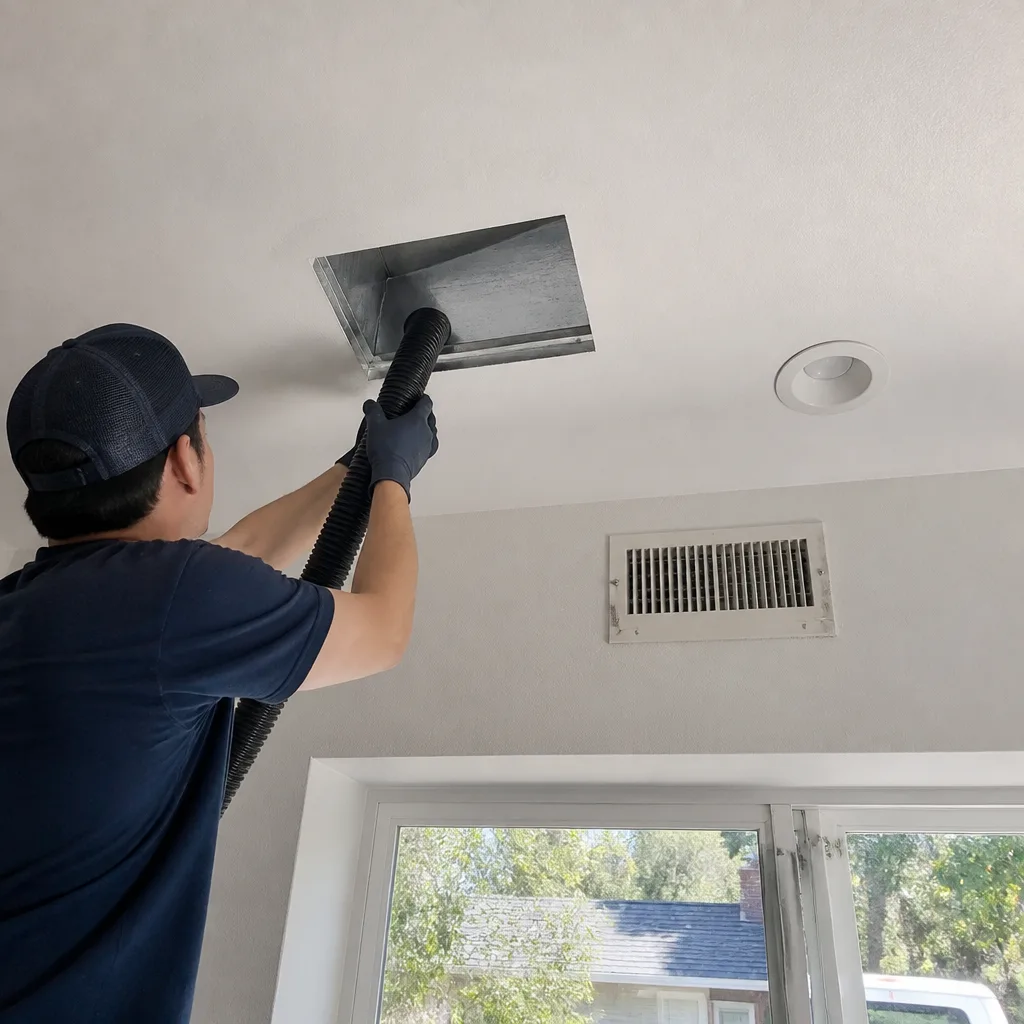 After
When to Call a Professional
Call when you see the signs: visible register dust, startup odors, uneven room airflow, or darkened particulate after wildfire season. Call when you’ve renovated without post-construction duct cleaning. Call when your dryer takes longer than 45 minutes to dry a load. And call when you simply don’t know what your ducts look like inside, because most Tarzana homeowners never have and they’re often surprised.
Air Duct Cleaning Tarzana offers free estimates in Tarzana. We inspect first, quote a flat price per system, and use the equipment described in this guide on every job. Call (866) 472-7239 to schedule yours.
Frequently Asked Questions
A complete cleaning for a typical Tarzana single-family home ranges from $450 to $900, depending on the number of furnaces, the system’s material mix, and whether HEPA collection is specified. The price should be quoted per system with the full scope defined before work begins, not per vent. Call (866) 472-7239 for an exact quote, estimates are free.
Low quotes come from skipping containment equipment, skipping the inspection phase, or pricing per vent and then redefining the system once on-site. A truck with a shop-vac attachment and a rotating brush costs far less to operate than a negative-air containment unit, and the results reflect that difference.
Ask for before-and-after camera footage of your own ducts. If the company doesn’t run a camera through the system, you’re taking their word for it. The footage should show the same sections before and after, and changes in duct-wall condition should be visible. It’s not an unreasonable request; it’s the minimum standard for verifiable work.
Yes, and it’s measurable. Debris on the evaporator coil and blower fan reduces airflow and heat exchange efficiency, which means the system runs longer to hit the same setpoint. In Tarzana’s 100°F summers, that inefficiency compounds quickly. The efficiency loss from coil fouling is typically greater than the loss from dirty duct walls alone.
Cleaning removes the particulate residue that carries much of the odor, but it doesn’t treat odor that’s penetrated into attic insulation, drywall, or the HVAC cabinet itself. After wildfire seasons, we recommend the cleaning first and then evaluate what remains. If odor persists in the ducts specifically, HEPA collection and component cleaning usually address it. If it persists in the home, the source is likely outside the ductwork.
After, not before. Renovation generates dust that will enter the ducts whether the system is running or not, and cleaning before a renovation simply means cleaning again after. Wait until the drywall work, sanding, and paint are complete, then have the system cleaned and the filter replaced. If you’re renovating in phases, clean at the end of the dustiest phase.
The Bottom Line
Air duct cleaning in Tarzana is not a generic service. The housing stock here, a mix of 1970s ranches, 1990s additions, and modern replacements, demands inspection before agitation and equipment that can handle long runs, mixed materials, and wildfire particulate. Professional-grade tools (Rotobrush, Nikro, Abatement Technologies) do the work; negative-air containment keeps it from recirculating. The best Tarzana air duct cleaning starts with inspection, treats repair as part of the job, and leaves you with documentation showing what was done. If your system hasn’t been looked at in years, now is the time, before another Valley summer puts the load on it.
Written by the team at Air Duct Cleaning Tarzana, serving Tarzana since 2013.