
Last updated November 2, 2026
 Whole-home duct cleaning
 Dryer vent cleaning
 Camera inspection
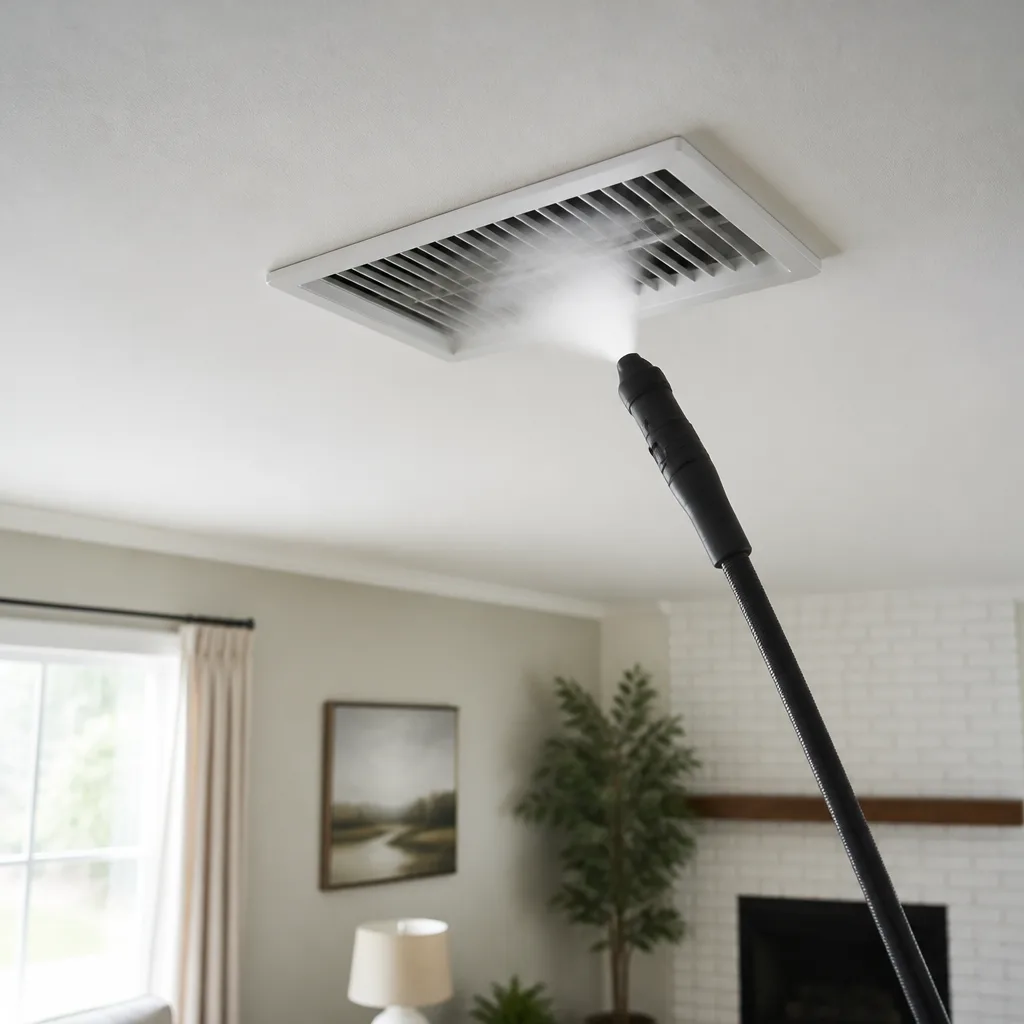 Sanitizing & deodorizing
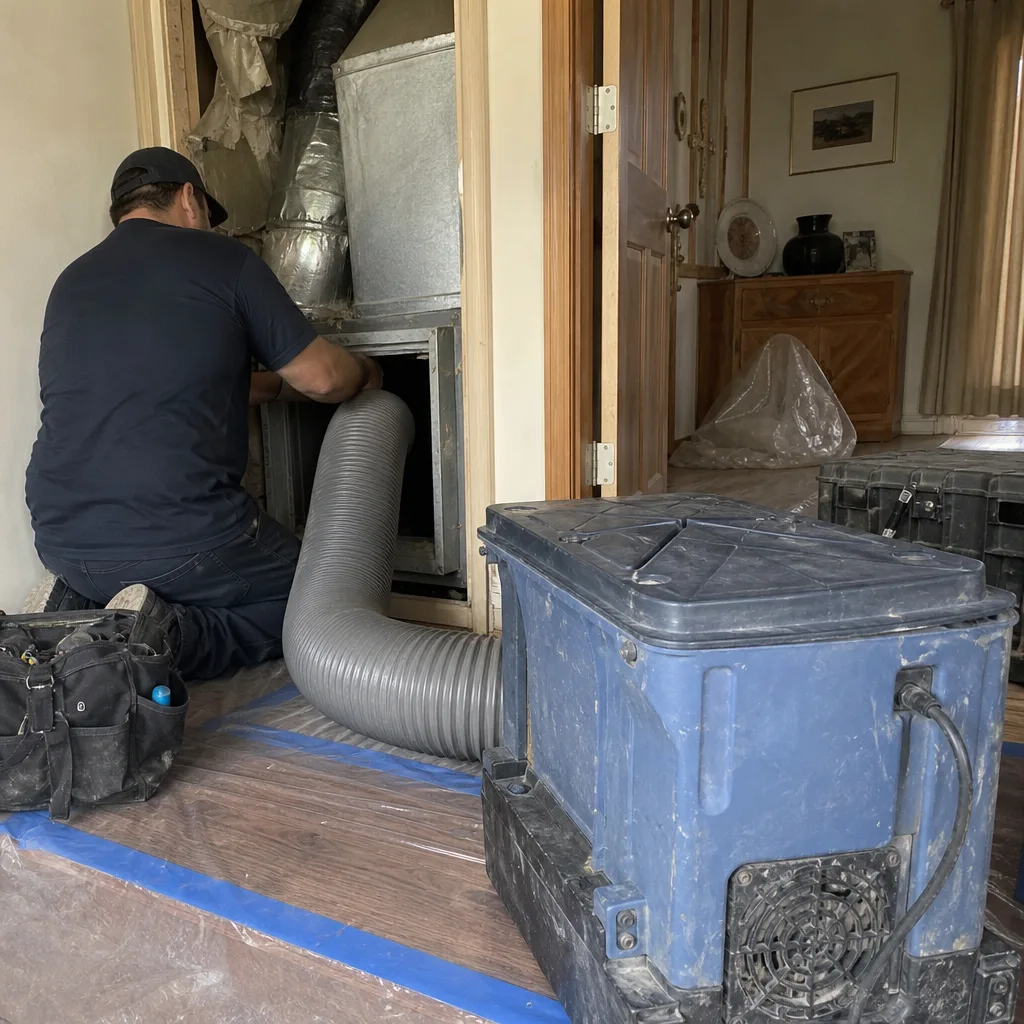
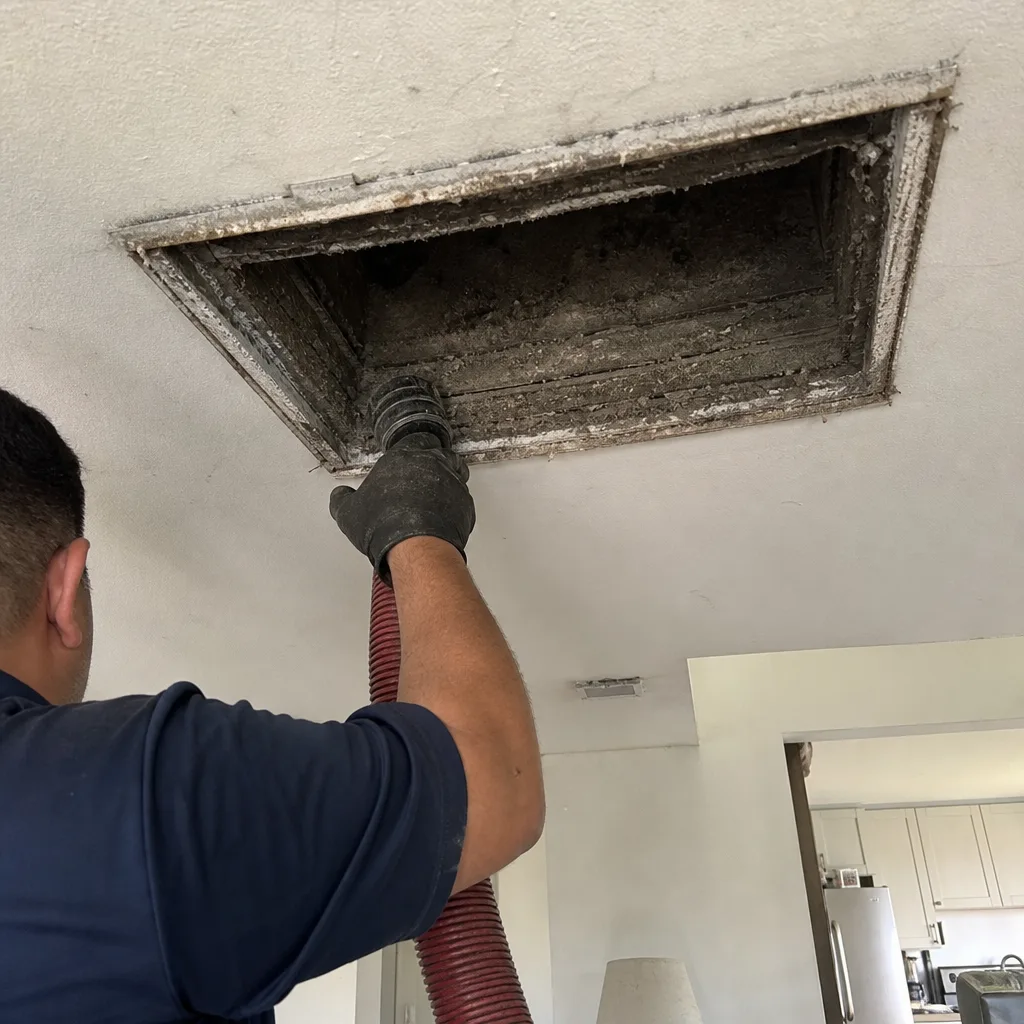
Whole-system duct and dryer vent check with before-and-after photos - you see exactly what came out of your vents
That "$99 whole-house special" is a bait ad - the real number appears once they are in your hallway, or the "clean" is a shop-vac at the register. We photograph the inside of your ducts before and after instead.
DIY vs Professional Air Duct Cleaning: The Tarzana Homeowner’s Decision Guide
A shop vac generates somewhere between 50 and 100 cubic feet per minute of suction. A commercial truck-mounted duct cleaning system generates 12,000 to 16,000 CFM. That’s not an incremental difference. It’s a categorical one. If you’re a Tarzana homeowner trying to decide whether to clean your ducts yourself or hire a professional, the decision should not come down to elbow grease or what you saw on a weekend warrior video. It comes down to whether the tool you’re holding can actually extract debris from deep inside your duct system, or just loosen it and push it around. By the end of this guide, you’ll understand exactly what professional-grade duct cleaning involves, what DIY can legitimately accomplish, and where the line between the two is drawn in the San Fernando Valley’s specific housing stock.
Styles & brands we work with
- Whole-home duct cleaning
- Dryer vent cleaning
- Camera inspection
- Sanitizing & deodorizing
Quick Answer
Professional air duct cleaning in Tarzana uses commercial negative-pressure systems generating 12,000+ CFM to dislodge and immediately extract debris from the entire duct system. DIY methods using a shop vac simply cannot generate enough suction to clean beyond the first few feet of a register opening. For most Tarzana homes, the right approach is professional full-system cleaning every 3 to 5 years, with homeowner maintenance like register vacuuming and filter changes in between.
Table of Contents
- The Physics of Duct Cleaning: Why CFM Is the Whole Ballgame
- What DIY Can Legitimately Accomplish in Tarzana Homes
- When DIY Makes Professional Cleaning Harder
- Tarzana-Specific Risk Factors Most Guides Miss
- The Break-Even Analysis: What DIY Actually Costs in 2026
- The One DIY Maintenance That Genuinely Extends Intervals
- Why Equipment Choice Matters: Rotobrush, Nikro, and Negative Air
- Common Mistakes to Avoid
- When to Call a Professional
- Frequently Asked Questions
- The Bottom Line
The Physics of Duct Cleaning: Why CFM Is the Whole Ballgame
Source removal in air duct cleaning depends on two things happening at once: agitation and airflow. You have to knock debris loose from the duct walls, and you have to move enough air through the duct to carry that debris out of the system and into a containment device. The second part is where DIY falls apart.
Airflow through a duct is measured in cubic feet per minute. A typical Tarzana home has branch lines that are 6 to 8 inches in diameter. To create the airspeed needed to lift and carry dust, dander, construction debris, and the fine silicate particles that accumulate in Southern California ductwork, you need a minimum of around 2,000 CFM at the point of contact. That’s a floor, not a target. Professional truck-mounted systems and their portable equivalents like those from Nikro generate 12,000 to 16,000 CFM at the unit, with enough residual velocity at the end of a 30-foot branch line to actually pull material out.
A consumer shop vac rated at 5 horsepower might claim 150 CFM on the box. In real use, with a hose run of 15 feet, a narrow attachment, and a filter that’s already catching dust, you’re getting 50 to 80 CFM at the point where it matters. That is not enough to lift settled debris from a flat duct surface. What it does is disturb the top layer.
Think of it like this: a professional system is a leaf blower and a dump truck working together. Your shop vac is a drinking straw. Both are technically “suction,” but only one is performing source removal.
This is why we tell homeowners who call us about Air Duct Cleaning in Tarzana to be suspicious of any service that arrives with what looks like consumer equipment. The physics do not care about marketing. If the CFM is not there, the cleaning is not happening.
What DIY Can Legitimately Accomplish in Tarzana Homes
We’re not here to say a homeowner should never touch anything related to their ducts. There’s a narrow, well-defined band of tasks that are genuinely useful, safe, and well within the capability of a person with standard tools. Tarzana houses, especially the 1950s and 60s ranch-style homes common south of Ventura Boulevard, have accessible return air registers that collect a visible amount of dust and hair within a few months.
- Register and grille cleaning: Remove the register cover with a screwdriver, take it outside or into a utility sink, and wash it with warm soapy water. Let it dry fully before reinstalling. While the cover is off, vacuum the first 6 to 12 inches of visible duct interior with a brush attachment on a standard household vacuum. This removes the loose material that triggers visible dusting around the register.
- Return grille filter replacement: If your home has a filter at the return grille, replace it or wash it (if it’s a washable type) every 30 to 60 days during fire season and high-use months. In Tarzana, September through November sees peak particulate load from Santa Ana winds and nearby brush events. A clogged filter forces the blower to work harder and increases the amount of bypass dust entering your ducts.
- Visible surface dusting around registers: Use a damp microfiber cloth to wipe the wall and ceiling around supply registers. This prevents the register from pulling dust back into the airflow when the system cycles off and on.
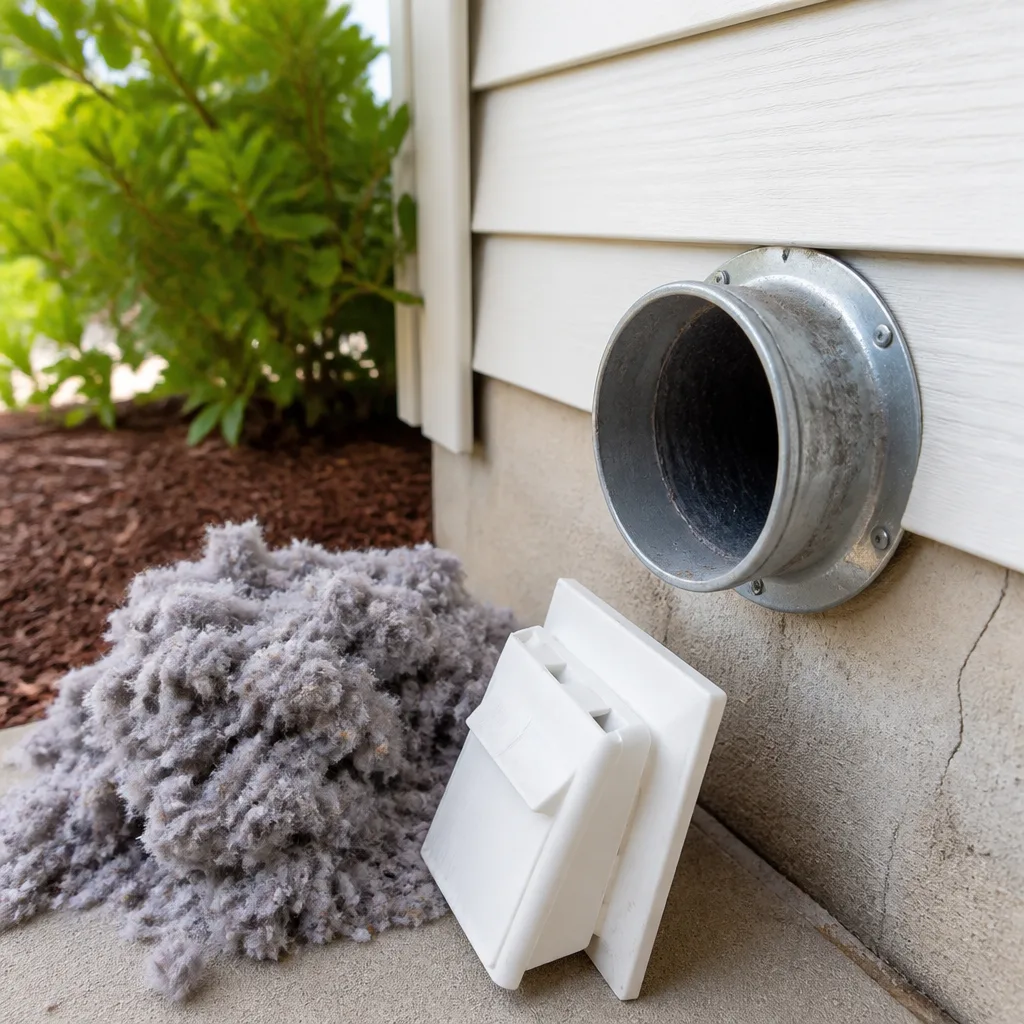
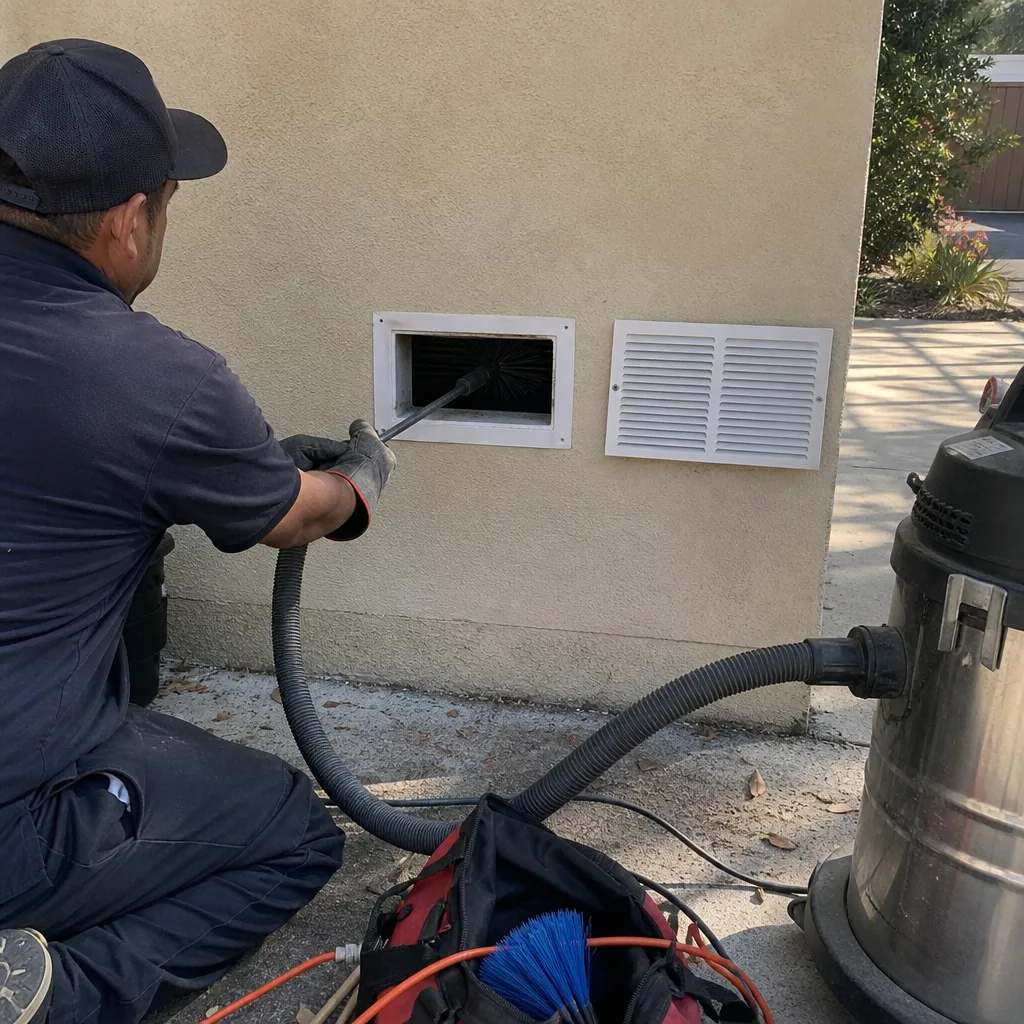
- Dryer vent exterior cap clearing: Go outside to where your dryer vent terminates, usually a wall cap or roof cap. If you can reach it safely from the ground, remove the cap (it’s typically held by a single screw or friction fit) and pull out the lint you can reach with your fingers or a flexible lint brush. This addresses the first 12 to 18 inches of the vent. It does not replace a full Dryer Vent Cleaning in Tarzana, because the dangerous accumulation is usually deeper in the run where lint compacts at bends and seams.
These four tasks, done consistently, will not clean your ducts. They will reduce the rate at which new debris enters the system and keep the visible points of entry and exit from becoming eyesores. That’s what they’re for.
When DIY Makes Professional Cleaning Harder
There is a version of DIY duct cleaning that is actively counterproductive, and unfortunately it’s the version most often promoted online. It involves inserting an air compressor hose into a duct and blowing compressed air through the system while registers are open. The idea is that the air pressure will blast dust toward the registers and out.
What actually happens is this: the compressed air dislodges debris from the duct walls, but without negative pressure to capture it, the now-airborne particulates follow the path of least resistance. That path is not out through a single register. It’s into every register, every seam, every gap, and every room connected to the system. Fine dust that was sitting harmlessly on the bottom of a duct is now suspended in your living room air.
Worse, the compressed air drives smaller particulates deeper into the duct liner. Many Tarzana homes built before 1980 have fiberglass duct board with a fibrous surface. Aggressive blowing packs dust into those fibers rather than lifting it out. When we are hired to clean a system after a homeowner’s DIY attempt, we typically find that the job takes longer and requires more agitation passes than a system that was simply left alone. The dust has been embedded, not removed.
The same applies to aggressive brushing. There are consumer tools sold online: a flexible rod with a stiff brush head that attaches to a drill. If you shove that into a flex duct section, you can tear the inner liner. Flex duct is thin foil and plastic. It was not designed to withstand radial scrubbing force from a spinning brush not matched to its diameter. A torn liner means that duct now leaks conditioned air into the attic and pulls attic air into your living space. That’s a repair, and it costs more than the cleaning would have.
Tarzana-Specific Risk Factors Most Guides Miss
Generic duct cleaning advice does not account for the actual housing inventory in a specific place. Tarzana’s is distinctive, and it matters for this decision.
Fiberglass duct board: A significant portion of Tarzana’s housing stock was built between 1955 and 1975. During that period, fiberglass duct board was a common material for supply plenums and trunk lines. Duct board is rigid fiberglass with a foil or fabric facing on the outside and an air-facing surface that is fibrous. Over decades of temperature cycling, that surface becomes friable. A professional cleaning system with adjustable air pressure and negative containment can clean it effectively. A homeowner with a brush or compressed air can degrade it.
Flex duct runs in attics: The further south you go in Tarzana, toward the slopes and especially in the hillside sections, the more you encounter homes with long flex duct runs snaking through tight attic spaces. Flex duct is lightly reinforced. It sags, it kinks, it tears at connection collars. It’s common for Tarzana attics to reach 140 degrees in August, which makes the plastic liner more pliable and easier to damage. If you’re crawling through a hot attic pulling a DIY tool through flex duct, you’re working in conditions that make damage significantly more likely.
Wildfire adjacency: Tarzana sits below the Santa Monica Mountains. Fire season particulate is a real input into duct systems. When the air quality index spikes from brush fires, your HVAC system is filtering some of that air, but it’s also capturing what the filter misses. That fine particulate is exceptionally light and mobile. It’s the material most likely to be redistributed by the compressed-air DIY method. Professional systems with HEPA-filtered negative air units are designed to capture it. Consumer equipment is not.
The Break-Even Analysis: What DIY Actually Costs in 2026
Let’s put numbers on the DIY option. This is what a Tarzana homeowner would actually spend to attempt a “clean” using the most commonly recommended consumer methods.
- Shop vac rental (Home Depot in Tarzana): $21 for 4 hours, roughly $35 for a day. This is a 5-gallon unit rated around 5 peak HP. Real CFM at the end of a 15-foot hose: approximately 60-80.
- Flexible dryer vent brush kit: $18 to $35 from a hardware store or online. These are 10 to 20 feet of flexible rod with a round brush. Useful for dryer vents, not for HVAC duct runs.
- Consumer “duct cleaning” attachment kit: $25 to $45. These are segmented plastic rods with a soft brush head designed to fit a standard 2.5-inch vacuum hose. They reach 8 to 12 feet into a branch line. That covers the first 10% of a typical home run.
- Time investment: Realistically, 3 to 5 hours for a first-time homeowner to remove and clean all register covers, vacuum visible duct openings, and attempt one or two “deep reach” passes on each accessible register. This assumes one person and a single-story home.
Total equipment cost: $65 to $115. Total time: 3 to 5 hours. What you’ve accomplished: visible surface cleaning at the register openings and the first foot or two of duct interior. The remaining 90% of the duct system has not been touched.
A professional cleaning for a typical 2,000-to-2,500-square-foot Tarzana home runs in the range of $350 to $700 depending on the number of systems, the accessibility of the equipment, and whether duct repair is needed during the job. That price includes commercial equipment, negative air containment, agitation of the entire duct interior, and verification photos.
Here’s the honest way to frame it: DIY costs about one-fifth of a professional cleaning and accomplishes about one-tenth of the work. That is not a value equation in the homeowner’s favor. Where it does make sense is as interim maintenance between professional visits, not as a substitute for them.
The One DIY Maintenance That Genuinely Extends Intervals
There is one area where consistent DIY work genuinely stretches the time between professional cleanings: the dryer vent. It’s a dedicated lint removal task that a homeowner can do partially, and a specialty service that should be done fully every one to two years.
A typical Tarzana laundry room has a dryer vent run of 10 to 30 feet before it exits the house. The closer the dryer is to an exterior wall, the shorter the run and the more useful your DIY cleaning will be. If your vent exits directly behind the dryer through a wall cap, the entire run is reachable with a brush from either end. In that specific configuration, a homeowner can realistically clear the whole vent. If the vent runs up through the roof, which is common in Tarzana’s two-story homes, the run length alone puts the far end out of reach of any consumer tool.
For the accessible short-run scenario, here is the complete homeowner procedure:
- Unplug the dryer and pull it away from the wall with care, watching the gas line if you have a gas dryer.
- Disconnect the transition hose (the semi-rigid foil tube) from both the dryer and the wall.
- Vacuum the interior of the transition hose. If it’s cracked, collapsed, or more than five years old, replace it. It costs $18.
- Insert a dryer vent brush into the wall port and push it through to the exterior. Rotate as you pull it back.
- Repeat from the exterior side if the run is short enough to access both ends.
- Reconnect everything, push the dryer back, and confirm the exterior cap opens when the dryer is running.
This procedure, done once a year, will meaningfully reduce lint accumulation in a short, straight run. It will not clear a long run with bends. It will not clear a roof-terminated vent. It will not address the transition hose if lint has compacted into a hard mat. That’s Dryer Vent Cleaning in Tarzana territory, and it’s one of the few home maintenance tasks that carries a genuine fire-safety component. Lint is fuel. The US Fire Administration identifies dryer vent obstruction as a leading contributor to residential dryer fires. When the run is beyond the reach of your brush, call. That’s the line.
Why Equipment Choice Matters: Rotobrush, Nikro, and Negative Air
This is where the difference between a professional service and a low-bid operator in Tarzana becomes visible. The cleaning platform matters, and so does the containment method.
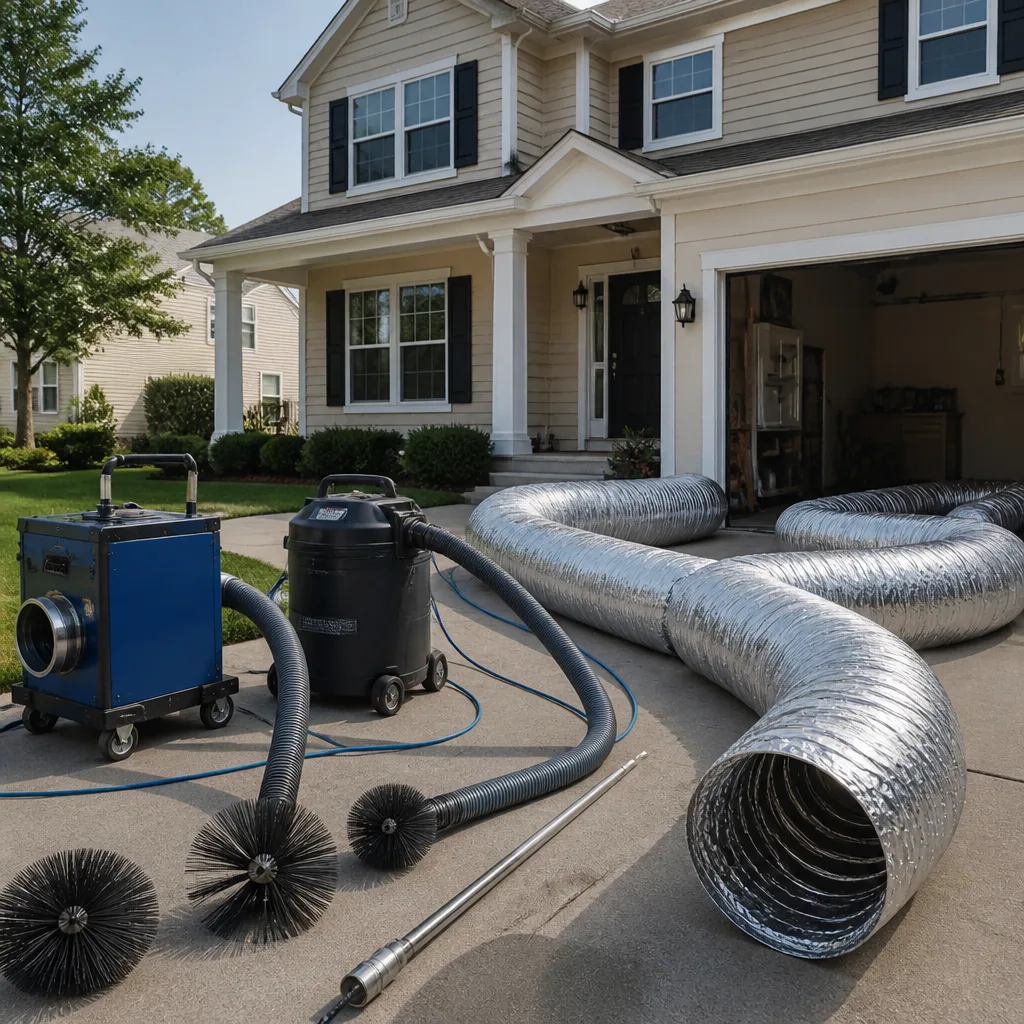
Professional duct cleaning platforms fall into two broad categories: rotary brush systems and pneumatic (compressed air) whip systems. The Rotobrush system is a rotary brush that travels through the duct while simultaneously vacuuming, with the brush and vacuum operating together so debris is agitated and extracted in a single pass. The Nikro platform encompasses a range of pneumatic tools and high-CFM filtration units designed for source removal in both residential and light-commercial settings. What both share is design intent: they are built to generate the negative pressure and mechanical agitation necessary to remove, not redistribute.
Containment is the second piece, and it’s the one homeowners rarely think to ask about. A system being agitated loosens debris. If the only vacuum in the operation is attached to the cleaning tool, some of that debris will escape into the airstream. The professional answer is Abatement Technologies negative-air equipment: a HEPA-filtered unit that creates continuous negative pressure in the duct system during cleaning, so any airborne particle that isn’t captured by the primary vacuum is drawn through the negative air unit and trapped. This is standard practice in hospital and commercial IAQ work. In our experience, most residential cleaners in the San Fernando Valley do not deploy this equipment. It’s heavy, it’s expensive, and it adds setup time. It is also the difference between a cleaning process that replaces the air as it works and one that stirs the air and hopes for the best.
For a Tarzana homeowner evaluating a professional service, these are the questions to ask: What cleaning platform do you use, specifically? Do you run negative air containment during the job? Will I get before and after photos? A legitimate operator will answer all three without hesitating. The reason we surface this is simple: the DIY vs. professional question presumes that all professionals are roughly equivalent. They are not. Some are running the same physics as your shop vac, just louder.
The better comparison is between what you can do yourself, what a low-bid operator with a portable vacuum can do, and what a properly equipped specialist with a Rotobrush or Nikro system and negative air containment will do. Those are three different outcomes. Two of them are not worth paying for.
Common Mistakes to Avoid
- Using compressed air to “blow out” ducts. Airborne dust follows the path of least resistance, which means it exits into every room connected to the system. You will spend the following weekend wiping every surface in the house and still smell the dust every time the system kicks on.
- Buying a consumer “duct cleaning kit” and expecting full-system results. Those kits reach 8 to 12 feet. The average branch line in a Tarzana home runs 25 to 40 feet from the trunk. You’re cleaning the on-ramp, not the highway.
- Ignoring the filter while “cleaning” the ducts. If the filter is clogged or the wrong size, the blower is pulling bypass air around it. That debris goes into the ductwork you just cleaned. Filter first, always.
- Brushing flex duct aggressively. Flex duct liner tears. Once torn, the duct pulls attic air into the conditioned space and sends paid-for cool air into a 140-degree attic. That’s not a maintenance issue anymore; it’s an Air Duct Repair in Tarzana invoice.
- Drinking the “per-vent” pricing Kool-Aid. If a company quotes you a price per vent or per square foot with a low teaser, that’s a known bait-and-switch pattern. Professional pricing is per system or per home, agreed before work starts, with no per-vent upcharges at the door.
- Assuming a “duct cleaning deal” and a legitimate cleaning are the same. A $79 whole-house special cannot pay for the equipment, time, and labor of real source removal. It exists to get a salesperson in the door. If the offer seems disconnected from the labor involved, it is.
- Waiting until the ducts are visibly dirty to think about them. By the time dust is visibly accumulating around register openings within a week of wiping, the system interior has been loading for months. The sign is the symptom, not the start.
When to Call a Professional
Call a professional when the problem is in the system, not at the register. That means: visible dust returning to surfaces within days of cleaning even when the filter is clean; persistent musty odor that follows the HVAC cycle; rooms that are consistently hotter or cooler than others with the same thermostat setting; visible dust or debris falling from a supply register when the system starts; a home renovation or major remodel that produced drywall dust and debris; moving into a home whose maintenance history is unknown; or a dryer that takes longer than one cycle to dry a standard load. All of these indicate the issue is beyond the reach of a homeowner. Air Duct Cleaning Tarzana offers free estimates in Tarzana. Call (866) 472-7239 to have a system evaluated without obligation.
Frequently Asked Questions
Professional air duct cleaning for a typical Tarzana home costs between $350 and $700 for a single HVAC system, depending on system size, accessibility, and whether any Air Duct Repair in Tarzana is required during the job. Homes with two HVAC systems, common in larger Tarzana properties, run higher. Legitimate quotes are per system or per home, not per vent. If a quote is by the vent, that’s a red flag. Call (866) 472-7239 for an exact quote on your system; estimates are free.
Lower quotes typically mean lighter equipment, no negative air containment, and no repair capability. A residential-grade portable vacuum moved room to room cannot generate the CFM to perform source removal through a full branch line. The low price is a function of what’s being sold, which is usually a surface-level treatment with a dusting of “inspection” upsells. Real duct cleaning involves expensive equipment, setup time, and labor. If the price cannot cover those inputs, the work is not the same work.
You can clean the first 12 inches of duct visible behind each register cover, and that’s about it. A shop vac generates 50 to 100 CFM at the end of the hose. Source removal through a 25-foot branch line requires 2,000+ CFM at minimum. You can clean register covers, replace filters, and vacuum visible openings. You cannot clean the duct system. The physics do not bend for enthusiasm.
For most Tarzana homes, every 3 to 5 years is realistic. Homes with pets, smokers, recent renovations, or that operate the HVAC system heavily during peak summer and fire season may need service every 2 to 3 years. The determining factor is total particulate load, which is influenced by occupancy, filter quality and replacement discipline, and proximity to wildfire activity. The best indicator that it’s time is visible dust returning to surfaces despite clean filters and the system running normally.
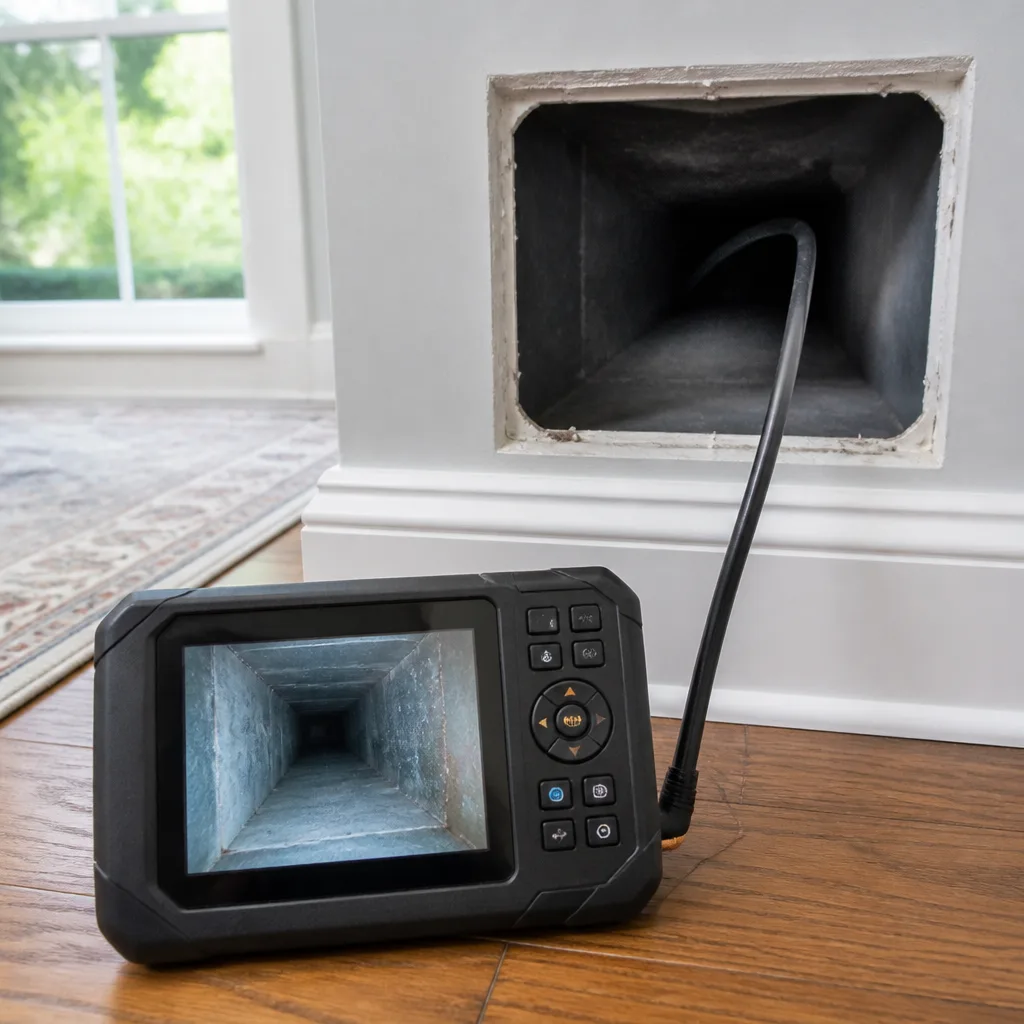
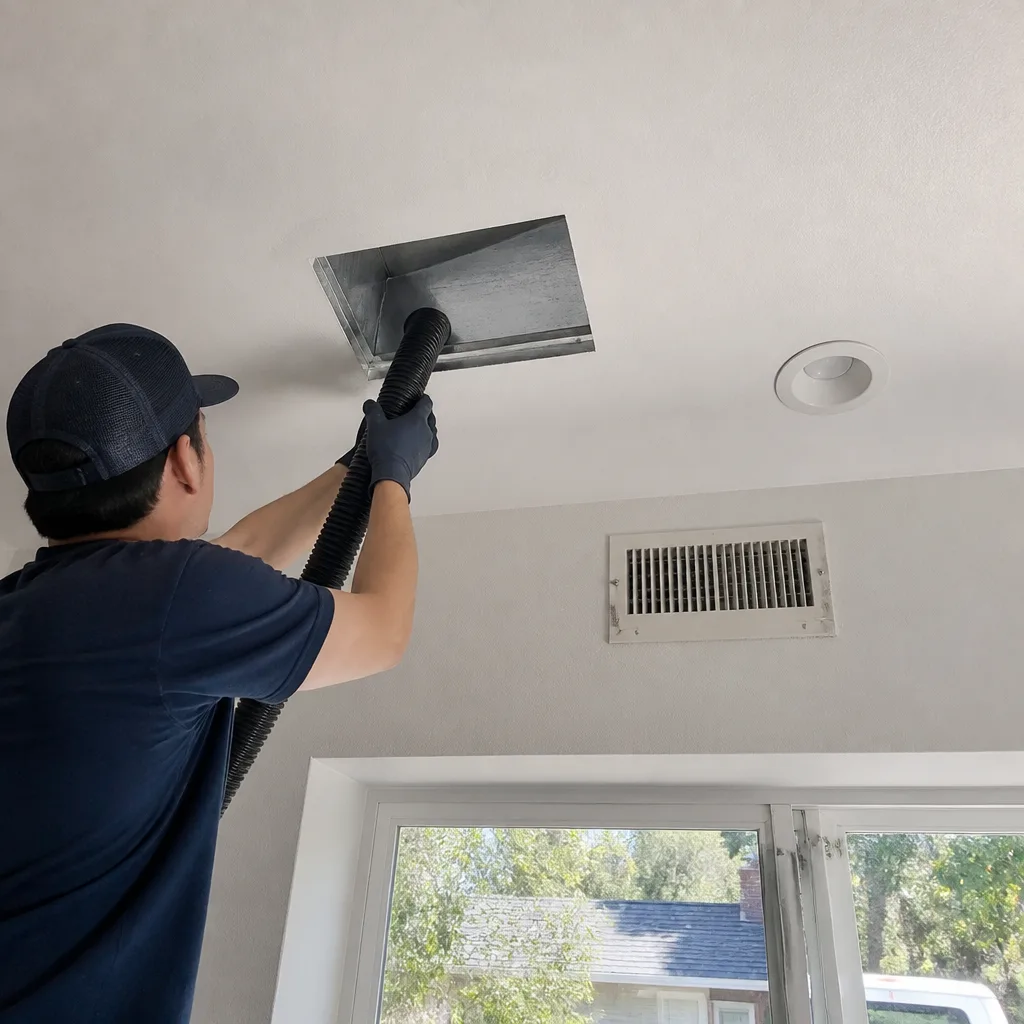
Request before-and-after photos of the interior of the ductwork. Any legitimate operator will document the work. Photos should show the same duct section before and after agitation and extraction, with visible difference in surface condition. If a company cannot or will not provide documentation, assume the work was not substantive. The photos are the proof. The equipment is the method.
If your dryer vents straight through a nearby exterior wall and the total run is under 10 feet with no bends, annual DIY brushing with a proper vent brush is sufficient. If the run travels through a wall, floor, ceiling, attic, roof, or has bends, a professional should clear it every 1 to 2 years. Compacted lint in a long run is both a fire risk and beyond the reach of consumer tools. When in doubt, have it evaluated.
The Bottom Line
The DIY vs. professional duct cleaning question resolves to a simple technical fact: your tools cannot generate the negative pressure required to extract debris from a duct system. What you can do is maintain the points of entry and exit: register covers, filters, visible openings, and short dryer vent runs. What you cannot do is clean the duct interior. For that, the decision comes down to choosing a professional who runs real equipment and verifies the work. In Tarzana’s housing stock, with its duct board, flex duct, and fire-season particulate, that distinction is more consequential than in most markets. Do what you can yourself. Pay for what you cannot. And verify what you pay for.
Written by the team at Air Duct Cleaning Tarzana, serving Tarzana since 2013.
See the difference
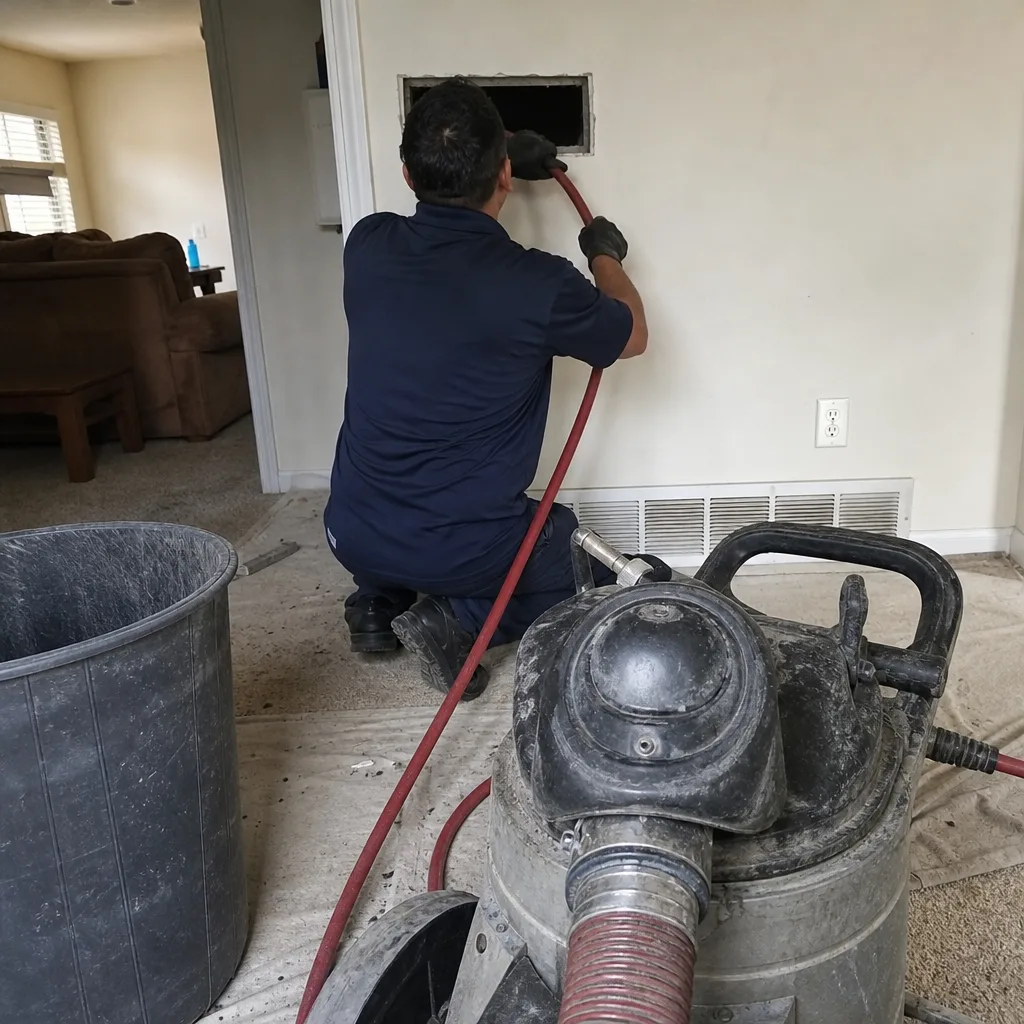 Before
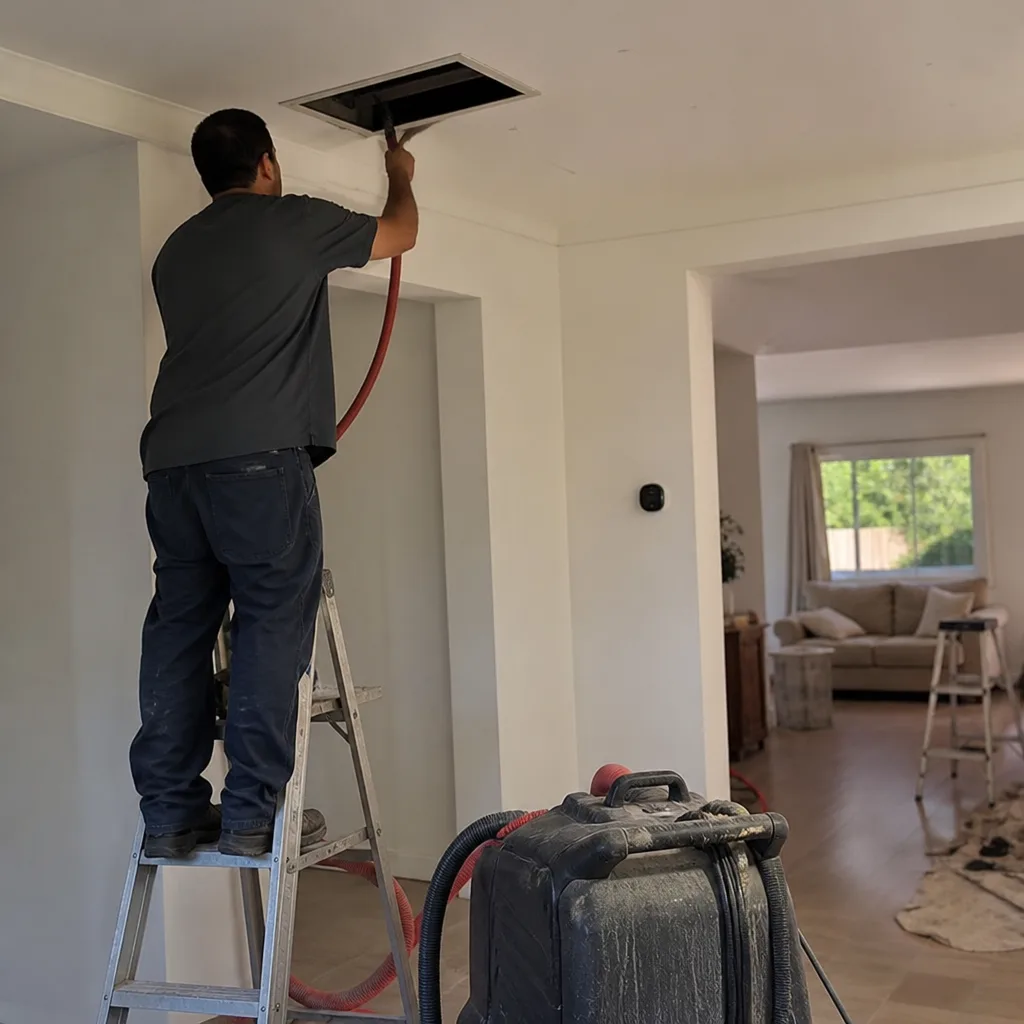 After
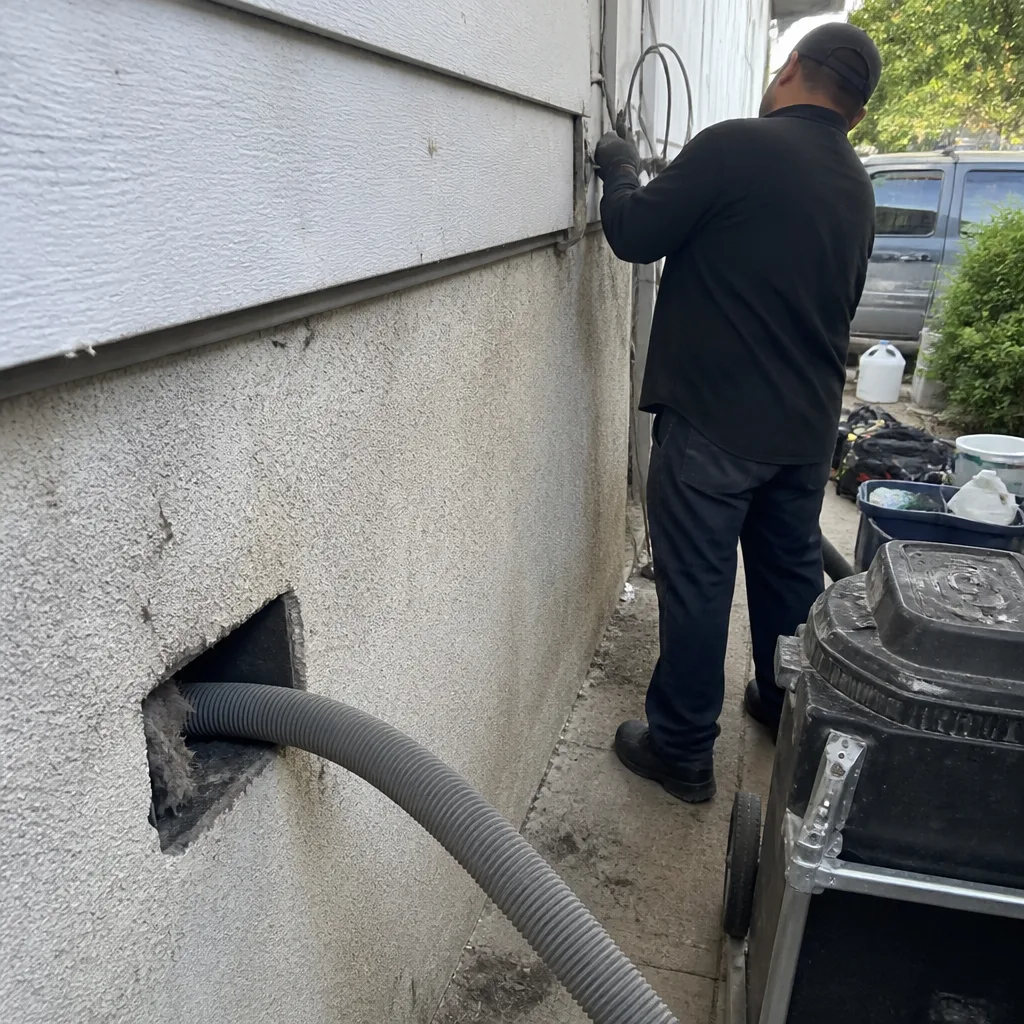 Before
 After
 Before
 After