
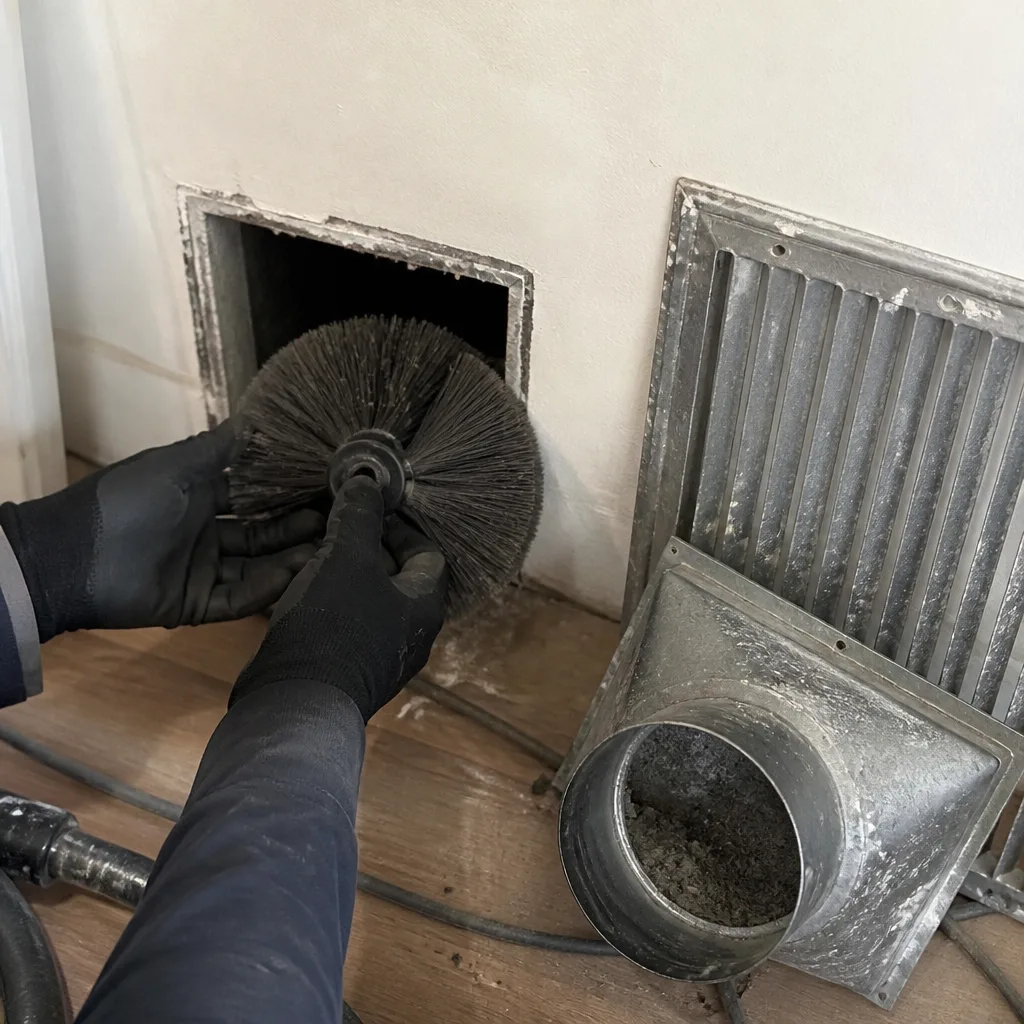
Last updated November 2, 2026
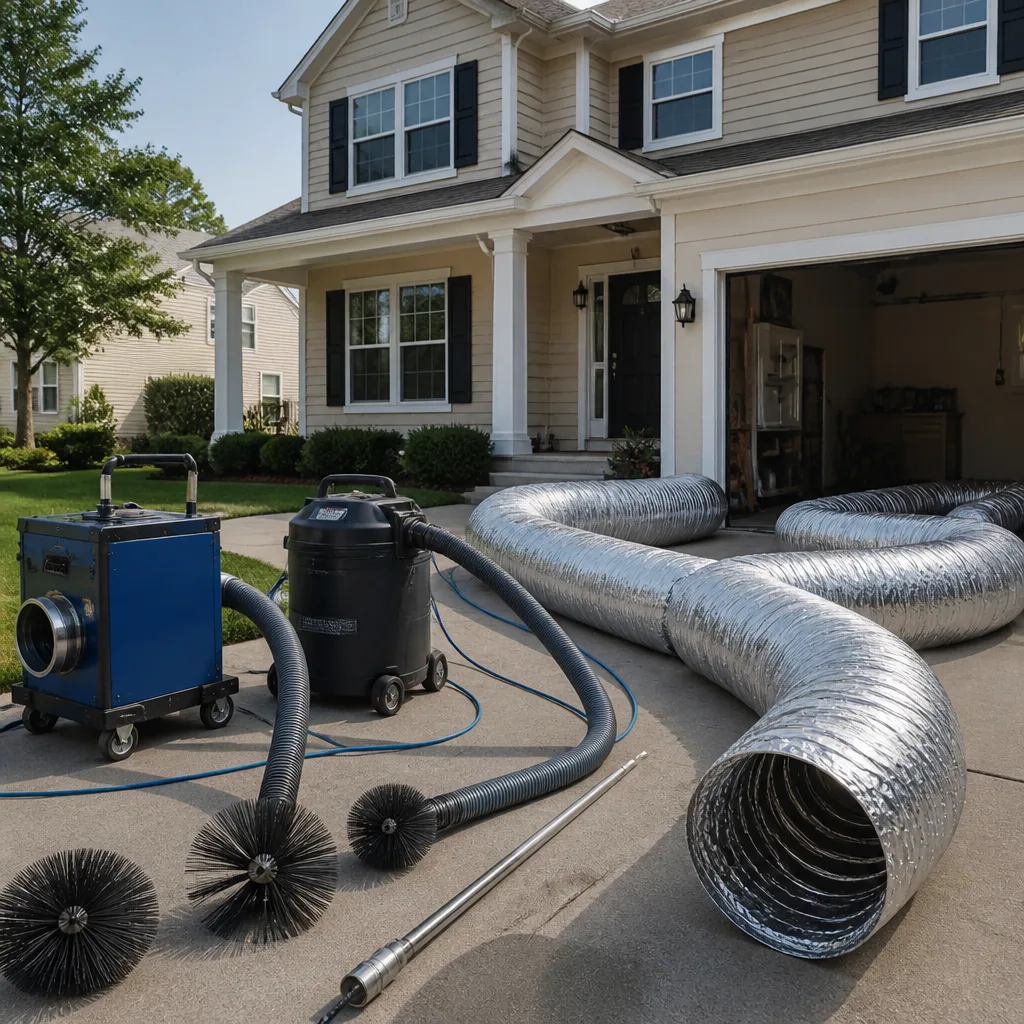 Whole-home duct cleaning
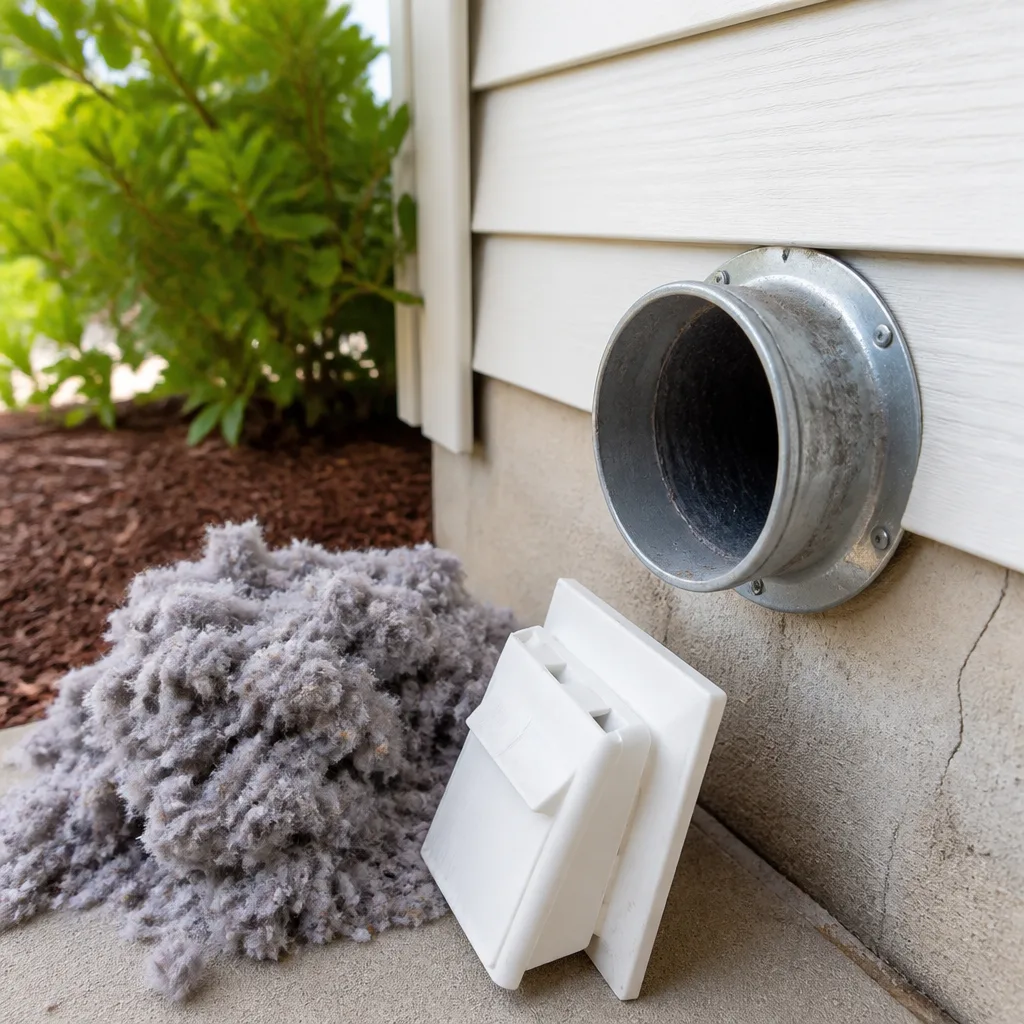 Dryer vent cleaning
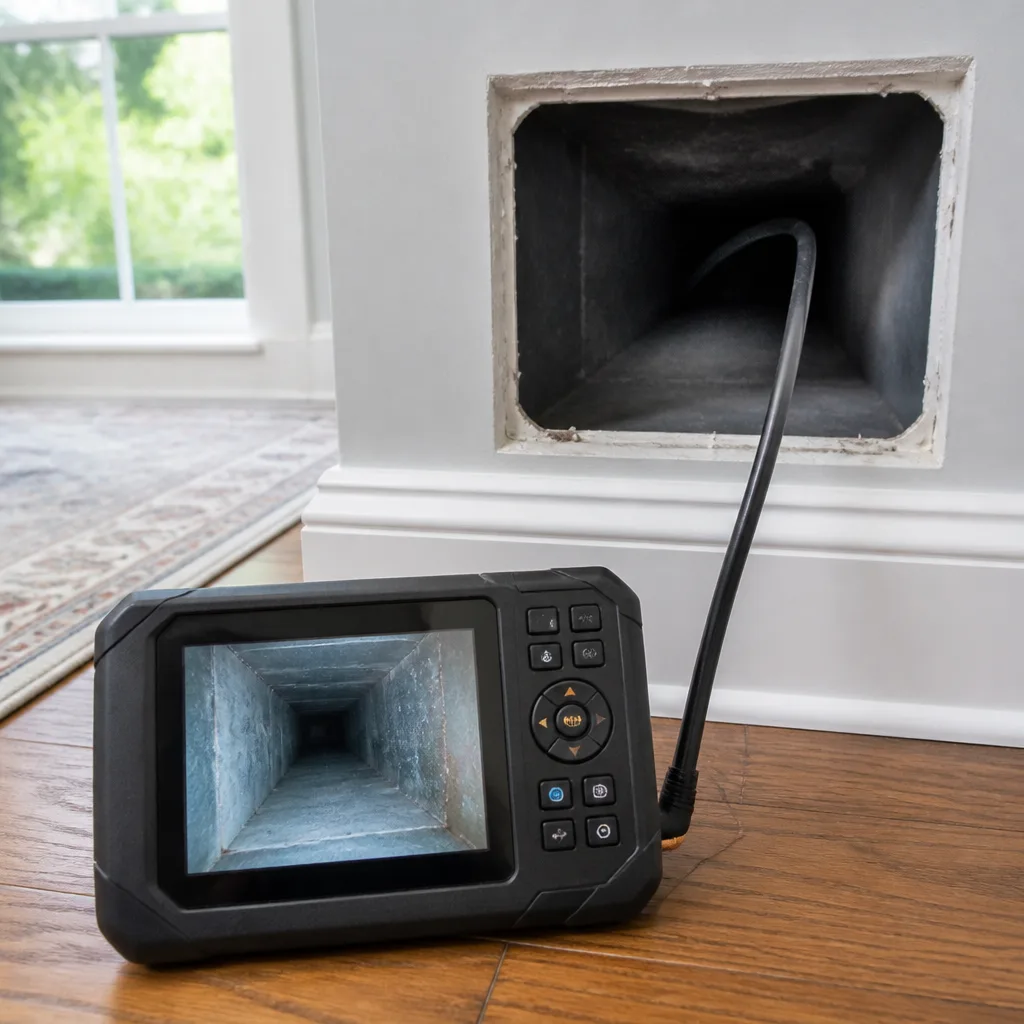 Camera inspection
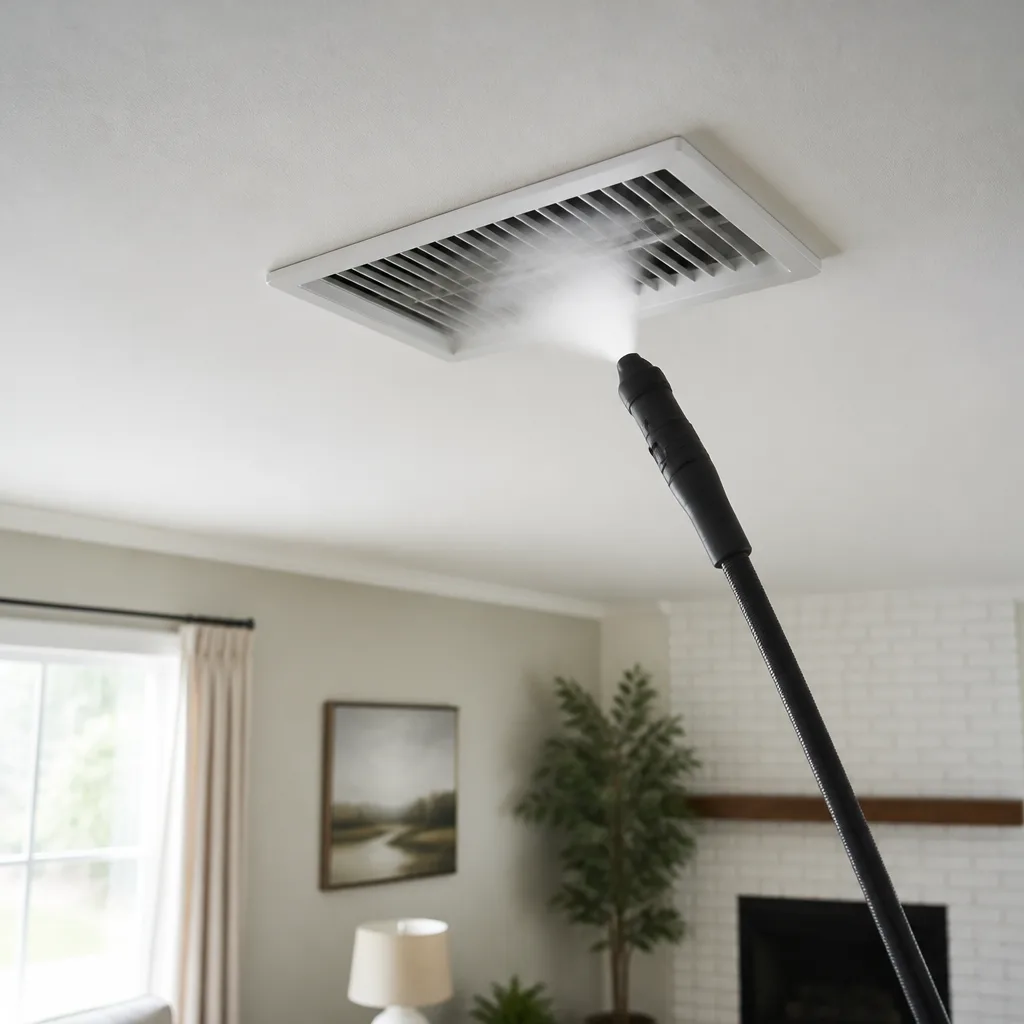 Sanitizing & deodorizing
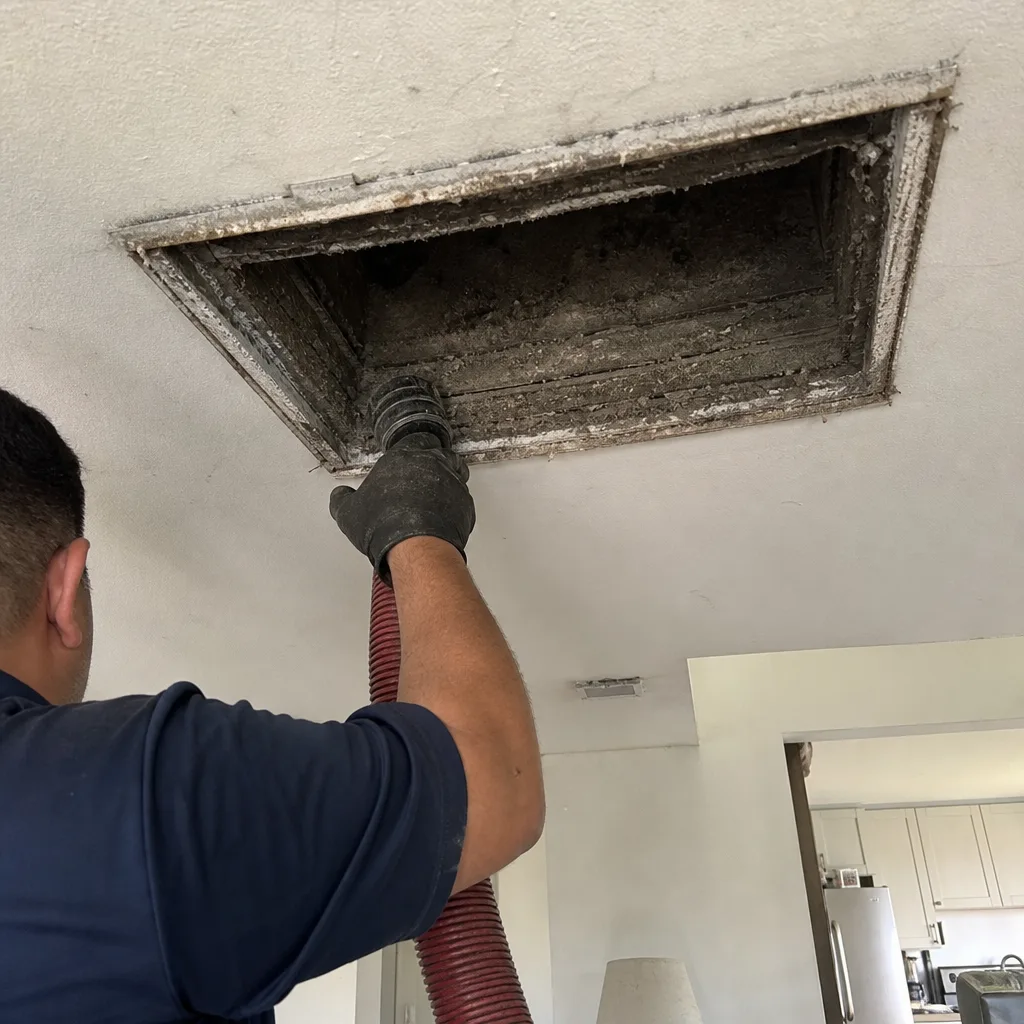
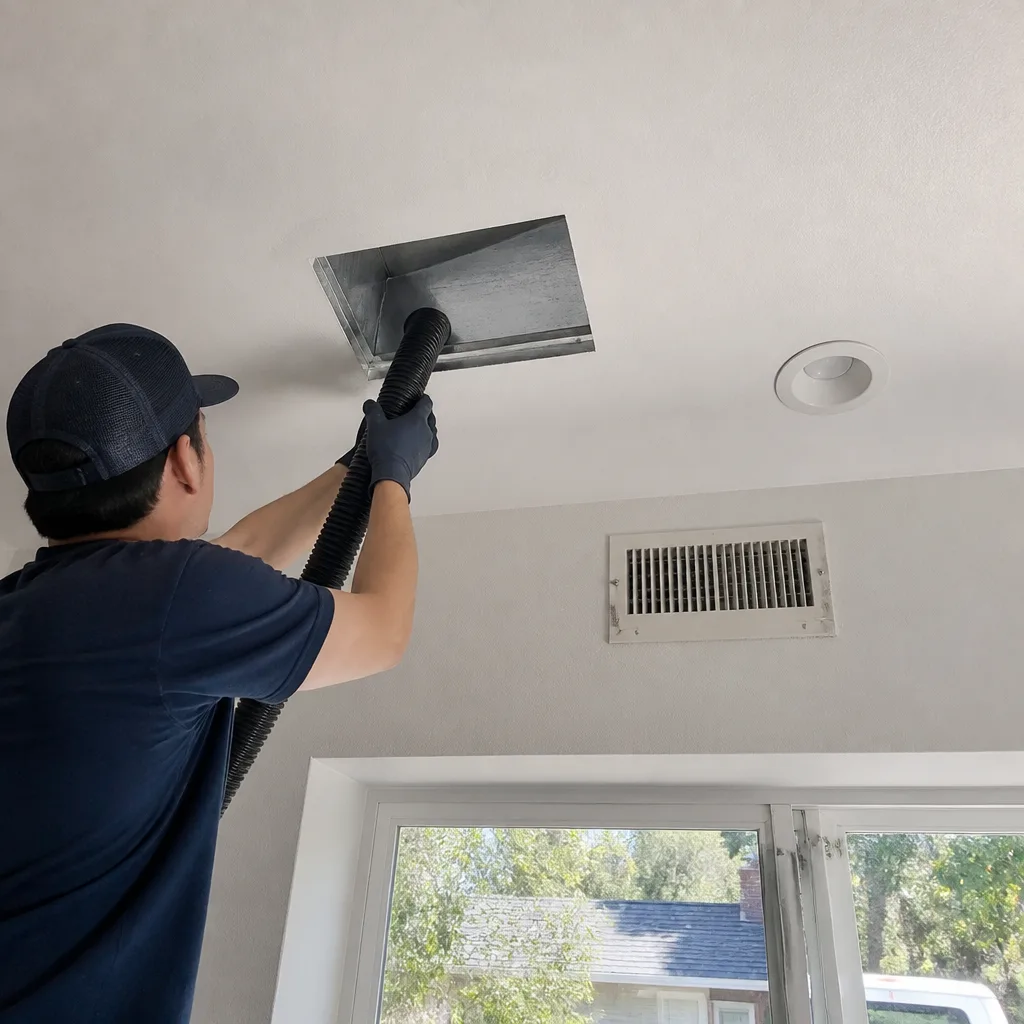
Whole-system duct and dryer vent check with before-and-after photos - you see exactly what came out of your vents
That "$99 whole-house special" is a bait ad - the real number appears once they are in your hallway, or the "clean" is a shop-vac at the register. We photograph the inside of your ducts before and after instead.
Air Duct Cleaning Emergency Preparedness Guide for Tarzana Homes
During the 2025 LA-area fires, a pattern emerged that few homeowners anticipated: houses miles from any flame line still ended up with smoke-contaminated ductwork. The culprit wasn’t embers landing on roofs. It was HVAC systems running on auto during active smoke events, pulling ash-heavy air through return ducts and distributing it through every supply register. A filter swap couldn’t undo that. Professional remediation could, but only after days of breathing recirculated particulate. This guide – along with our more guides & resources – explains what Tarzana homeowners should do with their duct systems before, during, and after a wildfire smoke or ash event so a regional emergency doesn’t become a permanent indoor air quality problem in your home.
Quick Answer
If wildfire smoke or ash is present in Tarzana, shut your HVAC system off unless outdoor air is being filtered through a MERV-13 or higher filter, and close all registers tightly. After the event, a filter change may be enough for light exposure, but heavy smoke infiltration or visible ash around registers warrants professional duct inspection and likely cleaning, which is exactly what our team handles at Air Duct Cleaning Tarzana home service calls throughout the San Fernando Valley.
Styles & brands we work with
- Whole-home duct cleaning
- Dryer vent cleaning
- Camera inspection
- Sanitizing & deodorizing
Table of Contents
- Pre-Event Protocol: Preparing Ducts Before Smoke Arrives
- During a Smoke or Ash Event: System Settings That Limit Infiltration
- Register Types and Sealing: Bar vs. Stamped Face
- Post-Event Assessment: Did Your Ducts Actually Get Contaminated?
- The Remediation Threshold: When Cleaning Is Warranted vs. an Upsell
- Documentation for Insurance: What a Post-Event Report Must Contain
- Dryer Vents and Wildfire Ash: A Separate Risk
- Protecting Schools and Light-Commercial Ducts in Tarzana
Pre-Event Protocol: Preparing Ducts Before Smoke Arrives
Tarzana sits at the western edge of the San Fernando Valley, directly in the path of Santa Ana wind patterns that push smoke from Ventura County and the Santa Monica Mountains into residential corridors. If you wait until you smell smoke to think about your ducts, you’re already behind. The preparation window is the weeks and months before fire season starts, and it comes down to three variables: filter rating, duct seal quality, and system access.
First, know your filter’s MERV rating. A standard fiberglass filter, typically MERV 4 to 6, does almost nothing against wildfire smoke particles, which range from 0.4 to 0.7 microns. A MERV 13 filter captures roughly 90 percent of particles in that range, but it also creates more airflow resistance. Older systems or units with undersized return ducts may struggle, so don’t just drop a MERV 13 into a system designed for MERV 8 without checking static pressure. In our experience across Tarzana’s housing stock, which spans 1950s ranch homes to newer construction south of Ventura Boulevard, the older systems are the ones that need a professional evaluation before a filter upgrade.
Second, address duct leaks before fire season. A duct system with even a 10 percent total leakage rate will pull unfiltered attic or crawlspace air into the supply stream during normal operation. During a smoke event, that leakage becomes a direct pathway for ash to bypass the filter entirely. We use Rotobrush and Nikro inspection tools to map exactly where leaks are, and our repair capability means we can seal them rather than just telling you they exist. This is core to our Air Duct Repair in Tarzana service: finding the disconnects, holes, and degraded liners that make a system vulnerable before an emergency, not after.
Third, know where your system’s components live. If your air handler is in an attic with vented soffits, it’s exposed to outdoor air directly. If it’s in a garage, it’s slightly more protected but still subject to infiltration when the garage door opens. If it’s in an interior closet, you’re in better shape. This isn’t something most homeowners think about until smoke arrives and they’re trying to make a decision about whether to run the fan.
During a Smoke or Ash Event: System Settings That Limit Infiltration
Here’s the counterintuitive part that trips people up: running the fan on “auto” during a smoke event is often worse than running it continuously or shutting it off entirely. On auto, the system cycles on and off based on temperature, which means return ducts repeatedly pull smoke-laden air into the system, deposit particulate on duct surfaces, and then push a burst of it into living spaces when the blower kicks on. Every cycle adds another layer of contamination.
The decision tree depends on what you’re running:
- MERV 13 or higher filter installed, system in good condition: Run the fan continuously on “on” rather than “auto.” Continuous operation keeps positive pressure in the ducts during operation and moves air through the filter repeatedly. It doesn’t eliminate infiltration, but it prevents the start-stop pattern that maximizes deposition.
- Standard filter (MERV 8 or lower), or unknown filter condition: Shut the system off entirely. The filter isn’t stopping smoke particles, and running it just distributes contamination. Use portable HEPA units in occupied rooms if you have them.
- System has known or suspected duct leaks: Shut it off regardless of filter rating. Leaky supply ducts in an attic will pull smoke in through gaps and push it into your living space during a positive-pressure cycle.
During a prolonged smoke event in Tarzana, which can last days when the Santa Anas stall, you’ll also want to close the fresh air intake damper if your system has one. Many newer homes have an outdoor air intake for code-required ventilation; leaving it open during a smoke event gives outdoor particulate a direct route into the return plenum. If you can’t find or access the damper, closing the system off and using portable filtration is the safer play.
Register Types and Sealing: Bar vs. Stamped Face
Most homeowners have never looked closely at their supply registers, but during a smoke event, register design actually influences how much ash settles into the ductwork behind them. The two common types are stamped-face and bar-style registers.
Stamped-face registers are the older, cheaper style with fixed louvers punched directly into a single metal plate. They provide minimal sealing when closed because the louvers don’t create a tight interface. Bar-style registers, which use individually adjusted curved bars, seal significantly better when closed because each bar overlaps the next. In Tarzana’s older housing stock, especially the 1950s and 60s tract homes north of Oxnard Street, stamped-face registers are the default. Newer construction and remodels south of the Boulevard more often have bar-style or a mix.
During an ash event, closing registers on a shut-down system helps, but it’s not a seal. Air still moves through the gaps, and fine ash follows air. If you’re on the west side of Tarzana, closer to the 101 and the Santa Monica Mountain corridor, smoke exposure is typically worse due to prevailing wind patterns, and closed stamped-face registers offer limited protection. One practical step during a prolonged event is to cover registers with damp cloths or magnetic register covers. It’s low-tech, but it measurably reduces ash deposition in the duct runs behind the registers.
After the event, register inspection tells you a lot. If you see ash accumulation on the register face, especially on back-side louvers facing into the duct, that’s a sign the duct itself has been exposed. If registers are clean but the home still has a smoke odor, the contamination may be in the filter housing or plenum instead.
Post-Event Assessment: Did Your Ducts Actually Get Contaminated?
After the smoke clears and the AQI drops back into normal range, the question every homeowner asks is: do I need Air Duct Cleaning services or is a filter swap enough? The answer requires actual assessment, not guesswork.
Start with the sniff test. Turn the system off, let it sit for 10 minutes, then stand at a supply register and have someone turn the fan on. What you’re smelling for is the puff of air that comes out in the first five seconds. If it carries a campfire or ash odor, particulate has deposited somewhere in the system, likely on the blower wheel, evaporator coil, or duct liners. A clean system with a fresh filter should produce air that smells neutral.
Next, the visual check. Pull a supply register or two and look at the duct interior with a flashlight. You’re looking for gray or brown film on duct surfaces, and specifically for ash residue that looks different from normal household dust. Normal dust is gray and fluffy. Ash residue is darker, finer, and tends to cling to surfaces in streaks where air moved across them. We use a borescope for this inspection because light from a phone camera can’t reach more than a few inches into a duct run.
Third, consider a particle count. If you have a consumer-grade particle counter or a friend with one, take readings with the system off, then with the fan running. A spike of 2.5-micron or smaller particles when the fan kicks on indicates the system itself is generating particulate, not just failing to filter it. Professional assessments use calibrated particle counters, but even a relative comparison between system-off and system-on readings is useful information. If you don’t have access to any of these tools, the sniff test and a visual register check are enough to make an initial determination.
The Remediation Threshold: When Cleaning Is Warranted vs. an Upsell
This is where the duct cleaning industry earns its mixed reputation, and where Tarzana homeowners need clear information, including what’s covered in our Air Duct Cleaning Permits, Codes & Inspections in CA: What You Need to Know. Post-wildfire duct cleaning is genuinely necessary in some cases and an unnecessary expense in others. Here’s the threshold we use when we evaluate systems after smoke events.
Cleaning is warranted when:
- Event duration exceeded 48 hours with sustained AQI above 150 in Tarzana, meaning the system cycled repeatedly through contaminated air
- Ash is visible on register faces or inside the duct boot when you remove a register
- The system ran on auto during the event with a standard filter, regardless of duration
- A family member has a respiratory condition and the sniff test or visual check shows any sign of deposition
- The home is within 2 miles of a burn scar and windows or doors were open at any point during active smoke
Cleaning is likely unnecessary when:
- The system was shut off before smoke arrived and registers were closed or covered
- A MERV 13 filter was in place and the system ran continuously on “on” during the event
- Post-event sniff test and register inspection show no residue and the home doesn’t hold smoke odor in fabrics
- The event lasted under 12 hours with light smoke that never produced visible ash fall in the neighborhood
One point we make consistently during post-event evaluations in Tarzana: if a contractor quotes duct cleaning without doing any inspection, that’s a red flag. A legitimate assessment involves looking at the actual system. Our process includes a borescope inspection before we recommend anything, and we’ll tell you if a filter swap and register cleaning are sufficient. That’s part of what separates our Air Duct Cleaning in Tarzana approach from a crew that shows up with a shop vac and a price sheet.
Documentation for Insurance: What a Post-Event Report Must Contain
California homeowners insurance policies vary, but many standard HO-3 policies include coverage for smoke damage remediation when it’s tied to a covered event and documented properly. The key word is documented. An adjuster won’t approve duct cleaning on your say-so. They need a report that establishes causation and scope.
A post-event duct inspection report that supports a remediation claim should include:
- Date and time of inspection, plus the AQI reading for Tarzana on the date of inspection and the peak AQI during the event window. This establishes environmental context.
- System description: unit type, location, filter type and MERV rating at time of event, and approximate duct length or number of registers.
- Visual findings with photos. Every photo should be timestamped. Interior duct shots from a borescope are far more persuasive than exterior register shots.
- A specific description of what was found, not “ducts are dirty” but “gray-brown particulate film observed on supply duct surfaces from register 1 to plenum, consistent with wildfire ash deposition.”
- Recommended scope of work: cleaning of supply and return ducts, blower assembly cleaning, coil cleaning if applicable, and register replacement if warranted.
- Contractor credentials: license number, insurance certificate, and a statement that the contractor does not also perform mold remediation (which creates a conflict of interest that adjusters flag).
We’ve helped Tarzana homeowners through this documentation process after the 2025 fires, and the difference between an approved claim and a denied one often comes down to whether the report reads like a contractor’s invoice or an inspection finding. For a full breakdown of what to check, see our Air Duct Cleaning Maintenance Checklist for Tarzana Homeowners. The former gets questioned. The latter gets approved.
Dryer Vents and Wildfire Ash: A Separate Risk
Dryer vents are a distinct system from HVAC ducts, and they face a different threat during wildfire smoke events. A dryer running during an ash event pulls outdoor air through the dryer cabinet and pushes it out through the vent, but ash accumulation in the vent creates a secondary fire hazard layered on top of the existing lint risk. The vent itself doesn’t cycle air into the living space like HVAC ducts do, but a clogged vent, whether from lint or ash, dramatically increases dryer run times and heat buildup.
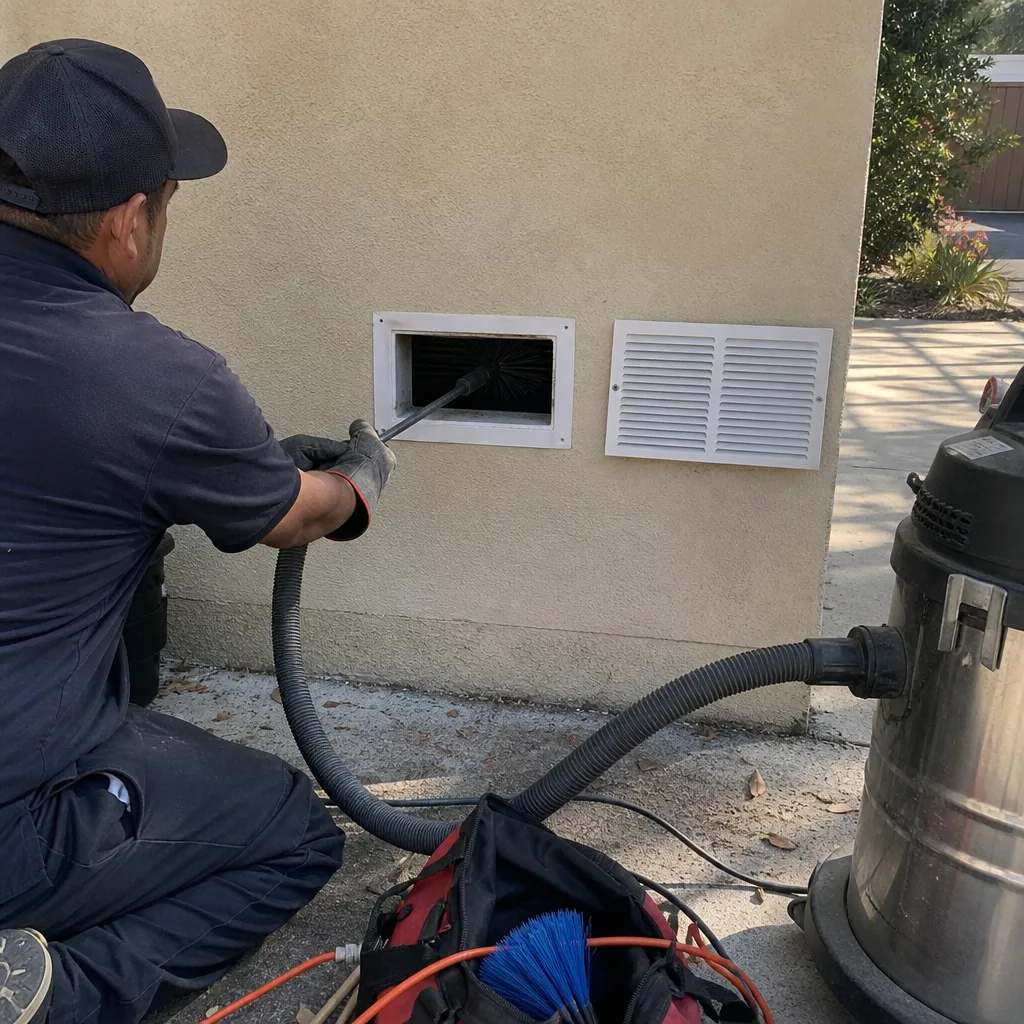
Tarzana homes with dryers on exterior walls facing the hills, especially properties in the foothill zones north of the 101, should treat their dryer vents as part of their emergency preparedness checklist. After a smoke or ash event, a Dryer Vent Cleaning in Tarzana inspection covers two things: the normal lint accumulation that all homes develop, and the ash that may have been pulled through during the event. Our dryer vent process uses the same professional-grade approach as our HVAC duct work, because a dryer vent full of ash and lint is a legitimate fire risk, and it’s not the place for a homeowner with a leaf blower and a good intention.
Protecting Schools and Light-Commercial Ducts in Tarzana
Residential systems aren’t the only ones that need a wildfire smoke protocol. Tarzana’s schools, medical offices, and light-commercial buildings along Ventura Boulevard have duct systems that move far more air than a home, and the contamination math scales accordingly. A commercial rooftop unit pulling smoke through a return plenum for eight hours can deposit enough particulate that a filter change does nothing for the odor or the air quality.
For property managers and facility staff, the pre-event question is whether the building’s air handling equipment has been evaluated for wildfire-season operation. The during-event protocol is different from residential because you can’t just shut off air to an occupied school or clinic. Instead, the system should run continuously with the highest MERV filter the unit can handle without exceeding its static pressure rating, and the fresh air dampers should be closed if the building management system allows it. After the event, the same assessment applies: borescope inspection of the supply and return plenums, visual check of the first few feet of duct beyond each register, and particle count comparison with the fan on versus off.
We work with light-commercial buildings in Tarzana and the surrounding Valley, and the most common post-event finding is a contaminated blower assembly even when duct interiors are relatively clean. The blower wheel catches particulate that the filter misses, and that’s what keeps recirculating the smoke odor long after the event. It’s also the part that general maintenance crews rarely inspect because it requires pulling the blower housing.
Common Mistakes to Avoid
- Running the system on auto during smoke. The start-stop cycling continuously pulls contaminated air through returns and deposits it on duct surfaces. Shut the system off or run it continuously with a high-MERV filter.
- Changing the filter mid-event and calling it done. The filter catches what passes through it, but duct surfaces collect what doesn’t. A new filter hides the problem, it doesn’t solve it.
- Opening windows after the smoke clears to “air out” the house. Santa Ana wind patterns in Tarzana can deliver ash fall for days after the visible smoke dissipates. Opening windows just reintroduces particulate.
- Turning on the whole-house fan. Whole-house fans, common in Tarzana’s older ranch homes, pull unfiltered outdoor air directly into the attic and across the living space. During and immediately after a smoke event, this is the worst possible system to run.
- Ignoring the blower motor and housing. Duct cleaning that doesn’t include the blower assembly leaves the component that actually moves air coated in smoke particulate. It’s like cleaning the pipes but not the pump.
- Accepting a phone quote without an inspection. Post-event duct contamination varies drastically by home. A contractor who quotes cleaning without looking at the system is selling a service, not solving a problem.
- Filing an insurance claim without documentation. Adjusters deny smoke remediation claims that lack inspection photos, AQI context, and specific findings. Get the inspection report first, file second.
See the difference
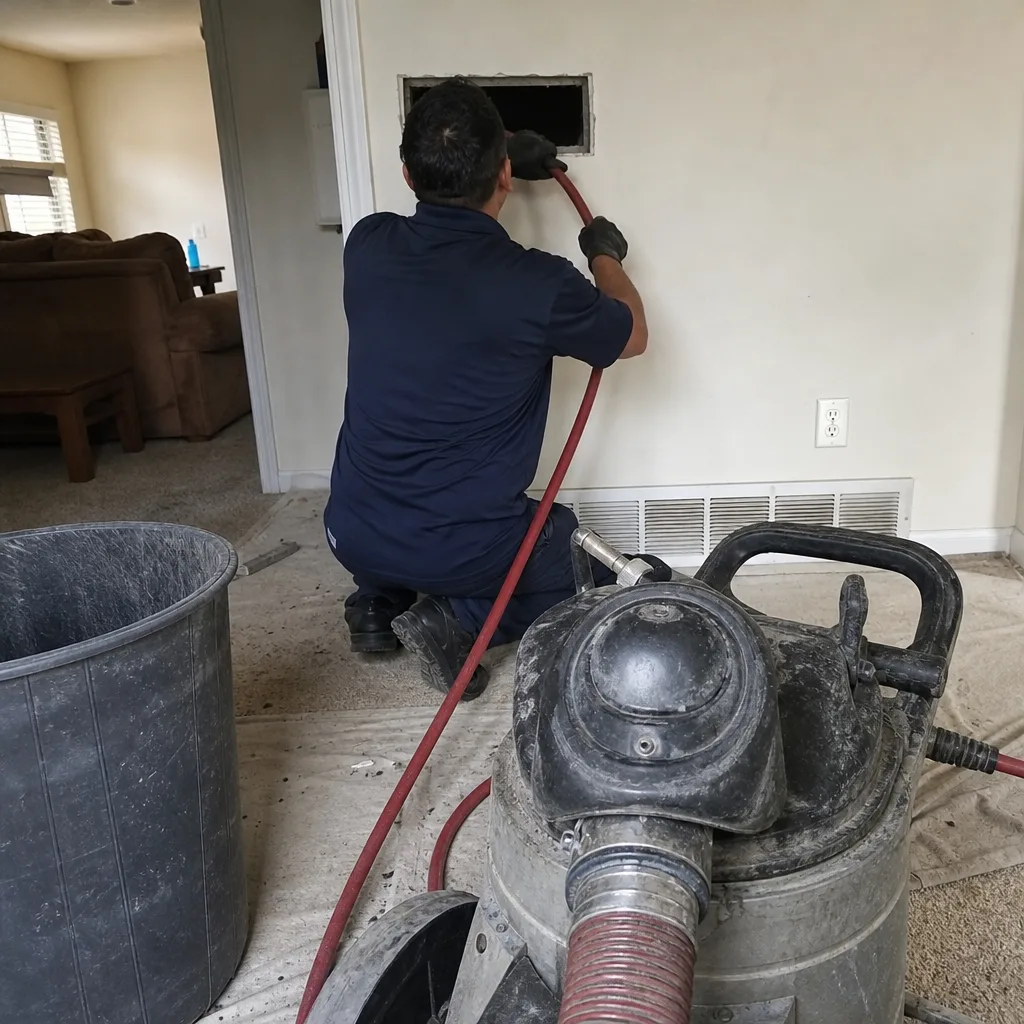 Before
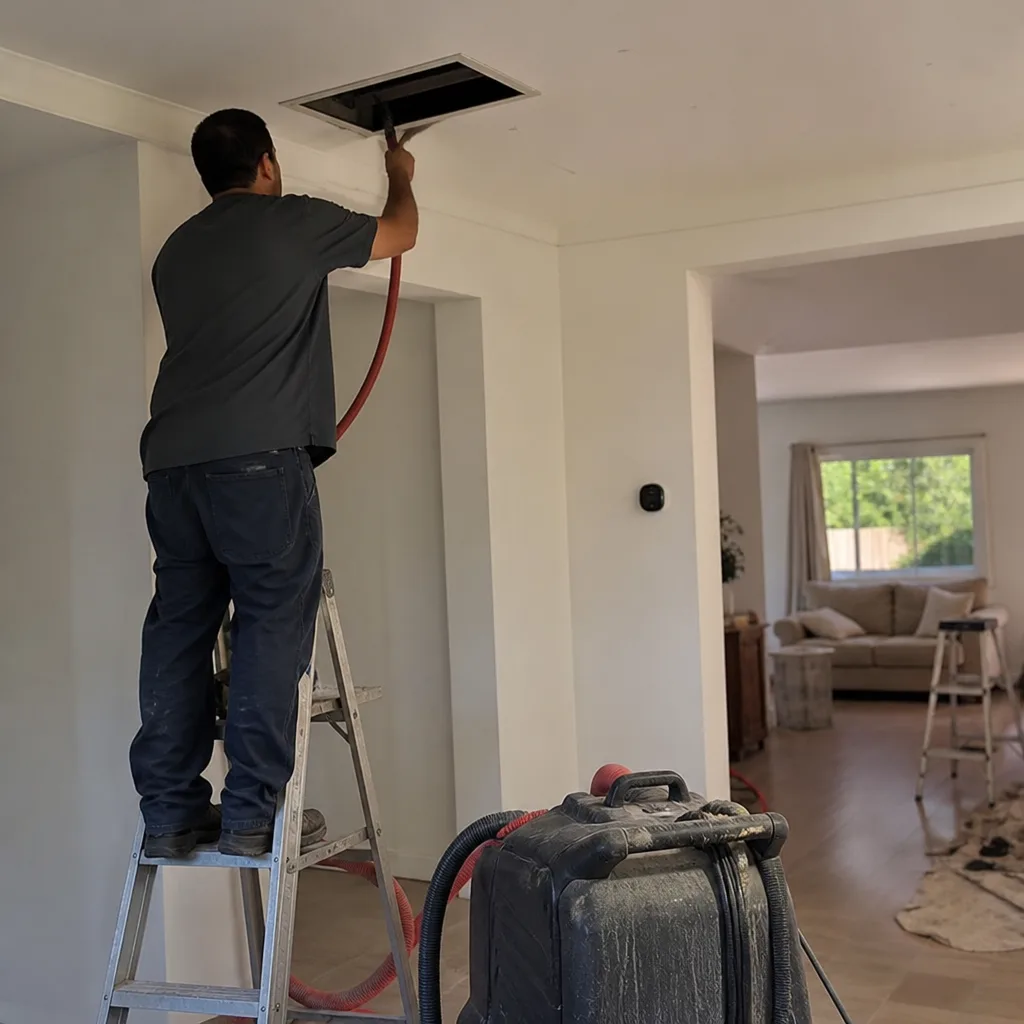 After
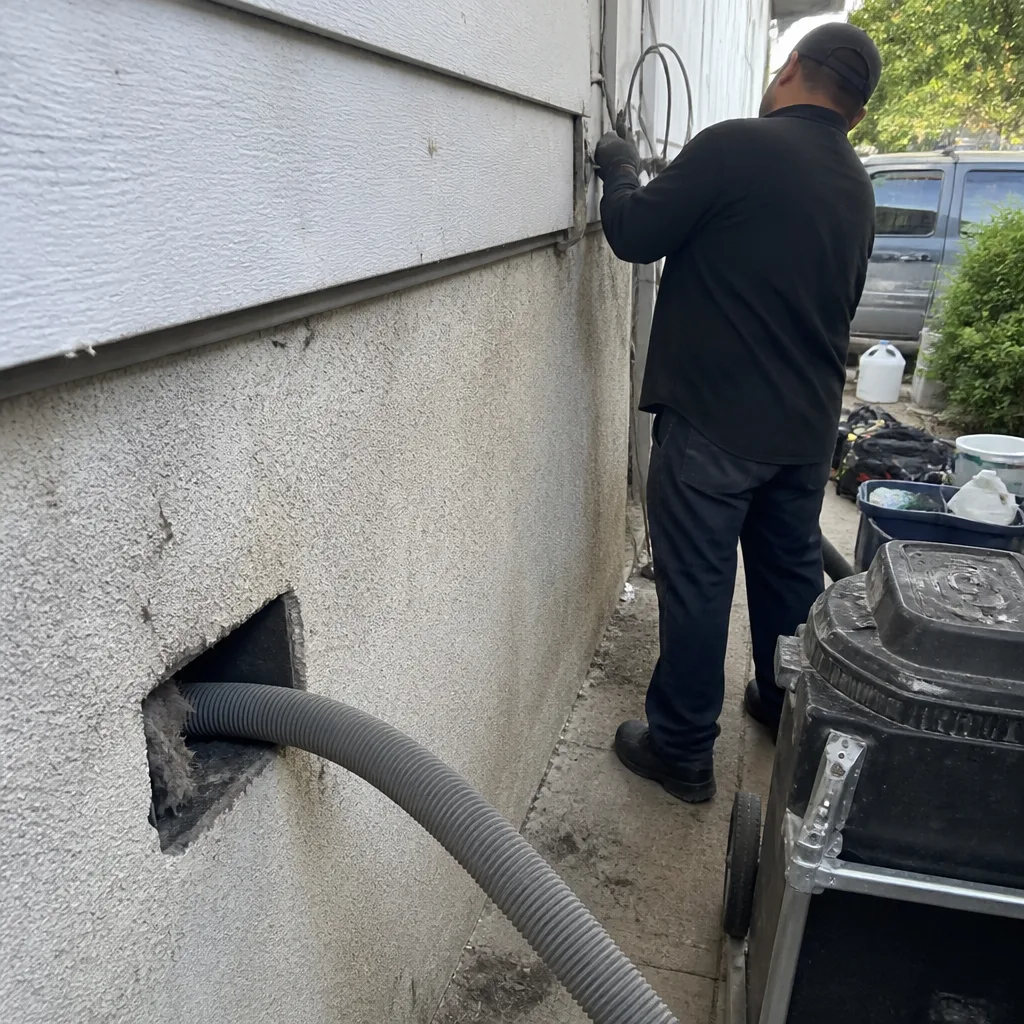 Before
 After
 Before
 After
When to Call a Professional
Call a professional if the post-event sniff test produces a smoke odor from your registers, if you see ash residue on register faces or inside duct boots, if your system ran on auto during a multi-day smoke event with a standard filter, or if anyone in the home has asthma, COPD, or other respiratory conditions and you have any doubt about what’s in the ducts. A professional assessment includes borescope inspection of the duct interior, a blower assembly check, and a clear recommendation on whether cleaning is necessary or a filter swap will do. Air Duct Cleaning Tarzana offers free estimates in Tarzana, call (866) 472-7239.
Frequently Asked Questions
Only if assessment shows actual deposition: a smoke odor from registers on startup, visible ash on register faces or duct interiors, or a particle count spike when the fan runs. Systems that stayed off during the event with closed registers usually need nothing more than a filter change. Call (866) 472-7239 for a professional evaluation if you’re unsure.
MERV 13 is the minimum rating that captures meaningful wildfire smoke particles in the 0.4 to 0.7 micron range, but your system needs to be able to handle the airflow resistance. Older Tarzana homes with undersized return ducts may need an evaluation before upgrading from a MERV 8. Members of the Honeywell line include MERV 13 options that work well in properly-sized systems.
Whole-system cleaning for an average Tarzana home, including supply and return ducts, blower assembly, and register cleaning, typically runs between $450 and $900 depending on system size and contamination level. Get an exact quote after inspection. Call (866) 472-7239 for a free estimate.
You can remove loose debris from the first few inches of duct behind a register with a standard vacuum, but you can’t reach the duct interiors, plenum, coil, or blower assembly that are most likely to hold smoke particulate. Professional systems like Rotobrush and Nikro use agitation and negative-air containment that can’t be replicated with consumer equipment.
Smoke odor in ducts persists as long as the particulate that carries the odor remains on system surfaces. It won’t dissipate on its own in a meaningful timeframe. The odor will continue to emit every time the fan runs until the contaminated surfaces are cleaned.
Tarzana sits in a Santa Ana wind corridor that channels smoke from the Santa Monica Mountains and Ventura County directly through the western San Fernando Valley. Homes west of the 101 and north of Ventura Boulevard get more sustained smoke exposure than areas further east, and that means more deposition on duct surfaces per hour of system operation.
Many standard HO-3 policies in California cover smoke remediation expenses, including duct cleaning, when the event is documented and the claim establishes causation. Your claim is much stronger with a dated inspection report, photos of duct interiors, AQI data for the event window in Tarzana, and a specific scope of work.
The Bottom Line
Wildfire smoke in Tarzana isn’t an outdoor problem that stops at the front door. Your HVAC system either filters it, distributes it, or stores it, depending on how it’s set up and what condition it’s in. The difference between a filter swap and a full duct cleaning comes down to event duration, system settings during the event, filter rating, and what a post-event inspection actually finds. Prepare before fire season with a properly rated filter and sealed ducts. Act decisively during smoke events by either running continuously on high-MERV filtration or shutting down entirely. And assess honestly afterward with the sniff test, a visual check, and professional inspection when warranted. That sequence is what keeps a regional emergency from becoming a permanent air quality problem in your home.
Written by the team at Air Duct Cleaning Tarzana, serving Tarzana since 2013.